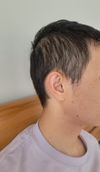
A 29-year-old is using liposomal topical finasteride/minoxidil and low-level light therapy (LLLT) to improve hair growth, showing significant progress in crown recovery. The user prefers liposomal topicals to avoid side effects from oral finasteride and uses the iRestore Essential device for LLLT.
The discussion is about using ASCEplus HRLB exosomes for hair loss treatment, which combines 10 billion exosomes with growth factors, nutrients, biotin, and copper tripeptide. The treatment is expensive and typically administered via scalp injections, but in Europe, it's done with microneedling.
Verteporfin treatment shows promise for hair regeneration and reducing scar tissue in hair transplants. Some users plan to try verteporfin with hair transplants, and it may also be combined with PRP in future experiments.
A human trial of verteporfin, a potential treatment for hair loss, with some users noting potential improvements in scarring and overall healing compared to control areas.
UCLA's PP405 shows promise in reactivating dormant hair follicles for hair loss treatment but is still in clinical trials. Minoxidil and finasteride remain common treatments until PP405 becomes available.
A user shared their experience using capsaicin from chili peppers and occasional topical minoxidil to promote hair growth, noting noticeable improvements without significant side effects. They previously experienced side effects from dutasteride and minoxidil but found the new regimen effective and manageable.
The conversation discusses a user's experiment of "burning the scalp" to treat hair loss, with mixed opinions on its effectiveness. Some suggest returning to proven treatments like finasteride and minoxidil, while others note slight improvements in hair density.
The user has been using minoxidil, trioxidil, procapil, redensyl, and ashwagandha lotion for hair loss but can't find more procapil redensyl lotion. They are seeking advice on where to find it or alternative solutions.
A 24-year-old with early hair loss is managing it with finasteride, minoxidil, and dutasteride, and is considering using a hair system for more styling options while maintaining transparency. They emphasize confidence and self-expression over hair, viewing it as an amplifier rather than a foundation.
The user reports positive progress in hair regrowth using 1mg oral finasteride, 3mg oral minoxidil, biotin, vitamin D, red light therapy, and microneedling. They note thickening at the hairline and some regrowth at the temples.
A 29-year-old male experiencing hair loss due to TRT is using minoxidil and dermarolling but is hesitant to use finasteride or dutasteride due to potential side effects. He is considering low level laser therapy (LLLT), PRP, ketoconazole shampoo, and oral minoxidil as additional treatments. A reply suggests that without a DHT blocker like finasteride or dutasteride, other treatments may not be effective long-term.
A user who decided to shave their head after trying PRP for hair loss with minimal results, and the replies which commended them on how good they looked without it.
Latanoprost is discussed as a potential hair loss treatment, noted for its synergy with minoxidil and 5-AR inhibitors, but concerns include its effectiveness on scalp hair, cost, and potential skin darkening. Some users express interest in trying latanoprost or bimatoprost despite limited real-world evidence.
The conversation discusses using Bimatoprost for eyebrow regrowth and its potential use on the hairline, with concerns about cost and side effects. Alternatives like topical Minoxidil are mentioned, but the user is worried about aging and acne.
The user is experiencing excessive hair thinning and is unsure of the cause. They are seeking opinions on treatments like Minoxidil, finasteride, and RU58841.
A user who had been noticing hair loss and decided to fight it by using Minoxidil, Finasteride, and low level laser treatments. They have now seen some positive results, with brand new vellus hairs appearing.
Scientists at UCLA have developed a promising treatment for male pattern baldness using a molecule called PP405, which can potentially stimulate dormant hair follicles. Initial trials showed significant results within a week, but larger clinical trials are needed to confirm its efficacy and safety.
Using lice as an alternative to microneedling for hair loss treatment, with concerns about effectiveness and practicality. Some users humorously suggest genetically altering lice to produce beneficial compounds.
A 33-year-old male is documenting his hair regrowth progress using minoxidil, red light therapy, copper peptides, and micro-needling, with noticeable improvement in hair thickness and coverage. He plans to add a topical finasteride/minoxidil spray and aims for a shadow on his scalp rather than a full head of hair.
Bimatoprost and latanoprost are being considered for scalp hair growth, with concerns about side effects like skin darkening and fat loss. A user warns about potential chemical burns from latanoprost.
Whether topical caffeine can be as effective for hair growth as minoxidil and finasteride, with various replies discussing the efficacy of these treatments and criticism of Dr. Huberman's research methods.
The conversation discusses hair regrowth after 5 months of using finasteride and minoxidil, along with 3 sessions of laser therapy and exosomes. The user is hopeful about regaining their bangs.
Pelage secured $120 million for PP405, a non-hormonal topical hair loss treatment, sparking debate on its potential as a breakthrough. Concerns about finasteride's side effects persist, with some suggesting alternatives like topical finasteride or dutasteride.
A person is experimenting with microneedling on one temple while using Minoxidil to address hair loss. They plan to needle weekly and apply Minoxidil twice daily, avoiding application around needling sessions.
The user shared their successful hair regrowth using oral finasteride, minoxidil foam, a custom topical solution, ketoconazole shampoo, and microneedling, resulting in significant improvement at the crown. However, they experienced hairline recession after switching to a topical solution with finasteride and minoxidil, raising concerns about its effectiveness.
A user shared their positive experience with MoriTint, a Korean scalp micro pigmentation technique that enhances the appearance of hair density without being permanent. They now offer this service in Los Angeles and emphasize its benefits for those with thinning hair, while clarifying it is not suitable for those with significant hair loss or baldness.
HairClone is developing cell replacement treatments to rejuvenate and generate hair follicles, and has launched a crowdfunding campaign. A user expressed skepticism about the need for crowdfunding.
The conversation discusses hair loss struggles and treatments, including oral minoxidil, oral finasteride, and RU58841. Users share experiences and advice, suggesting options like topical minoxidil, microneedling, hair transplants, and scalp micropigmentation.