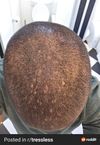
The conversation discusses hair loss treatments, specifically Minoxidil, finasteride, and RU58841. The user seeks input from medical professionals and scientists on these treatments.
RU58841, oral and topical minoxidil, finasteride, and ketoconazole shampoo led to significant hair regrowth, though some suspect a hair transplant. Concerns about RU58841's side effects, like anxiety and heart issues, were discussed.
The user noticed small circular hairless spots after a buzz cut and has been using finasteride, dutasteride, and oral minoxidil for hair loss. They are experiencing continuous shedding and thinning, and it is suggested they consult a dermatologist for a scalp examination and possible biopsy to determine if it's alopecia areata or androgenetic alopecia.
A Spanish dermatologist suggests sulforaphane for androgenetic alopecia (AGA) due to its potential to remove DHT metabolites, though high dosages are needed. A topical formulation might be possible.
A user discusses a novel hemp extract for hair regrowth, which showed superior results to finasteride and minoxidil. The formula includes CBD, CBDV, THCV, delta 9 THC, cannabigerol, and cannabinol, combined with menthol, peppermint oil, ethanol, Emu oil, HFA 134A propellant, and dimethicone.
P-1075 is a more potent hair growth agent than Minoxidil, but it poses significant heart risks, making it unsafe for use. Despite promising results in macaques, concerns about its cardiotoxicity in rats have halted its development.
Stopping creatine led to reduced hair loss for some, despite no proven link between creatine and hair loss. Users shared experiences, with some using minoxidil and finasteride to manage hair loss.
Redensyl, which is a topical alternative to Minoxidil for hair loss. It may have advantages such as not making the hair greasy and lasting longer after discontinuing use than minoxidil. There are some positive reports from users, but also some negative ones, so it's unclear how effective this treatment will be in comparison to Minoxidil and other treatments like Finasteride or RU58841.
Capilia Longa and Scandinavian Biolabs are discussed, with skepticism about their effectiveness and value. The conversation suggests avoiding these products due to high cost and perceived lack of results.
The conversation discusses experiences with Haircross Hair Growth Serum, which contains Redensyl, Capixyl, Procapil, Anagain, and Baicapil, as an alternative to Minoxidil and Finasteride. Users report mixed results, with some experiencing no regrowth and others noting slight thickening, but concerns about side effects and effectiveness compared to standard treatments remain.
The conversation discusses the effectiveness of an eyebrow serum containing Myristoyl Pentapeptide and Biotinoyl Tripeptide for hair growth. The user seeks information on other topical products with similar peptides for hair growth.
The conversation is about the potential benefits of Rapamycin for hair pigmentation and regeneration, based on effects observed in mice. The original poster is seeking personal experiences from others using Rapamycin for longevity.
Hair regrowth treatment involving 3aHSD enzyme shows 6% improvement in 18 weeks. Sulforaphane, L-Menthol, and Dexpanthenol are potential ingredients for new hair loss solution.
A dermatologist prescribed methionine with vitamins for hair loss, but the user is doubtful and plans to seek finasteride in France. The user is unsure why finasteride or minoxidil wasn't prescribed, suspecting concerns about side effects or strength.
The conversation discusses the effectiveness of RU58841 for hair loss compared to pyrilutamide, which failed to show significant hair regrowth in trials. Some users report personal side effects with RU58841 and question the criteria for success in hair loss treatments.
Calecim (PTT-6) Advanced Hair System is a 6-week hair restoration product using stem cell-derived ingredients to stimulate hair growth. Users are skeptical, calling it overpriced and ineffective, suggesting alternatives like LLLT devices or PRP treatments.
DHT causes hair loss by driving cells into senescence, and a polyphenol in black chokeberry may reverse this. A product using this theory is being considered for use alongside finasteride, minoxidil, and microneedling.
Creatine does not increase DHT levels or cause hair loss. Personal experiences vary, but scientific evidence shows no link between creatine and hair loss.
Norwood 7 hair loss is often excluded from trials to ensure treatments appear more effective and to reduce costs. Some believe treatments effective for Norwood 5 could work on Norwood 7, but companies prioritize market readiness.
GT20029 showed significant hair growth and safety in phase II trials, with no adverse sexual events. Users are hopeful but concerned about future costs and systemic effects.
The user experienced significant hair loss after using RU58841, a hair loss treatment, and had to undergo a hair transplant to rectify the damage. They're asking others who've used RU58841 about their experiences, particularly if they also experienced shedding, if their hair grew back, when they started using RU, and other related questions.
Reducing the dose of RU58841 from 25mg to 7.5mg topically helped minimize heart palpitations. Users discussed the cardiac effects of RU58841 and minoxidil, noting that no treatment is completely free of side effects.
RU58841, combined with 5% minoxidil, helped reduce acne and hair loss. Users discussed using RU58841 cream for acne and shared experiences with other treatments like finasteride and dutasteride.
Finasteride is effective for DHT/AR-driven hair loss but not for chromosome 20-driven cases, where treatments like minoxidil, prostaglandin analogs, and low-level laser therapy may be more beneficial. Genetic testing can help determine the underlying cause of hair loss to tailor treatment effectively.