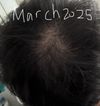
A user is concerned about weight loss stagnation while using minoxidil and finasteride during a calorie-cutting diet. Responses suggest water retention or a weight loss plateau as possible causes.
A user shared progress pictures after 100 days of using finasteride, topical minoxidil, and dermastamping, with oral minoxidil added two weeks ago, reporting no side effects. Some users praised the results, while others questioned the effectiveness of dermastamping and the visibility of hair growth.
The user reports using 2.5 mg oral minoxidil, 1mg finasteride, ketoconazole, and monthly dermarolling for hair loss over six months, and is asking if there's hair regrowth or stabilization. Another person suggests increasing dermarolling frequency, possibly using more dutasteride, topical minoxidil, or a retinoid cream to improve minoxidil absorption.
The user switched from minoxidil to a homemade 2-deoxy-d-ribose gel and noticed no hair fall after two weeks, despite stopping minoxidil. The gel includes water, 2-deoxy-d-ribose, vegetable glycerine, 2-phenoxyethanol, sodium alginate, and rosemary oil, and the user reports healthier-feeling hair.
A 34-year-old male shares his hair regrowth journey using Minoxidil Max Dual Gen with topical finasteride, hair oil, derma rolling, and nizoral shampoo, emphasizing persistence and consistency. Despite some skepticism about lighting and treatment effectiveness, he reports significant progress over 12 months.
The user has been using topical minoxidil 8% and finasteride 0.3% for six months, along with 2% ketoconazole shampoo and microneedling. They are experiencing some hair regrowth and hope for thicker hair by next year.
Nanoxidil, a minoxidil derivative, is being discussed as a potential hair loss treatment. Users are curious about its effectiveness and side effects compared to minoxidil, with some noting it includes additional ingredients like caffeine.
The conversation discusses creating a topical hair loss treatment by dissolving melatonin in ethanol and possibly mixing it with castor oil, questioning the stability of the solution. An alternative of using glycerin is also considered.
The conversation discusses improvements to a platform and mentions hair loss treatments including Minoxidil, finasteride, RU58841, and melatonin. It also highlights the addition of features like Google login, reply by email, keyword extraction, and a term glossary for better understanding of hair-related terminologies.
The user is using a hair recovery treatment with 0.5 mg dutasteride, 5 mg biotin, 5% topical minoxidil, and dermarolling twice a week. They are considering using a 1.5 mm dermaroller and red light therapy.
The conversation discusses GT20029, a drug in Phase II trials that targets androgen receptors with minimal systemic effects, and TDM-105795, a growth stimulant with a different mechanism than minoxidil that may revive papilla stem cells. Both are potential new treatments for hair loss.
A 40-year-old male has been using 5% minoxidil foam and 1mg finasteride for 2.5 months, noticing darker and thicker hair. Users encourage him to continue the treatment, as results can take 6-9 months or longer.
A deoxyribose sugar gel may work as well as minoxidil for hair regrowth by boosting blood supply to hair follicles. Some users discuss combining it with minoxidil and cetrizine, but caution is advised due to potential risks and lack of consistent results.
The conversation is about a user sharing their 5-month progress using topical minoxidil 5% twice daily, ketoconazole shampoo, and vitamin D supplements for hair loss, with plans to add finasteride. The user experienced initial shedding but noticed hair thickening by the fourth month, and is seeking advice for dryness caused by minoxidil.
Dutasteride is associated with increased blood glucose, HbA1c, LDL cholesterol, and liver enzyme activity, potentially leading to diabetes, NAFLD, and liver metabolism changes. The conversation highlights concerns about these adverse effects and calls for more studies, including on finasteride.
A user is considering using compounded Minoxidil with Tretinoin from Medical Wellness Center to improve hair growth. They are also curious about the effects of higher Minoxidil doses and adding Tretinoin to their regimen.
The user used Kirkland brand minoxidil foam twice daily for a year and noticed initial progress, but feels they might be losing progress or experiencing shedding. They are considering starting finasteride but prefer to avoid it and are seeking hair styling advice.
The user is using a hair loss treatment regimen that includes RU58841, minoxidil mixed with finasteride, adenosine, dermarolling with lidocaine cream, and biotin. They are questioning if they are dermarolling too aggressively and are willing to accept baldness if no improvement is seen in 6 months.
Phase II for TDM-105795 for Androgenic Alopecia is set to begin in April 2023. The study aims to evaluate the efficacy and safety of TDM-105795 in male subjects.
PP405 is not a cure for hair loss but may reactivate dormant hair follicles, similar to minoxidil. It is unlikely to help with miniaturized or vellus hairs and is still in trial phases, with availability expected around 2030.
A user is creating a home topical solution for hair loss using zinc, essential oils, and caffeine, aiming for a 0.001% caffeine concentration. They also use topical finasteride and are considering other treatments like low-level laser therapy, while discussing the effectiveness of various hair loss treatments with others.
An 18-year-old using 5% minoxidil topically and derma rolling weekly for 1.5 months shows visible hair growth progress. The user also addresses vitamin D deficiency and thyroid imbalance with medication.
OP saw positive results from 4 months of finasteride, vitamin D3, and microneedling. They plan to add rosemary and castor oil but decided against using minoxidil.
The conversation discusses using 0.1% Alfatradiol compounded by a pharmacy for hair loss treatment. It also mentions Minoxidil, finasteride, and RU58841 as other treatments.
The user is concerned about hair loss despite taking finasteride and has a hair transplant scheduled. They experience scalp itching and burning, which hasn't been relieved by various treatments, and another user suggests using ghk-cu & ahk-cu serum and Koshine kx-826/pyrilutamide for relief.
User discusses a promising topical Procyanidin B2 treatment for hair loss. Users share mixed experiences and mention effective treatments like finasteride, minoxidil, and LLLT.
Using a microdose of finasteride on the scalp with minoxidil as a carrier may have positive effects with minimal side effects. The user is also considering the effects of sulforaphane or broccoli sprouts on hair loss.
The user is using topical minoxidil, topical finasteride, tretinoin cream, microneedling, and ketoconazole and caffeine shampoo for hair regrowth. They are satisfied with the progress but unsure if more regrowth is possible and are advised to continue the routine for a year.