Search
for
Sort by
Community Join
480-510 / 1000+ resultscommunity Can Tazarotene Upregulate Minoxidil Conversion Like Tretinoin?
Tazarotene's potential to enhance Minoxidil conversion, similar to Tretinoin, is questioned. Users discuss the lack of information and seek further details.
community 8 month progress (topical min + fin)
community (4m - 6m fin) Still feel like it getting worse
community Pyrilutamide 4 Month Journey with progress Pics..!!!
The user reported significant hair regrowth and stopped hair loss after using Pyrilutamide and Minoxidil for four months. They found Pyrilutamide effective in blocking DHT locally without side effects, preferring a gray market version over Koshine's product.
community 2 months Dutasteride - hyperresponder?
OP experienced significant hair growth after switching from topical treatments to oral Dutasteride, alongside using CJC/Ipamorelin and Cialis. They stopped using topical Minoxidil and Finasteride, attributing the hair growth to the new regimen.
community Thorn Medical has "a complete cure for male pattern baldness"
community Adding cetirizine tablet to minoxidil
A user wants to add cetirizine tablets to their minoxidil bottle and asks how many 10mg tablets to crush for a 100ml bottle. They seek advice on the correct dosage.
community 6 months of finasteride and ghk-cu
The conversation is about hair loss treatment progress using finasteride and GHK-CU over six months. Users discuss application methods and share experiences with GHK-CU and AHK.
community Alcohol consumption triggering sheds.
community TH07 by Triple Hair entering phase III trial
A new topical treatment, TH07, combining finasteride, latanoprost, and minoxidil, is entering phase III trials with promising early results. Some users express skepticism, noting the treatment uses existing products.
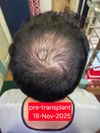
community 7 month crown transplant progress update | minoxidil since Jan, finasteride since June
A 28-year-old male shares his 7-month progress after a crown hair transplant, using topical minoxidil foam, finasteride, and microneedling. He seeks feedback on whether his crown's progress is typical and if further thickening is expected between months 7 and 12.
community 9 MONTHS HAIR TRANSPLANT UPDATE
community What's your opinion on topical caffeine?
The user is already using topical finasteride and minoxidil for hair loss and is considering adding topical caffeine. They are seeking opinions on the effectiveness of topical caffeine.
community Completed my Clascoterone study, updating as promised, no change
The user completed a Clascoterone study with no observable changes in hair loss and plans to try microneedling and Minoxidil next. They will microneedle weekly and apply Minoxidil twice daily, except on the night of microneedling, and compare results after six months.
community There will not be any new treatments anytime soon. Address the issue now, do not wait.
community Trichoscopy. 5 month difference. Picture of my sink after applying sea salt spray
The user is using minoxidil and finasteride to treat hair loss and is concerned about shedding and potential aggressive hair loss. They noticed some regrowth in trichoscopy pictures but are unsure about real-life changes.
community Tom Cruise at the Mission Impossible premiere hair.(He's 61 y/o)
The conversation speculates on whether Tom Cruise uses hair loss treatments like Finasteride or Dutasteride, with some suggesting he naturally has good hair like Brad Pitt, while others joke about Scientology or genetics playing a role. Specific treatments mentioned include Finasteride, Dutasteride, and possibly high-quality hair products or procedures like PRP (Platelet-Rich Plasma).
community crown worsening after 6 months 🥀
The user is experiencing worsening hair loss despite using finasteride and is advised to add minoxidil to their treatment. Concerns about side effects and the effectiveness of combining finasteride and minoxidil are discussed.
community Aronia Chokeberry and Cyanidin 3-O-arabinoside for Hair Growth (AGA) Study
A natural compound called C3A from Aronia Chokeberry can help prevent hair loss by counteracting the effects of DHT. The user has been taking 50 grams of dried organic Aronia Chokeberry daily for 30 days and will update with photos in 60 days.
community Is this regrowth? Minox, lumigan, needles, keto
The user is asking if they are experiencing hair regrowth while using a treatment regimen that includes hair regrowth gel with castor oil, minoxidil 5% with latanoprost, dermastamping once a week, ketoconazole shampoo, and nizoral cream. They have shared photos after applying these treatments.
community Crown Progress After 1 Month of Oral Finasteride
community Hey guys just came across this product,any reviews or users? It contains Minoxidil+ Finasteride+azelic acid +caffeine. TIA
The conversation discusses a hair loss product containing Minoxidil, Finasteride, Azelaic Acid, and Caffeine. People are sharing their experiences and reviews of the product.
community seoul fue for m shape hairline... trying to narrow down clinics
community Kintor Pharma Announced Successful Dosing of the First Patient for Acne Vulgaris Phase II Clinical Trial of KX-826
Kintor Pharma successfully dosed the first patient in a Phase II trial for KX-826 for acne vulgaris. Users are more interested in results for male pattern baldness (MPB).
community Growth Update on Crown - Fin & Min
The user shared progress pictures of their hair growth after using finasteride, oral minoxidil, and undergoing a hair transplant with 4,200 grafts in Istanbul. They reported thicker hair and noticeable crown regrowth, with no side effects from the treatments.
community Pyrilutamide (KX-826) vs CB-03-01 which one do you think is better?
The conversation is about comparing hair loss treatments Pyrilutamide (KX-826) and CB-03-01, discussing their cost, side effects, and effectiveness. The user questions whether to try CB-03-01, which is more expensive and potentially less effective, or switch to the cheaper and possibly better Pyrilutamide.
community Even male lions can’t escape balding
Hair loss treatments discussed include dutasteride and oral minoxidil. The conversation humorously compares male lions' manes to human balding.
community Crazy 6 month oral minoxidil and GHK-CU transformation
community Effectiveness of the combinational treatment of Laminaria japonica and Cistanche tubulosa extracts in hair growth.
The conversation discusses the effectiveness of combining Laminaria japonica and Cistanche tubulosa extracts for hair growth. It also mentions treatments like Minoxidil, finasteride, and RU58841.