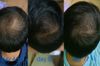
The user is considering RU58841 and has been using dutasteride since age 17. They are seeking affordable SARD options, mentioning ASC-J9, GT20029, and AH001.
A potential non-invasive topical treatment targeting the WNT Signaling Pathway for hair regeneration is being researched, with positive results on human hair follicle cells. Current effective treatments for hair loss include Minoxidil, finasteride, and hair transplantation.
Avixis Alfatradiol is a topical 5-alpha reductase inhibitor available in Latin America and Germany, but its effectiveness is questioned. A user reported worsened hair loss after using it and recommended finasteride instead due to its proven effectiveness and lower cost.
The conversation discusses using NAC and quercetin as supplements for hair loss, with some users also mentioning finasteride. NAC is highlighted for its potential benefits, but concerns about its safety and absorption are also raised.
CRISPR treatments for blood disorders have been approved, leading to discussions about its potential for treating hair loss (AGA). A study showed that editing a gene related to DHT sensitivity could lead to hair regrowth, suggesting CRISPR may eventually be used for AGA, but it's expected to be expensive and not soon available.
The conversation is about someone planning to use cb-03-01 for hair loss because they experience side effects with other treatments like finasteride, minoxidil, and RU58841. They have not found progress pictures online and are considering sharing their own experience with cb-03-01, which is expensive.
Clascoterone powder is now available, but it's expensive and not widely discussed due to past ineffective results at higher concentrations. Users are skeptical about its effectiveness and are seeking reliable sources.
Experimenting with the effects of creatine and finasteride on DHT levels, as well as a discussion regarding the potential link between creatine supplementation and hair loss.
GHK-Cu and AHK-Cu peptides show limited success for hair loss, with skepticism about their effectiveness and concerns about misleading claims. Users report better results when combined with treatments like finasteride, dutasteride, minoxidil, and other methods.
The conversation discusses the potential of a new hair loss treatment, GT20029, which may prevent hair loss by destroying androgen receptors on the scalp. Users express hope for the treatment's success and speculate on its usage routine, effectiveness, and possible side effects.
Kintor's GT20029, a treatment for hair loss, has completed Phase 1 successfully, showing promise as an androgen receptor degrader that could potentially regrow hair. It is considered more effective than Pyrilutamide, with infrequent dosing and minimal systemic absorption.
Clascoterone shows promising results for hair regrowth in men with androgenetic alopecia, with potential FDA approval by 2026. It acts as a topical androgen receptor blocker, offering a new treatment option with minimal side effects compared to existing treatments like finasteride.
The conversation is about seeking updates on the hair loss treatment RCH-01, specifically its next phase and any news from Shiseido. The user recalls someone being in contact with a researcher or company representative.
The conversation discusses using PGE2 as a hair growth stimulant, comparing it to minoxidil, and considering the addition of Setipiprant. Concerns about side effects like skin damage and cost are also mentioned.
User experienced slow gains with topical fin+min, switched to topical dut+min, and considered adding Eucapil. Another user suggested DUT may be less effective topically due to high molar mass and mentioned Fluridil as a weak anti-androgen that could help.
HMI-115, a newly discovered hair loss treatment that could potentially be effective for those with diffuse thinning and telogen effluvium. It is based on prolactin receptor antagonist signaling and has already undergone Phase I trials in women, with potential commercialization by 2027.
The conversation is about the progress of clinical trials for SCUBE3, a potential hair loss treatment. Specific treatments mentioned include Minoxidil, finasteride, and RU58841.
AHK-Cu peptide is considered better than GHK-Cu for hair growth. The user is seeking recommendations for trusted AHK-Cu peptide brands with third-party testing.
Concerns about the long-term safety of VDPHL01, an extended-release minoxidil, due to potential risks similar to Cantu syndrome, were raised, highlighting the lack of monitoring for chronic connective tissue changes. The conversation suggests that while the treatment may improve hair growth, it could lead to issues not detected in short-term trials.
The user observed that stopping nicotine and caffeine improved their scalp health while using oral finasteride. However, relapsing with caffeine and nicotine caused scalp tightness and inflammation.
A male in his early 20s with CCCA (scarring alopecia) started treatment with Finasteride, Fluocinolone, and Doxycycline. Steroid injections were suggested but not yet done.
The conversation is about whether 0.5 mg of finasteride reduces scalp DHT as effectively as 1 mg. Users suggest that even lower doses like 0.05 mg can significantly reduce scalp DHT.
Recruitment for a verteporfin trial and a separate hair cloning trial using verteporfin and other methods is underway, with locations in Jordan, NYC, Beverly Hills, and Memphis. Dr. Bloxham is conducting the hair cloning trial, and interested participants are encouraged to contact him directly.
Follicum discovered that their drug FOL-005 increased hair count by 12 hairs per cm2 in patients with less than 255 hairs per cm2 and is planning a phase 2b trial. They are currently fundraising for the trial, and the drug may also be effective for women.
The conversation is about finding a trustworthy and affordable source for RU58841 in Europe, with a comparison between Anagenic and Actifolic. The user seeks experiences from others in the EU to avoid receiving water instead of the product.
Users discussed experiences with Everychem's solution similar to PP405 for hair loss, noting some positive results like increased hair thickness and new growth. There was skepticism about the product's legitimacy and safety, with some users reporting early signs of effectiveness and others expressing concerns about the lack of evidence and safety profiles.
Clascoterone 5% solution is discussed as a potential new treatment for hair loss, offering an alternative for those who can't use finasteride or need additional options beyond minoxidil. Concerns about cost, effectiveness, and safety compared to existing treatments like RU58841 and finasteride are highlighted.
1 mg of finasteride is commonly prescribed because it is more effective for a larger number of people compared to lower doses, despite only slightly reducing serum DHT more than 0.2 mg. Serum DHT and scalp DHT are different, and 1 mg is believed to reduce scalp DHT more effectively, contributing to better hair growth results.