Search
for
Sort by
Community Join
780-810 / 1000+ resultscommunity Does RU58841 have to be refrigerated? Source?
RU58841 should be refrigerated. The KB Solution is more effective at delivering RU58841 to the scalp.
community Are we still getting the PP405 phase 2a results by the end of March?
People are discussing the anticipated release of PP405 phase 2a results, expected by the end of March, with some skepticism about its effectiveness. There is cautious optimism due to past experiences with similar treatments like Breezula, despite concerns about the lack of presentation at the AAD 2026 conference.
community When to switch finasteride/dut?
community What happens if you place a biodome on your scalp?
community 2022->2026, 3.5 years Fin, no min, trans male
community 3 month update - 0.5 Finasteride daily & 1 x Minox daily
User took 0.5mg Finasteride daily and 1x Minoxidil daily for 3 months, experienced positive hair growth and temporary side effects. Recommends sticking with treatment and adjusting dosage if needed.
community Anagenic replied on availability of gt20029
The conversation is about the availability of gt20029 for hair loss treatment, indicating that it will not be available for purchase soon. No specific treatments were discussed.
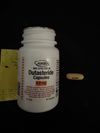
community Switched to Dutasteride After 13 Years on Finasteride: Is Camber Legit?
The user switched from finasteride to dutasteride to address temple hair loss and obtained generic oral minoxidil. They are questioning the legitimacy of Camber's dutasteride compared to other options.
community 15 months on the Big 3! My journey so far…
A user's progress after 15 months of using the "Big 3" treatments for hair loss (finasteride, minoxidil and micro needling) as well as Nizerol 2%. The post encourages others to seek out available information on hair loss treatment and reassures them that if it doesn't work, it is only hair.
community 13 months Progress on Dut + Minox. I am happy.
The conversation is about someone's 13-month hair regrowth progress using 0.5 mg Dutasteride daily, 5% Minoxidil twice daily, Biotin tablets, and Sebizole shampoo. They are happy with the results.
community GT20029: How It Works for Hair Loss - Hair Loss “Cure”
GT20029 is a potential treatment for androgenetic alopecia, addressing the root cause by targeting androgen receptors, unlike Minoxidil or Finasteride. It is seen as a preventative measure rather than a regrowth agent, with hopes for market release soon.
community (Good) crown progress in 3 months
The user experienced good crown progress in 3 months using finasteride, collagen, vitamins B, C, D, zinc, and dermarolling. They are pleased with the results after a hair transplant on the front and mid scalp.
community 02/28/22 to 02/28/23 Oral Finasteride 1mg/daily, Biotin, & Curly Girl Method
The conversation discusses a year-long hair loss treatment from February 28, 2022, to February 28, 2023, which included daily oral finasteride (1mg), biotin supplements, and the Curly Girl Method. Progress pictures were shared to show the results.
community 5 Month Finasteride Update & Caboki Hair Fiber Review
Hair loss discussion includes treatments like hinoki tree oil and procyanidin b2. Experiences and effectiveness of these treatments are shared.
community 6 months oral Fin 1mg + Min 3mg

community 33M Considering Switch from Topical to Oral Finasteride for Temples and Crown
A 33-year-old is considering switching from topical finasteride to oral finasteride due to application difficulties with long hair. They are concerned about potential shedding with oral finasteride and are seeking advice on dosage and whether their crown shows signs of thinning.
community Pp405 AAD presentation tomorrow - fingers crossed - what to expect?
New hair loss treatments PP405 and VDPHL01 are discussed with skepticism and hope, alongside existing treatments like minoxidil and finasteride. Users express frustration over limited progress since the 1980s but remain cautiously optimistic.
community Anyone who used topical bicalutamide/estradiol/cyproterone acetate /spironolacton? (Need advice)
A user is seeking advice on the efficacy and side effects of homemade topical solutions for hair loss, specifically bicalutamide, estradiol, cyproterone acetate, and spironolactone, as they cannot access RU58841 or pyrilutamide.
community 25M (2.5mg Oral Min + 1mg Oral Fin Daily)
community Kintor Pharma Announces Completion of Patient Enrollment in Phase II Clinical Trial of GT20029 for Treatment of Androgenetic Alopecia in China
Kintor Pharma completed patient enrollment for a Phase II trial in China for GT20029, a potential new treatment for hair loss. Some believe GT20029 could replace finasteride if effective, while others discuss finasteride's limited efficacy and potential underreported side effects.
community Any active Kx-826 Pyrilutamide group buys happening?
The conversation discusses organizing group buys and tracking progress for Kx-826 Pyrilutamide, a hair loss treatment. Participants express optimism about upcoming results and concerns about self-reporting bias.
community Micro needling and ptd-dbm progress
The conversation is about using micro needling and PTD-DBM for hair loss treatment. The user applies PTD-DBM drops on weekdays and performs micro needling weekly.
community 5 meses usando Dut + min ... Transplante agendado para agosto 2027
community Fin 3 Month Progress
A 23-year-old noticed crown thinning and started using 1.25mg finasteride, biotin supplements, biotin/collagen shampoo, and 1% nizoral shampoo. After 3 months, they reported improvement and side effects that subsided after 2 months.
community Update for PP405 - phase 2b underway
PP405 is advancing to Phase 2b trials, showing promise from Phase 2a. It may be available in 3-6 years, with trials using a topical gel.
community GT-20029 should be much more superior than finasteride
GT-20029 is discussed as a potential hair loss treatment, with concerns about its safety and systemic absorption compared to finasteride. Users express skepticism about its effectiveness and safety, noting that it may not surpass existing treatments like finasteride and minoxidil.
community One Year Final Update 24M (Fin + Min)
community After 3 months of Oral Fin & Min 28m
community my ru58841 solution has crystals at the bottom after refrigerating for 2 months
RU58841 solution developed crystals after refrigeration. Letting it reach room temperature and shaking can dissolve the crystals.