The conversation is about finding a source for Alfatradiol 0.1% as most available products are 0.025%. A suggestion was made to use four times the dosage of the 0.025% product.
Choosing between KB and PG solutions for applying RU58841, considering factors like scalp oiliness and absorption. Some users prefer KB for being gentler, while others use PG and recommend washing hair before application for better results.
The potential stability of pyrilutamide in a mixture with water, and how it could be used in combination with Minoxidil and Finasteride to treat hair loss.
The conversation humorously discusses the fictional "Post PP405 Syndrome" and the idea of starting a foundation or cult around it. It mentions skepticism about the effectiveness of PP405 and jokes about future therapies.
An arthritis drug, baricitinib, is discussed as a potential treatment for autoimmune alopecia, not androgenetic alopecia. Ritlecitinib is also mentioned as a possible treatment for scarring alopecia.
GT20029 is a potential treatment for androgenetic alopecia, addressing the root cause by targeting androgen receptors, unlike Minoxidil or Finasteride. It is seen as a preventative measure rather than a regrowth agent, with hopes for market release soon.
PP405 is a potential new hair loss treatment that might replace finasteride and minoxidil, but it is still in clinical trials and may not be available until 2028-2031. There is skepticism about its effectiveness, with only a 20% increase in hair density observed in some participants.
The conversation discusses interest in participating in PP405 trials for hair loss treatment, with users expressing uncertainty about eligibility due to location. Participants are eager for updates and willing to pay for shipping if trials are limited to America.
A new hair loss treatment, PP405, is moving from phase 2A to 2B in clinical trials, sparking discussions about its potential to regrow dormant hairs and its impact on existing treatments like Minoxidil and finasteride. Some users express skepticism, while others are hopeful about its future effectiveness.
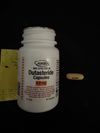
The conversation is about someone's 13-month hair regrowth progress using 0.5 mg Dutasteride daily, 5% Minoxidil twice daily, Biotin tablets, and Sebizole shampoo. They are happy with the results.
HMI-115, a potential treatment for hair loss that can reverse miniaturization and make individual hairs thicker, as evidenced by data from macaques given the treatment and one subject in the phase I trial.
Han Bio plans to start clinical trials for a new hair multiplication technology this year, which could significantly reduce the cost and time of hair transplantation. The technology uses a single hair strand to cultivate enough cells for 30,000 hair strands.
The conversation discusses using GHK-Cu for hair loss, with one user suggesting subcutaneous administration for better control. The effectiveness of topical application is questioned due to a lack of reliable reviews.
PP405 is a topical gel being tested for hair regrowth in adults with androgenetic alopecia. Volunteers aged 18-55 are needed for a 16-week trial in several US locations.
The conversation is about a user sharing their 3-month progress with finasteride, minoxidil, and weekly derma rolling for hair loss. Some suggest buzzing the hair off to better apply treatments and consider a hair transplant in the future.
The conversation discusses maintaining hair regrowth using minoxidil and finasteride and whether using gt20029, which degrades androgen receptors, would affect this. Fluridil, a similar treatment, can disable over 90% of active androgen receptors.
KX-826 Phase II results show that a 0.5% concentration performs better than 1% for treating male pattern baldness. Concerns about receptor upregulation from long-term DHT antagonism were mentioned.
The conversation discusses impressive results from a 28-day application of a hair loss treatment. Users compare it to their experiences with Minoxidil and Dutasteride, noting excitement over the new findings.
The conversation discusses using USB microscopes for scalp photos and provides a link to an overview of trichoscopy. Treatments mentioned include Minoxidil, finasteride, and RU58841.
TDM-105795 showed promising hair growth results, with higher efficacy than placebo and minimal side effects. It activates dormant hair follicle stem cells and may maintain gains without immediate loss, unlike minoxidil.
A user is concerned about hair loss in the temple area despite using Minoxidil and finasteride for 10 months and is curious if PP405 can help. Responses indicate uncertainty about PP405's effectiveness, with some optimism about future treatments and AI speeding up drug discovery, but emphasize waiting for clinical trial results.
Pyrilutamide did not show effectiveness in regrowing hair compared to a placebo, but it may still help maintain existing hair by preventing DHT from causing follicle miniaturization. Some users believe it could be beneficial when used with other treatments like minoxidil, finasteride, and dutasteride.
The FDA will now require only one clinical trial for drug approval, potentially speeding up the release of hair loss treatments like PP405. Pelage is expected to present full results of PP405 Phase 2a trials and move to Phase III in mid-2026.
JeremySoCa's DHT level was 29 ng/dl, considered low, and Estradiol was 26.1 pg/dl within the normal range. They are using topical finasteride for hair loss and had a thyroidectomy due to Graves' disease.
The conversation discusses sourcing pyrilutamide from China for hair loss treatment, highlighting its potency compared to other AR antagonists like bicalutamide and RU58841. The user expresses interest in trying pyrilutamide despite mixed results in clinical trials.
Bicalutamide blocks androgen receptors, preventing testosterone and DHT from binding, which can help with hair loss but may cause feminization. It is not recommended for those who do not want feminization effects.
A user is seeking advice on mixing GHK-cu/AHK-cu with minoxidil for hair loss treatment. They are asking for recommendations on the correct mixing ratios and any experiences with copper peptides.
The conversation is about adding crushed bicalutamide or spironolactone to a topical mix with finasteride and minoxidil to suppress testosterone in hair follicles, similar to what RU58841 does. The user cannot obtain RU58841 in their country and is seeking advice on this alternative approach for hair loss treatment.