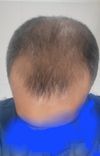
Minoxidil is commonly used for male pattern baldness, but Procapil is considered to have fewer side effects and be more effective. The user seeks information or experiences regarding Procapil.
The conversation discusses the effectiveness of adding RCP (redensyl, capixyl, procapil) to a hair loss treatment regimen that includes minoxidil and finasteride. Users share experiences, suggesting RCP may not be as effective as minoxidil, but could be useful for creating topical solutions.
A 31-year-old experiencing rapid hair loss is considering whether to shave their head or use treatments. They were prescribed B12, topical finasteride 0.1%, and minoxidil 10% but are unsure about the correct dosage and potential side effects.
The conversation is about hair loss treatment progress using finasteride and GHK-CU over six months. Users discuss application methods and share experiences with GHK-CU and AHK.
A user shared their successful hair loss and gray hair reversal routine, which includes Minoxidil, Cetirizine HCl, Latanoprost, Dutasteride, Melatonin, Caffeine, Tretinoin, Vitamin D3, and Vitamin E. They also use a red light cap, oral Minoxidil, and are developing new treatments.
Finasteride and minoxidil are discussed as hair loss treatments, with warnings about minoxidil's toxicity to cats. Suggestions include hair transplants, dutasteride, and humorous alternatives like red light therapy and rosemary oil.
Minoxidil, dutasteride, and copper peptides are used in a tattooing method for hair regrowth, with some users noting better results compared to oral treatments. Copper peptides are considered to have minimal impact, but the method may reduce side effects.
Treating hair loss with various remedies, such as Cetirizine and the Big3 complex (minoxidil, finasteride, and RU58841), which have properties like adipogenic, anti-fibrotic and anti-inflammatory. References to research studies are also included.
The conversation discusses interest in peptides for hair loss, specifically mentioning ahkCU and ghkCU. A user is considering adding ghkCU to their treatment regimen.
The user is seeking help with using Ell-Cranell for hair loss treatment. They are unsure about the correct application method and dosage. They also inquire about combining microneedling with topical alfatradiol and question a study that referred to alfatradiol as a hair growth inhibitor in male mice.
Scientists discovered a sugar gel, 2dDR-SA, that increased hair growth in mice. Users discussed its potential, comparing it to other treatments like Minoxidil and finasteride.
PP405 and GT20029 are new hair loss treatments with different mechanisms from traditional options like Minoxidil and Finasteride. PP405 targets hair follicle stem cells to reactivate growth, while GT20029 works as an androgen receptor deleter, both requiring ongoing use for effectiveness.
A user diagnosed with Crohn's disease is concerned it might contribute to balding. They have been using keto shampoo, finasteride, and oral minoxidil, which improved their hair but not significantly.
Hair regrowth treatments for cis-males include Minoxidil, Finasteride, and RU58841. Estrogen and testosterone blockers can help restore hair loss but may not suit everyone.
The user has been using a treatment regimen for hair loss for 8 months, including topical 5% minoxidil, 2.5 mg daily minoxidil, 5 mg finasteride every other day, and vitamins. They shared progress pictures showing little change in the crown area.
The post discusses using Carnitine Tartrate, Potassium Chloride, and Niacin to reduce hair shedding, with the user experiencing significant improvement. The user also suggests considering a ketogenic/paleo diet for those with insulin resistance-related hair loss.
Copper peptides, specifically GHK-Cu, are discussed as a potential addition to hair loss treatments, possibly working synergistically with Minoxidil to convert vellus hair into terminal hair. The effectiveness and credibility of copper peptides are questioned due to the lack of widespread discussion and potential conflict of interest from the product's creator.
Exploring treatment options for male pattern baldness, including minoxidil, finasteride, and RU58841, with a focus on Eucapil, a topical agent. The post also discusses research from various sources about the efficacy of these treatments.
The user has been using topical finasteride since October without improvement and is considering adding a caffeine product with dimethylglycine. Another user suggests caffeine is more promising and advises consulting a dermatologist about the lack of progress with finasteride.
PP405 is discussed as a potential hair loss treatment, but its effectiveness and safety are uncertain. Some users express skepticism, while others are hopeful, comparing it to existing treatments like Minoxidil and Finasteride.
PP405 is a new hair loss treatment targeting dormant hair follicles, with ongoing trials. Some users consider stopping finasteride and minoxidil to join trials, while others doubt its effectiveness.
The conversation is about a user unsure if their dermatologist-prescribed treatment is Minoxidil and concerned about its safety for cats. The treatments discussed include Minoxidil, finasteride, and RU58841.
PP405 shows initial promise for treating androgenetic alopecia, with safety confirmed in early trials, but skepticism remains due to limited data. Further trials are needed to determine its true efficacy and potential market impact.
The conversation is about the use and application of CB-03-01-2 (Breezula) for hair loss, including questions about its form, how to apply it, and the duration 10g would last. Specific treatments discussed are Minoxidil, finasteride, and RU58841.
Whether topical caffeine can be as effective for hair growth as minoxidil and finasteride, with various replies discussing the efficacy of these treatments and criticism of Dr. Huberman's research methods.
A user is considering mixing 5% topical minoxidil with Alpecin Caffeine Liquid to enhance its effect, while also using oral finasteride. They seek feedback on potential efficacy loss and downsides of this mixture.
The user felt pressured during a hair transplant consultation at Bosley, where they were advised to undergo FUT surgery and use a laser cap for maintenance, but did not meet with a doctor. Other users recommended seeking a second opinion from reputable doctors like Dr. Rassman and suggested trying finasteride first.
A new drug, PP405, is being discussed as a potential cure for baldness, with hopes it could be more effective than Minoxidil and Finasteride. Users are skeptical about its effectiveness and the need for lifelong use.
The conversation is about the progress of clinical trials for SCUBE3, a potential hair loss treatment. Specific treatments mentioned include Minoxidil, finasteride, and RU58841.