Search
for
Sort by
Community Join
540-570 / 1000+ results
community My hair receding/thinning 20m what’s should I do?
A 20-year-old is experiencing hair thinning and receding. Suggested treatments include Minoxidil, finasteride, and RU58841.
community Progress on once daily topical Finasteride, Pyrilutamide and WAY-316606
The conversation discusses progress with a hair loss treatment regimen that includes once daily topical Finasteride, Pyrilutamide, and WAY-316606. Specific treatments for hair loss are being shared and discussed.
community TCA 35% chemical peel, don't try this shit at home.
The conversation discusses using a TCA 35% chemical peel on the scalp to potentially improve hair growth by addressing fibrosis and enhancing the effectiveness of topical treatments. The user also mentions trying microneedling and other methods like topical metformin and dutasteride for hair regrowth.
community Update from December's Pyrilutamide GB?
community RU58841 legit source from europe and china
A user is seeking advice on purchasing RU58841 from Biolab Shop in Poland and is looking for trustworthy sources that deliver to Germany from Europe or China. They are interested in the product's composition and user experiences.
community Pyrilutamide cease and desist from Kintor
Considering a hair transplant, using Pyrilutamide, the potential availability of CosmeRNA, and the significance of taking Minoxidil and Finasteride for long-term results.
community Even if the new drugs succeed, how are we gonna apply so many topicals?
New hair loss treatments like GT20029, Clascoterone, and PP405 are being discussed, with concerns about how to apply multiple topicals alongside existing treatments like minoxidil and finasteride. Suggestions include creating a routine, mixing treatments, or minimizing redundancy in treatment stacks.
community Crown recovery update - 7 months of treatment
A 29-year-old reports positive hair recovery after 7 months using liposomal topical finasteride and minoxidil, low-level light therapy, and vitamins, following a 3600 graft DHI procedure. They experienced no side effects from the topical treatment, unlike with oral finasteride.
community Replicel Info - Possible Info Date
Replicel's results were delayed, but Shiseido might share data at BioJapan on October 11. Users are hopeful for new treatments like RCH-01, potentially eliminating the need for finasteride or minoxidil.
community 2 year transformation, 21 yr Male.
community Breezula(CB)Phase3Results Date
Breezula's phase 3 results are expected in July or August, with commercialization possibly in two years. There are concerns about delays and effectiveness, and the cost may be high.
community Anyone else have one chad hair? This thing has somehow held on for dear life for years and years, like an inch past my hairline. Should donate this mf’s follicle to science
Hair loss discussion with a focus on a single resilient hair, jokingly called "chad hair," that remains despite hairline receding. Some users suggest microneedling and hair follicle cloning as potential treatments.
community Crown recovery update - Nov 2024 to now
A 29-year-old shares progress on hair recovery using a daily liposomal topical mix of finasteride and minoxidil, iRestore device, and several vitamins. They report no side effects from the topical treatment, unlike previous issues with oral finasteride.
community Low level chronic allergies and hair loss
Hair loss can be influenced by chronic low-level allergies, and treatments like fexofenadine or topical cetirizine may help with regrowth. The user avoids finasteride, dutasteride, and minoxidil, and has tried Regenera Activa and PRF sessions.
community People who had grafts harvested from beard to cover their crown how is your beard today ?
community Ligand Chem cease trading Pyrilutamide
Pyrilutamide, a possible hair loss treatment, ceasing to be traded due to patent laws; and the hope that this indicates it may be a legitimate treatment.
community help me out gng need sources of cb , pyrilutamide , fluridil , aflatridol etc
The conversation is about finding sources for topical anti-androgens like CB, pyrilutamide, fluridil, and aflatridol for hair loss treatment. The user is considering using CB powder from IndiaMart but is concerned about side effects from finasteride and minoxidil.
community Hair Regrowth Following a Wnt- and Follistatin- Containing Treatment: Safety and Efficacy in a First-in-Man Phase 1 Clinical Trial: Scientific, Peer-Reviewed Dermatology Article Indexed with MEDLINE/PubMed
A treatment containing Wnt and Follistatin was found to be safe and effective for hair regrowth in a Phase 1 clinical trial. Specific treatments discussed include Minoxidil, Finasteride, and RU58841.
community How aggressive can I push my stack?
A 21-year-old male is experiencing crown balding and is using RU58841, topical minoxidil, and plans to add dutasteride and oral minoxidil to his treatment. He seeks advice on increasing his treatment stack despite previous side effects like chest pain.
community Targeting multiple AGA mechanisms with commonly available substances
The conversation discusses using a multimodal approach to treat androgenic alopecia, including substances like gamma-linolenic acid, DHA, sulforaphane, melatonin, cetirizine, astaxanthin, fisetin, apigenin, curcumin, limonene, genistein, and berberine. Users also mention using ketoconazole, minoxidil, and low-level laser therapy (LLLT) as part of their hair loss treatment regimens.
community The fully haired elites are suppressing the hair loss cure.
The conversation humorously suggests that elites with full hair are suppressing a hair loss cure to maintain their dating advantage. It mentions treatments like hair systems, hair transplants, and medications such as Minoxidil and finasteride.
community 2020 is here, what’s the current state for “upcoming” treatments?
Minoxidil and finasteride are the main treatments for hair loss, with Breezula and hair cloning being explored. No definitive cure is available yet.
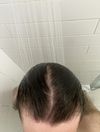
community Week 0 to week 11 of Minoxidil, Microneedling, and Nizoral (19 M)
A 19-year-old male used Minoxidil, microneedling, and Nizoral over 11 weeks for hair loss. The post includes before-and-after photos to show progress.
community never give up (19 to 21 years old)
The conversation is about a person recovering from drug-induced malnourishment, regaining hair growth, and improving overall health. They attribute their progress to stopping drug use, focusing on nutrition, and possibly using hormone replacement therapy (HRT).
community Can HMI-115 reverse miniaturization?
HMI-115, a potential treatment for hair loss that can reverse miniaturization and make individual hairs thicker, as evidenced by data from macaques given the treatment and one subject in the phase I trial.
community Brutal... RU58841 , is that true ?
The conversation discusses hair loss treatments, specifically Minoxidil, finasteride, and RU58841. Concerns are raised about the lack of studies on RU58841 and its potential effects.
community 2020 Hair and Scalp Treatments: A Clinical Guide (in Depth 350 Page Guide)
Treatments for hair loss, including topical immunotherapy, regenerative treatments, laser and light-based therapies, oral supplements, intralesional steroids, and new drugs like finasteride and minoxidil.
community Whats up with Prolactine these days?
The conversation discusses the potential role of prolactin in hair loss and mentions treatments like HMI115, mucuna pruriens, Zinc, and B6 P5P for lowering prolactin levels. It also touches on the use of natural compounds and the lack of studies due to funding issues.
community My Delusional Hope - This page becomes irrelevant in 2030s
People are hopeful for a permanent hair loss solution by the 2030s, considering options like hair cloning and treatments like pp405. Synthetic hair transplants have been attempted but are not effective long-term.