The conversation is about the availability of WINLEVI, a hair loss treatment, and the possibility of getting it compounded. The user is seeking information on when they can obtain the treatment.
The conversation is about a user trying to fund lab testing for RU58841 to verify its legitimacy, as there are doubts about its effectiveness. Some users express skepticism about RU58841, suggesting alternatives like KX-826.
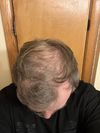
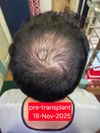
The conversation discusses hair loss treatment progress 11 weeks after a crown transplant. The user is using minoxidil every two days and biotin daily, without finasteride.
Hair loss treatments discussed include Minoxidil, Finasteride, and RU58841. HMI-115, a monoclonal antibody drug, is in phase 1 and 2 trials for different conditions, but its availability on the gray market is unlikely due to high production costs.
Hair cloning technology is advancing, with clinical trials for improved methods expected by 2028 and 2029, potentially offering a solution for hair loss if donor follicles remain. Organtech's expansion into other biotech areas may secure funding, but the effectiveness of cloning depends on the availability of androgen-resistant donor follicles.
The conversation discusses GT20029, a drug in Phase II trials that targets androgen receptors with minimal systemic effects, and TDM-105795, a growth stimulant with a different mechanism than minoxidil that may revive papilla stem cells. Both are potential new treatments for hair loss.
A 45-year-old male successfully slowed hair loss using Nizoral and low-level laser therapy (LLLT) but cannot use Minoxidil, finasteride, or dutasteride for medical reasons. He seeks suggestions for hair regrowth options.
PP405 shows promise in activating dormant hair follicles and increasing hair counts but lacks detailed efficacy data compared to minoxidil and finasteride. Opinions are mixed, with some optimism and skepticism about its effectiveness.
The conversation discusses Shiseido's RepliCel Hair-01 technology for hair regeneration, which aims to stop hair loss with minimal regrowth. Treatments mentioned include Minoxidil, finasteride, and RU58841.
CRISPR treatments for blood disorders have been approved, leading to discussions about its potential for treating hair loss (AGA). A study showed that editing a gene related to DHT sensitivity could lead to hair regrowth, suggesting CRISPR may eventually be used for AGA, but it's expected to be expensive and not soon available.
The conversation discusses the sale of a premixed KY19382 solution for research purposes, highlighting previous unsuccessful group buys and the formulation process. Prices and purchasing options for KY19382 solutions and powder are provided.
The conversation is about the safety of Breezula compared to RU58841 for hair loss treatment. The user believes Breezula is safer but less effective than RU58841.
A bodybuilder's hair transplant appears unnatural with a straight hairline and low density, possibly worsened by not using finasteride. The Turkish clinic is criticized for poor design, and the transplant may have been free for promotion.
Hair loss discussion involves experimenting with Sulforaphane from broccoli sprouts and possibly procyanidin b2. People seek updates on progress and if it's worth adding to treatment stack like microneedling.
HMI-115, a potential treatment for hair loss that can reverse miniaturization and make individual hairs thicker, as evidenced by data from macaques given the treatment and one subject in the phase I trial.
The conversation humorously discusses hair loss treatments, mentioning Minoxidil, finasteride, and RU58841. It suggests that affordable genetic therapy could be the ultimate solution.
Low-level laser therapy (LLLT) is discussed as a supplementary treatment for hair loss, with users recommending brands like LaserCap, Ideatherapy, Capillus Pro, and iRestore Pro. Users suggest combining LLLT with treatments like minoxidil and finasteride for better results.
The conversation discusses GT20029 as a potential cure for hair loss and includes information on specific treatments used. Minoxidil, finasteride, and RU58841 are mentioned as related treatments.
A user is using Minoxidil, finasteride, saw palmetto, and Minimalist RCP serum to address hair thinning, with some success but concerns about the long-term benefits of Minimalist. They plan to continue Minoxidil and finasteride for another year before considering a hair transplant.
A 27-year-old woman experiencing significant hair loss is using spironolactone, Nizoral shampoo, and betamethasone valerate. She questions the effectiveness of these treatments and whether she should seek another dermatologist.
The conversation discusses the differences between PG/Ethanol and KB solutions for RU58841 application, focusing on potential scalp irritation. KB solution is suggested for those allergic to PG, though both contain ethanol which can dry the scalp.
Eirion Therapeutics is recruiting for phase 1 of ET-02 in Texas, which showed promising hair growth results in non-clinical studies. ET-02 demonstrated significantly more hair growth compared to Minoxidil.
GT20029 is discussed as a potential treatment for androgenetic hair loss by targeting androgen receptors, unlike finasteride which reduces DHT broadly. Concerns include its effectiveness, genetic variations in androgen receptors, and availability, with some skepticism about its potential as a true alternative.
Pelage Pharmaceuticals raised $120M for their hair loss treatment, PP405, showing strong investor confidence despite limited data. There is skepticism about its efficacy and long-term effects compared to treatments like GT20029.
HMI-115 is a new drug developed by Bioinvent and licensed by Bayer, with mixed opinions on its potential effectiveness. Some users are skeptical and prefer proven treatments like Minoxidil, finasteride, and RU58841.
Some users of RU-58841 report cardiovascular symptoms like heart palpitations and chest tightness, which may be linked to its metabolites causing lung disease. The safety of RU-58841 is uncertain due to lack of long-term data and concerns about product purity, especially from gray market sources.