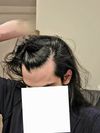
User shared 126-day progress using Fin/Min/Niz/Microneedling for hair loss. Others discussed microneedling depth, results timeline, frontal coverage, and switching to Dutasteride.
The conversation discusses purchasing experimental hair loss treatments KX-826, AHK-Cu, and PTD-DBM, with the user already using Minoxidil and having side effects from Finasteride. Concerns about the legitimacy of certain suppliers and the authenticity of products like pp405 are also mentioned.
The user has been using a combination of oral and topical minoxidil, topical finasteride, RU58841, Nizoral, and microneedling for hair loss treatment. They report improvement in hair thickness except for the crown area, which has not changed.
A user ordered RU58841 from a Chinese supplier, found it to be less than 99% pure, and plans to try a different seller next time. Concerns were raised about impurities, but the user believes they are likely inactive fillers rather than harmful substances.
The conversation discusses the impact of nicotine and caffeine on hair loss. The user has been using finasteride, minoxidil, and nizoral for hair loss treatment and is questioning whether to stop using nicotine products.
The conversation is about using GHK-Cu, a copper peptide, for hair loss treatment. Users discuss their experiences, dosages, and additional benefits like improved skin and energy.
The conversation discusses the application frequency of Koshine 1% for hair loss, with conflicting instructions between Amazon and the main website. The user is unsure whether to apply it once or twice daily.
Men discussing hair loss treatments, including bicalutamide, cyproterone acetate, dutasteride, minoxidil, and RU58841. They share experiences and concerns about side effects like infertility, liver health, and feminization.
The conversation is about starting a Discord group for people using KX-826 as their only treatment for hair loss, excluding those who are not serious or use multiple treatments. Someone agrees with the idea but mentions "GP :3," which is unclear.
A user discusses their rapidly receding hairline and a prescribed topical solution containing 7% Minoxidil, 0.1% Finasteride, and 3% biotinoyl tripeptide. The solution is a custom compound from their dermatologist, costing $50 for a one-month supply.
The clinic diagnosed the user with NW3 and AGA, noting thinning hair despite using finasteride for 3 years, and suggested PRP and Mesotherapy before considering a transplant. The user questions the necessity of these treatments without confirming retrograde alopecia and its treatability.
User regrew lost hair using microneedling, minoxidil, finasteride, Nizoral, fish oil, and collagen peptide. Progress was slow but constant, and patience was important.
Clascoterone (Breezula) shows a potential 500% increase in hair growth, possibly outperforming minoxidil and finasteride. It is in advanced trials, with hopes for FDA approval, but cost and side effects are concerns.
The user is considering blood tests to understand their receding hairline and is exploring brewer's yeast for its biotin content. They have been using topical Minoxidil, biotin, collagen, and microneedling, but are avoiding oral Finasteride and Dutasteride.
AHK and GHK are discussed for hair growth in the crown area, with questions about side effects and safety after microneedling. Users share experiences and concerns about these treatments.
The potential hair regrowth benefits of ASC-J9, a synthetic modified version of curcumin that is said to be more effective than Minoxidil and Finasteride. Reports from users suggest good thickening and temple regrowth with topical use at 0.025% concentration.
The conversation discusses a hair loss treatment called "nanoxidil," which is similar to minoxidil but with better absorption. Users are curious about its effectiveness for hair regrowth.
A 28-year-old male reported significant hair regrowth using 5mg minoxidil and 0.5mg dutasteride over five months, with occasional ketoconazole use. Users discussed side effects like stuffy nose and low libido, and shared experiences with different hair loss treatments.
A user is considering a 3-in-1 capsule containing Finasteride, Minoxidil, and Biotin for hair loss. Concerns are raised about Biotin's impact on the effectiveness of Finasteride and Minoxidil, and the cost is unclear without logging in.
High cost of studying 3α-Hydroxysteroid dehydrogenase in hair loss led to suggestions of crowdfunding for research. Users discussed using Procyanidin B2/melatonin topical treatment and tracking funds with blockchain.
The user achieved impressive hair regrowth using 1mg finasteride and topical minoxidil, and is now adding dutasteride due to recent diffuse thinning. They experienced initial side effects with finasteride but no longer have issues.
A 21-year-old shares their one-year progress using finasteride for hair loss, experiencing initial shedding but eventual regrowth, especially on the crown. They consider switching to dutasteride due to continued hair loss at the front temple and mid-scalp areas.
The conversation discusses hair loss linked to BDNF-increasing nootropics like Semax and Lions Mane. Suggested topical treatments include capsaicin, beta-glucan, and ginseng to counteract TGF-B activation.
The conversation discusses the delay in the PP405 Phase 2 study results, now expected by the end of 2025, and skepticism about research practices. There is also mention of optimism for Amplifica's AMP303 and a topical treatment in early testing.
A 30-year-old male is experiencing hair loss and is concerned about his receding hairline, seeking advice on his Norwood scale classification. He is apprehensive about using Minoxidil and finasteride as treatments.