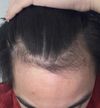
A user's two month update on their hair loss journey and the treatments they are trying, which include exosome injections, minoxidil, finasteride, and RU58841.
The conversation is about frustration over the delay in phase 2 results for a hair loss treatment called GT20029. One user suspects the treatment may have failed.
RU58841 worsened hair condition, causing thinning and unusual patterns. The user stopped using it two months ago but hasn't seen recovery, and there's speculation about androgen receptor upregulation.
A 49-year-old is documenting their hair regrowth journey using tretinoin cream, minoxidil foam, and finasteride. They report thicker hair and improved confidence, though progress feels slow and mentally challenging.
Clascoterone is suggested as an alternative for those who experience side effects from finasteride and dutasteride. It is not widely available yet, but some users are obtaining it from compounding pharmacies or suppliers like Echemi.
Pyrilutimide and CB-03-01, two treatments for hair loss, have similar clinical trial results despite different binding affinities to androgen receptors. Factors other than binding affinity, like the time a drug stays bound to the receptor, may influence their effectiveness.
The conversation is about a hair loss product that claims to use stem cells and ingredients like Capixyl, Redensyl, and Baicapil, with the user asking if anyone has looked into it. No specific treatments were discussed.
Age-linked hair loss is linked to disappearing collagen. Treatments discussed include minoxidil, finasteride, RU58841, tretinoin, microneedling, and collagen supplements.
The user is using a combination of microneedling, minoxidil, tretinoin, scalp massages, and red light therapy to address hair loss, with a focus on the hairline and temples. They emphasize the importance of scalp massages and have seen regrowth, attributing success to their comprehensive routine.
A 17-year-old is experiencing rapid hair loss from NW1.5 to NW3 in six months and feels dermatologists are unhelpful. They are using Minoxidil (Rogaine) and seeking advice on application.
Tretinoin can irritate seborrheic dermatitis, but using it with a moisturizer on calm skin may help. Parallel Health's skin microbiome testing and phage therapy are suggested for persistent issues.
Hair loss treatments, specifically 5AR inhibitors, can impact neurosteroids and sexual health. The effects of topical fin/dut on tissue-specific DHT levels are unclear.
Significant hair regrowth was achieved using Minoxidil, Dutasteride, and derma stamping. The user noted improved hair quality and thickness with no side effects.
The user reports significant hair regrowth using finasteride, topical minoxidil, and dermarolling twice a week, despite poor photo quality. Another user shares their experience with oral minoxidil and finasteride, noting ongoing shedding and considering additional treatments.
The user has been using topical minoxidil for over a year and added kx826/pyrilutamide to improve hair growth, avoiding finasteride due to side effects like lowered libido and panic attacks. They report positive results with reduced shedding and healthier hair, particularly in areas previously unresponsive to minoxidil.
Clascoterone showed promising initial results for hair regrowth but failed to replicate them, leading to disappointment. Users discuss combining it with minoxidil and other treatments, noting its current availability only in lower concentrations.
The conversation discusses how Caucasian men are more likely to experience hair loss due to genetic predisposition, with factors like the androgen receptor on the X chromosome playing a significant role. The user also expresses confusion about the evolutionary reasons for hair loss, especially in colder climates where it would seem beneficial to retain hair for warmth.
A user shared that after quitting caffeine and restarting oral minoxidil, they experienced significant hair regrowth, suggesting that caffeine might interfere with minoxidil's effectiveness by blocking adenosine receptors. They also mentioned side effects like water retention and dizziness, which subsided after a few weeks, and are not using any DHT blockers.
The conversation discusses using a multimodal approach to treat androgenic alopecia, including substances like gamma-linolenic acid, DHA, sulforaphane, melatonin, cetirizine, astaxanthin, fisetin, apigenin, curcumin, limonene, genistein, and berberine. Users also mention using ketoconazole, minoxidil, and low-level laser therapy (LLLT) as part of their hair loss treatment regimens.
Blocking DHT may slow down aging and improve skin, with users reporting positive effects from finasteride. Minoxidil and RU58841 are also mentioned as treatments.
Microneedling may enhance hair regrowth by transferring stem cells to dormant follicles, improving the effects of minoxidil. Users discuss using microneedling with needle lengths around 1.5mm to stimulate hair growth.
User discusses group buy for finerenone, a third-gen mineralocorticoid antagonist for hair loss treatment. Finerenone inhibits TGFb, NOX, and ROS, and improves renal and cardiac function; topical dose should be no more than 10mg per day.
Japanese scientists discovered ABM cells, enabling successful human hair follicle cloning, potentially curing hair loss. The treatment may be available in Japan by 2028, but it will be expensive and require travel.
Gut microbiome imbalances can cause scalp inflammation and affect hair follicles, potentially leading to hair loss. Treatments include finasteride, peptides like BPC-157, TB-500, KPV, and lifestyle changes such as diet and exercise.
Fluridil may decrease the number of androgen receptors in hair follicles by up to 95%. This suggests a different action mechanism from other non-steroidal antiandrogens like RU58841, indicating they might be used together.
The user experienced aggressive hair loss despite using oral finasteride and minoxidil, with additional issues like dandruff and eyebrow hair loss. They are considering switching to oral minoxidil and dutasteride due to scalp inflammation and lack of improvement.
A method for treating androgenic alopecia using minoxidil, antiandrogens, exercise, and cold exposure to promote hair growth. Environmental factors and lifestyle changes, like diet and exercise, can improve treatment effectiveness.
A user shared their 9-month progress using RU58841 at 2% daily for hair regrowth, initially starting at 5% but reducing the dose due to early signs of gynecomastia, which has since mostly resolved. They achieved their goal of regrowing hair at the temples and hairline.
Finasteride, Minoxidil, Bioneer CosmeRNA, Technoderma, Kintor, Hope, Breezula, and Follicum treatments showed increases in hair count, with Technoderma showing the highest increase at 24.3 hairs/cm². Amplifica has not yet published results.
A user is considering using topical finasteride, topical minoxidil, RU58841, and dermarolling twice a week to address hair loss after experiencing side effects with oral finasteride. They previously saw positive results with a topical spray containing finasteride, minoxidil, and tretinoin but discontinued use due to laziness.