Koshine is considered less effective than finasteride, dutasteride, and RU58841 for hair loss treatment. One user reported positive results with Koshine, but others found it ineffective.
A user thanks the group for sharing experiences, leading them to start finasteride, dermarolling, and castor oil, while using Nizoral and LLLT. They plan to reintroduce minoxidil later.
The user is using minoxidil, finasteride, dermarolling, and other treatments for hair regrowth, showing promising results in the temple area. Despite some skepticism, there is optimism about potential improvement.
People are discussing JXL-069 (PP405) for hair loss, with some experimenting with a 0.05% topical gel. Concerns about safety and efficacy persist due to limited testing and lack of official approval.
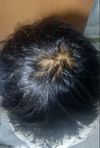
The user is using Dutasteride and Minoxidil for hair loss and is considering a shorter buzz cut to manage the appearance of thinning at the crown. They are unsure if a #1 buzz cut would look better than a #3 while waiting for the treatment to take effect.
CRISPR shows promise for treating hair loss by targeting specific genes. Current treatments include Minoxidil and finasteride, but CRISPR could offer a more precise solution, though it is still expensive and in early stages.
The conversation discusses GT20029 as a potential hair loss treatment that could act like a cure by targeting androgen receptors in scalp hair follicles. Specific treatments mentioned include GT20029, with a user expressing hope that it could make male pattern baldness obsolete.
GT20029 and PP405 are discussed as potential alternatives or complements to finasteride for hair loss treatment. GT20029 is entering phase 3 trials, while PP405 is seen as promising for regrowing hair and possibly eliminating the need for other treatments.
FCE 28260 (PNU 156765), an under-explored 5α-reductase inhibitor, showcases promising results in research by Giudici et al., outperforming well-known treatments like Finasteride in reducing the conversion of testosterone to DHT. Its superior efficacy, demonstrated through lower IC50 values in both natural and human recombinant enzyme studies, suggests it could offer more effective management of DHT-related conditions. Additionally, its lower molecular weight hints at better potential for topical application, potentially offering advantages in treating conditions such as androgenic alopecia. Despite its potential, it has not advanced in development, possibly due to financial limitations, leaving its therapeutic prospects and side effect profile largely unexplored.
Adipose-derived stem cell secretome showed significant improvement in hair density and growth, especially when combined with minoxidil, suggesting a synergistic effect. The study had limitations, including a small sample size and potential bias.
Men should feel socially accepted wearing hair systems, similar to how women use extensions and makeup. Treatments mentioned include minoxidil, finasteride, and hair transplants.
A user is comparing Capillus Ultra and Capillus ONE for hair loss treatment, questioning if the number of diodes matters. Another user suggests the OMG helmet as the only worthwhile option.
The conversation is about using topical cetirizine for hair loss treatment. The user mixes Aller-TEC tablets with a hair tonic but faces issues with the solution's consistency.
The product being promoted is likely ineffective for hair regrowth, as it lacks key ingredients like minoxidil and finasteride, and may rely on deceptive marketing tactics such as lighting tricks. Users suggest that proven treatments like minoxidil and finasteride are more reliable for hair loss.
Hair cloning updates, with potential costs ranging from $200,000 to $350,000. Clinical trials may start in 2020, and some hope for cheaper options in Turkey or China.
The conversation discusses a hair loss prevention regimen using a custom topical treatment with Dutasteride, Minoxidil, Latanoprost, Cetirizine, Tretinoin, Vitamin D3, and caffeine, along with supplements like iron, selenium, vitamin D, and vitamin B. The user advises against expensive treatments like LLLT caps and unnecessary natural supplements.
The conversation discusses alternative hair loss treatments beyond the commonly used Minoxidil and Finasteride. One user is trying diclofenac gel, caffeine + antioxidant serum, finasteride, ketoconazole shampoo, and has stopped using Minoxidil due to ineffectiveness, while another user has adopted lifestyle changes like exercise, diet, stress reduction, and topical caffeine, along with scalp massages and microneedling.
PP405 is a safer alternative to JXL069 for hair loss treatment because it penetrates the skin effectively and degrades in the blood, avoiding systemic toxicity. JXL069, when forced into the body, can cause dangerous side effects like lactic acidosis due to its inability to degrade safely.
The conversation is about a user offering free unused Eucapil after switching to finasteride for hair loss treatment. The user did not use Eucapil and is willing to give it away locally or ship it if costs are covered.
Procapil is claimed to be better than Minoxidil for hair loss. Users discuss the effectiveness of various treatments, including Minoxidil, Finasteride, RU58841, and The Ordinary's Multi Peptide Hair Serum.
Pelage is moving to Phase III clinical trials for PP405, a hair loss treatment, with results to be presented at a medical meeting. Users express skepticism and hope, comparing it to existing treatments like Minoxidil and finasteride, while discussing the potential for new hair growth in previously bald areas.
A user shared their positive experience with a non-surgical hair replacement system, detailing the purchase and maintenance process, including using Walker Lace Front Support Tape and various adhesives. They found the system secure and undetectable, allowing them to engage in active pursuits without issues.
A new hair loss protocol using FDA-approved topical treatments targets eight pathways, potentially improving results by 60-75% compared to the standard 40-50% from oral minoxidil and finasteride. The protocol includes minoxidil, finasteride, tacrolimus, cetirizine, bimatoprost, lithium gluconate, losartan, melatonin, NAC, caffeine, and tretinoin, with a monthly cost of $35-50 in Mexico and $80-150 in the US.
Stemson raised $15M for hair cloning, with hopes it becomes a reality in 10-20 years. Users are hopeful and discuss using Minoxidil and finasteride in the meantime.
Copper peptides are discussed as a potential alternative to minoxidil for treating hair loss. Users share interest and challenges in accessing copper peptides, with some mentioning specific products.
2% fucoidan alleviated AGA symptoms, promoted hair growth, and increased hair density in mice. Fucoidan is considered safe for humans as a supplement and topical skincare product, with potential therapeutic effects against AGA.
The conversation is about coping with hair loss and includes advice on improving overall appearance and confidence. Specific hair loss treatments mentioned are not discussed.
Topical high-dose vitamin C is discussed as a potential treatment for hair loss due to its ability to inhibit DHT and reduce histamine. Some users express skepticism about its effectiveness compared to treatments like finasteride.