Concerns about the long-term safety of VDPHL01, an extended-release minoxidil, due to potential risks similar to Cantu syndrome, were raised, highlighting the lack of monitoring for chronic connective tissue changes. The conversation suggests that while the treatment may improve hair growth, it could lead to issues not detected in short-term trials.
The experiences of users who have used RU58841 to treat hair loss, including both positive and negative effects. Some side effects reported include chest pain, joint pain in the hands, tinnitus, and increased heartbeat.
Pyrilutamide's effectiveness is questioned due to overstated claims and previous trial ineffectiveness, with some users opting for finasteride instead. Despite skepticism, some consider adding pyrilutamide to their regimen alongside treatments like bicalutamide.
Hair loss discussion includes treatments Minoxidil, Finasteride, and RU58841. HMI 115 shows anecdotal success in Phase I trial, users seek group buy for research chemical.
The conversation discusses the safety study of PP405, emphasizing that early trials focus on safety rather than efficacy, and that any efficacy data from such a short study should be viewed skeptically. It also highlights that the information released is primarily for securing funding, and that meaningful efficacy results are expected in later phases.
A user is joining a clinical trial for Clascoterone, a drug approved for acne but being tested for hair loss. They previously tried finasteride with limited success and plan to share updates on their experience with the new treatment.
A new hair loss treatment called TDM-105795 is discussed as a potential replacement or add-on to Minoxidil. Users express hope for new effective treatments.
A Phase 1 update for the HMI 115 clinical trial, which involves 16 participants and is expected to end in July 2023; as well as changes to the recruitment process, including treatment protocols with Minoxidil, Finasteride, and RU58841.
The conversation is about someone planning to use cb-03-01 for hair loss because they experience side effects with other treatments like finasteride, minoxidil, and RU58841. They have not found progress pictures online and are considering sharing their own experience with cb-03-01, which is expensive.
The conversation discusses the safety and cost of 2.5mg Dutasteride, and the potential for increased DHT reduction by combining Dutasteride with topical Finasteride. The original poster is currently using 0.5mg Dutasteride, 1.25mg oral Minoxidil, and a topical treatment, and is considering increasing the dosage to maximize results while avoiding less known treatments like RU58841.
A user started using RU58841 for hair loss and experienced anxiety and physical discomfort. Other users suggested avoiding the treatment due to similar side effects and recommended alternative treatments like pyri.
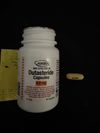
The user switched from finasteride to dutasteride to address temple hair loss and obtained generic oral minoxidil. They are questioning the legitimacy of Camber's dutasteride compared to other options.
The conversation is about a user whose insurance switched their prescription from finasteride to dutasteride, and they are considering whether to appeal the decision or continue with dutasteride. Other users suggest that both medications are affordable without insurance and that dutasteride may be more effective long-term.
The conversation is about the possibility of obtaining Pyrilutamide, a hair loss treatment, once it becomes available in China, despite it not being approved by the US FDA yet. The user wants to use Pyrilutamide along with other treatments.
The user is seeking an alternative to DualGen 15 that includes Minoxidil and Retinol but is less sticky and more convenient to use. They find the current product inconvenient due to its stickiness and long wait time before washing.
PP405 shows initial promise for treating androgenetic alopecia, with safety confirmed in early trials, but skepticism remains due to limited data. Further trials are needed to determine its true efficacy and potential market impact.
The conversation discusses skepticism about group buys for hair loss treatments, highlighting issues with unverified chemicals and the risks involved. It suggests stabilizing with dutasteride and minoxidil, and considering a hair transplant instead of experimenting with untested products.
Microneedling before applying topical finasteride or dutasteride may enhance their effectiveness by increasing local absorption in the scalp, despite concerns about systemic absorption. Users discuss combining this method with oral treatments and minoxidil, noting potential benefits and side effects.
New hair loss treatments like GT20029, Clascoterone, and PP405 are being discussed, with concerns about how to apply multiple topicals alongside existing treatments like minoxidil and finasteride. Suggestions include creating a routine, mixing treatments, or minimizing redundancy in treatment stacks.
GHK-Cu peptide injections are discussed for hair growth, but users report mixed results and suggest focusing on DHT management first. Some users combine GHK-Cu with treatments like Minoxidil and Dutasteride, but emphasize its benefits for skin rather than hair.
The acne medication Winlevi, which contains Clascoterone, is available in the U.S. and may slow down hair loss until a higher concentration treatment, Breezula, is released.
User asks if stacking Alfatradiol and Fluridil is effective for hair loss. Alfatradiol is a weaker, topical 5ar inhibitor, while Fluridil is an anti-androgen preventing DHT binding to hair follicles.
The user is exploring hair loss treatments and is interested in procyanidin B2 and annurca apples but has concerns about the effectiveness and availability of supplements. They cannot use Dutasteride or Finasteride and are considering Minoxidil with microneedling.
The conversation is about choosing an anti-androgen for hair loss treatment, with options being alfatradiol and pyrilutamide. Alfatradiol is considered a better choice due to its established use, while pyrilutamide is more experimental.
The conversation is about finding a reliable source to purchase Pyrilutamide that ships to the UK. There's also an openness to using RU58841 as an alternative.
The user is considering switching from finasteride to RU-58841 for hair loss due to side effects and is concerned about its safety around cats. They are also seeking dosage suggestions and alternatives like pyrilutamide.
A user is seeking a new source for RU58841 in the EU after their previous supplier stopped selling it. They mention considering Anagen, Actifolic, Minoxidilmax, and rudirect, and are using a treatment mixing RU58841 with Stemoxydine and Alfatradiol.
A user is seeking a new source for RU58841 in the EU after their previous supplier stopped selling it. They mention considering Anagen, Actifolic, Minoxidilmax, and rudirect, and are using a treatment mixing RU58841 with Stemoxydine and Alfatradiol.
The user stopped using Alfatradiol after 4 months due to no hair improvement and side effects like dry scalp and gallbladder pain. They are considering trying topilutamide, which is suggested as an alternative.