Search
for
Sort by
Community Join
30-60 / 1000+ resultscommunity RU58841 is a scam until proven otherwise
community TGF-Beta. Good or Bad? Help for treatment investment
TGF-B affects hair growth, both causing stem cell division and death depending on amounts. Amplifica's treatment injects Scube3 to increase TGF-B for hair growth.
community RU58841 carrier - PG/Ethanol vs KB solution?
The conversation discusses the differences between PG/Ethanol and KB solutions for RU58841 application, focusing on potential scalp irritation. KB solution is suggested for those allergic to PG, though both contain ethanol which can dry the scalp.
community Ru58841 2% ED 9 month progress
A user shared their 9-month progress using RU58841 at 2% daily for hair regrowth, initially starting at 5% but reducing the dose due to early signs of gynecomastia, which has since mostly resolved. They achieved their goal of regrowing hair at the temples and hairline.
community GHK-Cu is reducing my Seb Derm Flare
community CB-03-01 / Breezula Personal Results
The user shared their experience with CB-03-01 (Breezula/Clascoterone) for hair loss, noting reduced shedding and improved hair appearance but experiencing significant sleep disturbances and low energy due to HPA axis suppression. They decided to stop using it due to these side effects and are waiting for GT20029 as an alternative.
community Janoshik tests of Actifolic RU-58841 powder and GhK-Cu peptide
Actifolic RU-58841 powder and GhK-Cu peptide were tested and found to be accurate. The user is satisfied with the product's authenticity for hair loss treatment.
community VDPHL01 - could it be the replacement to DHT blockers?
community Pelage have presented only phase 2a. The rest of phase 2 for PP405 will be presented at a later medical meeting
PP405's phase 2a trial results were presented, focusing on safety and pharmacokinetics, with a future meeting planned to share the full dataset. The trial includes a randomized controlled portion and an open-label extension, with no indication of phase 2B completion.
community Does RU58841 have to be refrigerated? Source?
RU58841 should be refrigerated. The KB Solution is more effective at delivering RU58841 to the scalp.
community Making your own RT1640 in China
RT1640, a combination of cyclosporin A, minoxidil, and RT175, is discussed as a potential treatment for hair regrowth and repigmentation. The unique formulation aims to enhance hair follicle growth and restore hair pigment without the negative side effects of immunosuppressants.
community Any one here on GHK-RU58841? Does it work?
GHK-RU58841 is used for hair loss, with positive results when combined with finasteride, stemoxydine, redensyl, and alfatradiol. Users report effectiveness after adding finasteride.
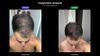
community M28 Great results in 5 month
A 28-year-old shared impressive hair regrowth results after 5 months using 1mg oral finasteride every other day, 2.5mg oral minoxidil daily, a 1mm dermastamp weekly, and daily scalp massages. The user is hopeful for continued progress.
community Why you can still look forward to PP405 and JXL-069
community TDM-105795 phase 2 results are in!
TDM-105795 showed promising hair growth results, with higher efficacy than placebo and minimal side effects. It activates dormant hair follicle stem cells and may maintain gains without immediate loss, unlike minoxidil.
community PP405 - hair stem cell stimulation
PP405, a topical LDH inhibitor, has shown to stimulate hair follicle stem cell proliferation in humans with moderate hair loss. They are advancing to more detailed trials this year.
community CB-03-01 users come forward!
The conversation discusses the potential of a new hair loss drug, CB-03-01, with users sharing their experiences and seeking advice on dosages and application methods. One user mentions using topical finasteride, minoxidil, dermarolling, and a clean diet for hair maintenance but is interested in CB-03-01 due to side effects from finasteride.
community Anyone else buy their Ru58841 direct from a chinese supplier?
The conversation discusses buying RU58841 directly from a Chinese supplier for cost savings. It mentions that companies like Anageninc and Actifolic do the same.
community RU58841 for 10 months- no results. Anyone else?
RU58841 not working for hair loss after 10 months. Concerns about purity of experimental drugs.
community September 2021 update from Dr. Kang-Yell Choi [Korean "cure"]
Dr. Kang-Yell Choi's company, CK Regeon, is developing a drug called KY19382 for hair regeneration, which involves creating fine wounds to activate stem cells. The drug is in the formulation development stage, targeting markets like the US and Korea.
community Wanting to try topical AHK-CU/GHK-CU
community Ru58841 completely got rid of my seb derm
RU58841 cured seborrheic dermatitis, oily scalp, dandruff, and scalp pain, improving hair health when combined with Minoxidil. Another user noted diet impacts their seborrheic dermatitis and that finasteride hasn't changed their condition.
community new way to activate stem cells to make hair grow
Stem cell-related treatments and drugs like RCGD423 and WAY are being tested for hair growth. Clinics are conducting tests on patients who haven't had previous treatments.
community 8 months minoxidil + dermaroller 0.5 mm (M50)
community 8 months of hair / scalp regrowth
community GT20029 China Phase II Trial For AGA Reached Primary Endpoint
The GT20029 tincture, a topical androgen receptor degrader, showed significant hair growth and good safety in a China Phase II trial for male androgenetic alopecia (AGA), with the 1% dose twice weekly identified as optimal. The company plans to initiate Phase III trials in China and Phase II in the U.S., and the treatment also shows promise for acne.
community Is the ru58841 from rudirect legit?
community Why TDM-105795 is not much talked about like GT20029 and HMI 115 despite having far better Trial results?
TDM-105795 showed better efficacy and safety in trials for hair loss, with a higher hair count improvement compared to GT20029 and HMI 115, but it's not as widely discussed. The user is questioning why this is the case.
community Brainstorming: upping your dermarolling game
The conversation is about enhancing dermarolling for hair loss by using topical peptides like tb-500 or GHK-Cu to aid in healing and hair growth, and whether anyone has experienced significant results from this method.