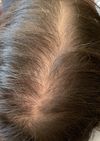
A user is considering a hair transplant in a "mohawk" pattern with scalp micropigmentation (SMP) on the sides and back, questioning its feasibility and appearance. Others discuss donor region quality, potential scarring, and alternative treatments like dutasteride and RU58841.
The conversation is about the potential of the RCH-01/Replicel hair loss treatment and its lack of updates since 2013, with the user expressing hope for its success and considering using Minoxidil, finasteride, and dermarolling in the meantime. Other treatments mentioned as promising are Breezula and Tsuji.
PP405 is considered as a potential hair regrowth treatment, but users are skeptical due to past product failures. They compare it to Minoxidil and Finasteride, questioning its effectiveness and the intentions of pharmaceutical companies.
The user experienced significant hair regrowth using finasteride and minoxidil, leading to doubts about proceeding with a planned hair transplant. Many suggest postponing the transplant to save grafts for future needs, as the current results are impressive.
Body hair transplants may look better if kept very short. People with limited donor regions or waiting for Verteporfin or FAK Inhibitors could consider this option.
A user shared progress pictures after 50 days of using finasteride, topical minoxidil, and ketoconazole shampoo for hair loss, noting significant hair growth and expressing surprise at the results. They plan to continue the treatment and possibly incorporate a dermastamp and increase minoxidil application if growth plateaus.
DHT causes hair loss by driving cells into senescence, and a polyphenol in black chokeberry may reverse this. A product using this theory is being considered for use alongside finasteride, minoxidil, and microneedling.
A 27-year-old male with diffuse hair loss, including the donor area, did not respond to finasteride, dutasteride, or minoxidil. He suspects his hair loss may be linked to a mild connective tissue disorder, possibly affecting the structural support of hairfollicles, rather than being purely hormonal.
Hair cloning is being developed by companies like Kangstem Biotech and Stemson, with potential availability in a few years. Initial costs are expected to be high, but prices may decrease over time.
Researchers finding that microRNA can potentially regrow 90% of lost hair, and the challenges involved in moving this research forward to human trials. Various treatments for hair loss, such as finasteride and minoxidil, have been discussed.
A user shared their experience with DIY PRP scalp injections for hair regrowth, using an EZ Injector and other at-home equipment. Another user reported success with at-home PRP treatments for 1.5 years, noting thicker hair and a stable hairline.
After suffering from hair loss and trying various treatments like finasteride, minoxidil, RU58841, and scalp micropigmentation without lasting success, the individual found freedom and a renewed sense of self by shaving their head and accepting their baldness. They encourage others struggling with hair loss to not waste years searching for a cure and to consider embracing a shaved head as a positive solution.
TGF-B affects hair growth, both causing stem cell division and death depending on amounts. Amplifica's treatment injects Scube3 to increase TGF-B for hair growth.
The conversation is about future hair loss treatments. Current treatments mentioned include finasteride, minoxidil, and RU58841, with potential future treatments like GT20029, TDM-105795, JW0061, and follicle cloning.
Follicium XR™ is a topical treatment for hair loss containing RU58841, AHK-Cu, GHK-Cu Peptide, caffeine, D-Biotin, methylene blue, keratin, and spermidine. RU58841 is considered the most effective ingredient, but concerns exist about its stability in water.
L'Oreal is working on hair cloning, with multiple companies using similar techniques, making hair cloning likely by 2030. The conversation expresses optimism about the progress and potential affordability of hair cloning solutions.
The user has been dealing with hair loss since middle school and has tried various treatments like mesotherapy, PRP, and red light therapy without success. Currently, they use minoxidil, finasteride, and dutasteride but are considering a hair transplant due to limited improvement.
The user is experiencing hair regrowth using 1mg oral finasteride daily, Minoxidil foam twice a day, and microneedling weekly with a 1.5mm needle. They are seeking feedback and suggestions to optimize their hair regrowth.
The user is experiencing hair regrowth in small clusters using oral minoxidil, oral finasteride, a red light cap, and Nizoral 2% shampoo. They are hopeful for continued improvement and thicker hair.
The conversation is optimistic about future hair loss treatments, highlighting Veradermics, Breezula, and PP405 as promising options expected by 2027-2028. The user expresses hope that these developments will prevent future generations from experiencing the same struggles with hair loss.
Hair loss discussion involves PRP (platelet rich plasma) treatment. PRP doesn't stop hair loss, only promotes regrowth; minoxidil is suggested as a better alternative.
A 35-year-old man had a 6400 graft hair transplant in Turkey after years of baldness, using finasteride, oral and topical minoxidil, and scalp micropigmentation. He is satisfied with the progress and plans further SMP touch-ups to enhance results.
Using PP405 and Clascoterone after a hair transplant may not cause issues if the transplant didn't achieve native density, but could lead to competition for blood supply if it did. Some users suggest waiting for these drugs to be available, as they might not significantly impact blood supply or regrowth.
ABS-201, a prolactin receptor blocker, shows promise in reversing hair loss and graying, with early success in macaques. Current treatments like finasteride, minoxidil, and RU58841 are still widely used, but new options like PP405 are eagerly anticipated.
Probiotics like L. reuteri ATCC PTA 6475 and B. longum BB536 may improve hair growth and density by reducing inflammation and reversing DHT damage. The user is trialing these probiotics personally, ordering them from the U.S. to Canada, and plans to continue if no adverse effects occur.
The user reports positive progress in hair regrowth using 1mg oral finasteride, 3mg oral minoxidil, biotin, vitamin D, red light therapy, and microneedling. They note thickening at the hairline and some regrowth at the temples.
A 29-year-old reports positivehair recovery after 7 months using liposomal topical finasteride and minoxidil, low-level light therapy, and vitamins, following a 3600 graft DHI procedure. They experienced no side effects from the topical treatment, unlike with oral finasteride.
PP405 shows significantly better early-stage hair regrowth results compared to minoxidil and finasteride, with 31% of users experiencing over 20% density increase in 4–8 weeks. Minoxidil and finasteride show minimal or no visible regrowth in the same timeframe.
Minoxidil, finasteride, and RU58841 are discussed as treatments for hair loss, with excitement around a new drug, PP405, and a reformulated oral minoxidil in trials. Concerns about cost, side effects, and long-term use are also mentioned.