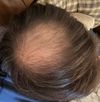
A 40-year-old shared progress pictures showing results after 3.5 months of using dutasteride for hair loss. The conversation likely discusses this specific treatment and its effects on hair regrowth.
The user experienced noticeable hair regrowth in three months using finasteride, minoxidil, and weekly dermastamping, while managing scalp inflammation with clobetasol. The user also uses a sea salt shampoo and rosemary conditioner to help maintain scalp health.
Clascoterone (CB) shows an excellent safety profile with no serious side effects, but its effectiveness may decline after six months, making it more suitable as an adjunct treatment with finasteride and minoxidil rather than a standalone solution. Some argue it could be better than finasteride due to its protection against testosterone, but its long-term efficacy remains debated.
The user is considering switching to oral dutasteride, topical minoxidil, retinoic acid, and clobetasol for hair loss treatment, after limited regrowth with finasteride and other topicals. They are seeking a source for clobetasol, as they believe it may help with their condition.
A dermatologist checked for hereditary hair loss using blood tests and plans to perform a trichogram. The user had slightly low Vitamin D3 levels, and the trichogram may help confirm androgenetic alopecia.
The user is excited about starting Clascoterone 5% for hair loss, a DHT blocker, and expects better results when combined with Minoxidil. The prescription costs $199 for 30 ml or $353 for 60 ml, and the user plans to cover the cost by driving for Uber.
A person shared their hair transplant experience at Diamond Hair Clinic, discussing the process, costs, and satisfaction with the results. They used Minoxidil, Duasteride, and vitamins for maintenance post-surgery.
The user experienced significant hair regrowth using a topical finasteride and minoxidil cream from Essential Clinic in Canada, and plans to switch to dutasteride and undergo a hair transplant in Mexico. They started treatment three months ago and have seen impressive results without side effects, using half the recommended dosage to extend the product's duration.
The user has been taking dutasteride for 8 months and finasteride before that, with normal DHT levels but high estradiol and prolactin, leading to sexual side effects. The user is disappointed with these results.
The conversation discusses how different factors can stimulate type 1 and type 2 isoforms of 5-alpha reductase, which are enzymes linked to hair loss. Specific treatments mentioned include oral Dutasteride and topical Finasteride.
A 17-year-old shares their hair loss treatment, using oral finasteride, dutasteride, stemoxydine, alfatradiol, and a placebo product, but cannot use minoxidil due to an allergic reaction. Others discuss similar treatments and question the use of dutasteride at a young age.
The conversation is about a potential new hair loss treatment called Breezula CB-03-01. Users are discussing updates on its development and sharing personal experiences with making or using it.
The user underwent a hair transplant and was prescribed dutasteride and minoxidil for 6 months to address crown thinning. They are skeptical about the short duration and consider continuing the medication longer.
The user switched from finasteride to dutasteride for hair loss and noticed elevated cholesterol levels, questioning if dutasteride caused this change. They also take Vitamin D, biotin, magnesium, ginkgo biloba, omega-3, and NAC, and are concerned about the impact of these supplements and their health on cholesterol levels.
Hair loss discussion includes potential HMI-115 treatment. Topical mucuna pruriens shows good results, blocking prolactin possibly more important than blocking DHT.
The conversation discusses the completion of a Phase II trial recruitment for Breezula (CB-03-01), a potential treatment for androgenic alopecia. Specific treatments mentioned include Minoxidil, Finasteride, and RU58841.
The conversation discusses a user's positive experience with hair loss treatments, including Duoxidil, oral Dutasteride, oral Minoxidil, and biotin, noting no side effects and effective results. The user plans to start a new cycle of Dutasteride and PRP sessions.
User shows temple area progress after hair transplant, using DUT every other day and oral Min 2.5 daily. Another user asks about number of grafts and cost.
The conversation discusses DHT blocking treatments for hair loss, specifically mentioning Minoxidil, Finasteride, and organic flaxseed oil containing omega-3 fatty acids. It highlights skepticism about alternative treatments and emphasizes the proven effectiveness of Finasteride and Dutasteride.
DHT Itch and its link to balding, with various treatments such as finasteride being discussed. Members shared their experiences of scalp itch before and after taking 5AR inhibitors, and potential underlying causes such as seborrheic dermatitis were discussed.
New hair loss treatments, including Breezula, VDPHL01, and PP405, are nearing Phase 3 trials, offering hope for effective solutions. Current treatments like finasteride and minoxidil remain effective, but early intervention is crucial.
Copper peptides may help with hair thickness and health, but their effectiveness in reducing DHT is uncertain. Minoxidil is being used, but finasteride is not available due to legal restrictions; ketoconazole shampoo is recommended for managing Malassezia-related issues.
Whether topical caffeine can be as effective for hair growth as minoxidil and finasteride, with various replies discussing the efficacy of these treatments and criticism of Dr. Huberman's research methods.
The conversation is about a hair care routine focused on microneedling and using DHI Hair Serum for temple hairline regrowth, without using minoxidil or finasteride. The user seeks advice on the best derma pen in India and feedback on their routine.
Ecklonia cava is suggested as an alternative to finasteride and dutasteride for hair growth, potentially offering benefits without their side effects. It is promoted for anti-aging, mood enhancement, and cognitive support.
The user experiences an itchy scalp and finds relief using shampoo and Zyrtec, which helps with inflammation. They are unsure if the issue is related to histamines or seborrheic dermatitis.
Peptides like GHK-Cu are discussed for hair regrowth, with mixed results; some users report no regrowth, while others notice thicker hair. Topical application is common, and proper sourcing and mixing are emphasized.
The user is considering microneedling versus a hair transplant (HT) for crown hair loss while currently using dutasteride and oral minoxidil. They are hesitant about microneedling due to potential scarring but are open to trying it before deciding on a hair transplant.
The user reduced serum DHT by 60% using Advanced Trichology's natural DHT blocker but saw no improvement in hair loss. They are considering switching to finasteride due to its proven effectiveness in inhibiting scalp DHT.