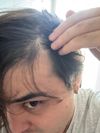
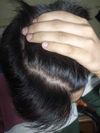
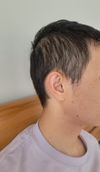
A 17-year-old is concerned about hair loss and shares photos for opinions. A user responds that the hair looks normal but is hard to assess from the images.
Intradermal botulinum toxin (BTX) injections effectively treat androgenetic alopecia (AGA) by inhibiting TGF-β1 secretion from hair follicles. Further research and long-term follow-up are needed to confirm these findings.
The user has been experiencing hair loss since having COVID and has low vitamin D levels; they are seeing some improvement in their crown and hairline after starting vitamin D supplements. Commenters suggest the hair loss pattern is consistent with male pattern baldness (MPD) and varies by individual.
A 21-year-old woman diagnosed with male pattern baldness (MPB) who is considering treatments such as spironolactone, minoxidil and finasteride to address her hair loss. The user also discusses potential solutions for concealing the appearance of her thinning hair, such as wigs or haircuts.
The user is experiencing reduced hair shedding and increased hair density after using finasteride, minoxidil, derma rolling, granactive retinoid, and Nizoral, while also taking testosterone and aromatase inhibitors. They question if they are a hyper responder to the treatments, despite mixed feedback from others about visible progress.
The conversation discusses using USB microscopes for scalp photos and provides a link to an overview of trichoscopy. Treatments mentioned include Minoxidil, finasteride, and RU58841.
The conversation discusses hair loss treatments, focusing on vitamin D and B12 deficiencies, and mentions using finasteride. It also suggests getting a biopsy to differentiate between MPB and other conditions.
The conversation discusses starting finasteride 1mg daily for hair loss and mentions a high baseline DHT level. Users comment on the unusually high DHT level and its potential causes.
The user believes Retrograde Alopecia may be linked to vitamin imbalances, specifically from taking too much Vitamin E, A, Zinc, and Selenium, and suggests it could be a middle ground between Androgenic Alopecia and Telogen Effluvium. Treatments for hair loss mentioned include Androgen inhibitors and improving lifestyle factors like nutrition and sleep, with topical melatonin also recommended for Retrograde Alopecia.
The conversation discusses a personalized hair loss treatment plan based on DNA test results, recommending Minoxidil, Dutasteride, 17-alpha Estradiol, Cetirizine, and PRP sessions. The test identifies a high risk of hair loss due to DHT but a good response to Minoxidil, suggesting a tailored approach to treatment.
Hair looks thinner in sunlight, and users discuss using hair fibers, minoxidil, finasteride, and considering dutasteride for hair loss. Hair fibers like Toppik help conceal thinning, and some users suggest additional treatments like derma stamping and micro-needling.
The user is experiencing aggressive diffuse thinning despite using 1mg oral finasteride daily, topical minoxidil twice, microneedling, and Nizoral for seborrheic dermatitis. They are considering switching to dutasteride or RU58841 but are advised to seek a second opinion to determine the cause of hair loss.
RU58841, an anti-androgenic compound, showed early promise for treating alopecia but faced challenges after its patent in 1997. Despite advancing to Phase II trials, safety concerns and financial struggles led Aventis to abandon its development. Proskelia, which later merged into ProStrakan, couldn't prioritize the drug, leading to its eventual stagnation and failure to reach the market.
The user experienced severe scalp itching and hair loss while on dutasteride, which they linked to caffeine and masturbation. They plan to cut out both to see if their hair density improves.
The post discusses a theory that hair regrowth after transplant is due to the angiogenesis process (new blood vessels forming), not because the transplanted hair is unaffected by DHT. The responses highlight the established belief in 'donor dominance' (the importance of the hair's origin in transplantation) and skepticism about the new theory.
Japanese scientists discovered ABM cells, enabling successful human hair follicle cloning, potentially curing hair loss. The treatment may be available in Japan by 2028, but it will be expensive and require travel.
Stem cell therapy shows promise in treating hair loss by mimicking DHT-resistant cells from the back of the head. Traditional treatments like finasteride are also discussed, but stem cells could potentially offer a more permanent solution.
Mallia Aesthetics has developed MAL-838, a hormone-free product derived from sCD83, which stimulates hair growth without disrupting the skin microbiome. sCD83 promotes hair growth by activating hair follicles and preventing cell death, offering a localized treatment without systemic side effects.
Diffuse thinning is worse than a receding hairline as it affects the entire scalp, complicating styling and hair transplants. Treatments like finasteride, minoxidil, dutasteride, and RU58841 are mentioned, with some users noting improved hair density.
A user with long-term hair loss has been using topical minoxidil, finasteride, RU58841, ketoconazole, and dermastamping for 8 months. They are unsure if the new hairs are miniaturized or vellus.
The user is experiencing excessive hair thinning and is unsure of the cause. They are seeking opinions on treatments like Minoxidil, finasteride, and RU58841.
Vitamin E and K deficiencies due to exocrine pancreatic insufficiency may affect hair growth. A scalp biopsy is recommended to check for autoimmune-related hair loss.
The user is experiencing hair regrowth with oral minoxidil and dutasteride but still has fragile hairs that easily pluck out from the front center. Despite improvements, the user is concerned about the persistent fragility and shedding of these hairs.
New hair loss treatments PP405 and VDPHL01 are discussed with skepticism and hope, alongside existing treatments like minoxidil and finasteride. Users express frustration over limited progress since the 1980s but remain cautiously optimistic.
ET-02 showed significant hair growth in five weeks, outperforming minoxidil, with a non-hormonal mechanism that avoids side effects of treatments like finasteride. A phase 2 trial is planned to further assess ET-02's efficacy and safety.
The conversation discusses why the difference between donor and balding hair isn't studied more to find a cure for hair loss. Treatments mentioned include Minoxidil, finasteride, and RU58841.
Thin, short hairs often appear in areas of hair loss but may not grow fully despite treatments like finasteride. Some users consider additional treatments like microneedling or hair transplants.
Combining therapies like scyllo-inositol, alpha-ketoglutarate, and autophagy-inducing supplements may enhance hair growth and prevent hair loss. Reporting individual results can accelerate progress in hair loss treatments.
Baldness is difficult to cure because current treatments like finasteride, dutasteride, and minoxidil only prevent hair shedding, and new developments are mostly ineffective. Botox shows potential in aiding skin regeneration and hair growth, but maintenance therapy with treatments like dutasteride and minoxidil may still be necessary.
The conversation discusses the difference between the commercially available Pyrilutamide and the version in clinical trials. It also mentions treatments like Minoxidil, finasteride, and RU58841 for hair loss.