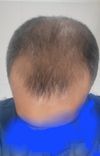
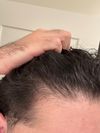
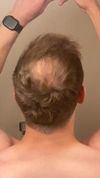
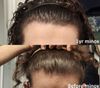
The conversation discusses interest in peptides for hair loss, specifically mentioning ahkCU and ghkCU. A user is considering adding ghkCU to their treatment regimen.
Male pattern baldness (MPB) may be influenced by androgen receptors in scalp hair follicles and potentially poor blood flow. Transplanted hair is not immune to DHT, and factors like inflammation and scalp tension might also contribute to hair loss.
The post and conversation discuss the unpredictable nature of diffuse thinning, a type of hair loss. Users share personal experiences, with some mentioning treatments like oral finasteride and toppik, and the need for patience with these treatments.
Aminexil/Kopexil may help reduce hair loss by addressing perifollicular fibrosis in androgenetic alopecia, but it lacks the extensive clinical backing of finasteride and minoxidil. Some users find it effective, but availability and cost are issues, especially in the US where it's not FDA-approved.
Calecim (PTT-6) Advanced Hair System is a 6-week hair restoration product using stem cell-derived ingredients to stimulate hair growth. Users are skeptical, calling it overpriced and ineffective, suggesting alternatives like LLLT devices or PRP treatments.
How androgens, including testosterone, can cause hair follicles to miniaturize in people with sensitivity to androgens, and treatments such as finasteride, dutasteride, minoxidil, RU58841, or fluridil may be used in combination for long-term treatment.
The user is exploring alternatives to hair transplants due to a weak donor area and is currently using finasteride, minoxidil, dermapen, low-level laser therapy, Nizoral shampoo, and a high-protein diet. They plan to switch to dutasteride and consider adding RU58841, while rejecting hair systems and considering a buzz cut.
Despite using dutasteride, RU58841, minoxidil, and ketoconazole for years, the user continues to experience severe hair loss and thinning. They seek advice after multiple dermatologists confirmed androgenetic alopecia (AGA) but offered no effective solutions.
The user is experiencing significant hair loss and has tried treatments like PRP therapy, topical and oral Minoxidil, Finasteride, and dietary changes, with limited success. They are concerned about losing more hair before a scheduled hair transplant and are advised to postpone the transplant to allow medications more time to work.
Evidence-based treatments for androgenic alopecia, such as minoxidil, finasteride, low-level laser light therapy, dutasteride, platelet-rich plasma, and topical ketoconazole. It discusses the efficacy, safety, and mechanism of action of these treatments, as well as future developments in understanding this polygenic condition.
User discusses potential hair loss treatment SCUBE3 and shares mixed opinions on its effectiveness. One user reports positive results after applying SCUBE3 following microneedling.
The user is seeking help with using Ell-Cranell for hair loss treatment. They are unsure about the correct application method and dosage. They also inquire about combining microneedling with topical alfatradiol and question a study that referred to alfatradiol as a hair growth inhibitor in male mice.
A 34-year-old man experienced hair loss during the COVID-19 pandemic and successfully treated it using minoxidil, reducing shampoo use, and taking fenugreek. He saw significant improvement within a few months and no longer appears bald.
User noticed receding temples, used minoxidil and microneedling with positive results. Added saw palmetto and eucapil, experienced shedding and thinner hairline, but no side effects.
A 25-year-old male experiencing hair loss suspects stress-related alopecia and is hesitant to use Minoxidil due to potential side effects. Another user suggests it might be androgenic alopecia and recommends starting finasteride.
Injectable GHK-CU and BPC157 were discussed for hair loss, but users did not notice significant hair changes. BPC157 was noted to help with shoulder issues.
A 33-year-old attempted hair regrowth after 10 years of baldness using topical finasteride, minoxidil, micro-needling, a laser cap, and later oral dutasteride. They noticed some regrowth, especially vellus hairs, and are considering a hair transplant or other treatments despite side effects.
Intradermal botulinum toxin (BTX) injections effectively treat androgenetic alopecia (AGA) by inhibiting TGF-β1 secretion from hair follicles. Further research and long-term follow-up are needed to confirm these findings.
GHK-Cu is discussed as a potential hair loss treatment, with claims of promoting hair growth and possibly reversing gray hair, though strong clinical evidence is limited. The user also mentions using Minoxidil, red light therapy, and microneedling.
A user has been losing hair for two and a half years after a tropical trip and illness. A dermatologist prescribed betamethasone valerate 0.1% lotion, but the user is unsure if it's safe or effective for general hair loss.
Onion juice, when applied topically, is an effective treatment for Alopecia Areata, showing significant hair regrowth in both males and females. The study suggests it could be interesting to test its effectiveness on Androgenic Alopecia.
The user is concerned about potential hair thinning and has been using minoxidil and finasteride for a year, noticing some new hair growth. They recently started microneedling to improve minoxidil absorption and seek advice on applying it to the crown area.
The conversation discusses how Caucasian men are more likely to experience hair loss due to genetic predisposition, with factors like the androgen receptor on the X chromosome playing a significant role. The user also expresses confusion about the evolutionary reasons for hair loss, especially in colder climates where it would seem beneficial to retain hair for warmth.
The user is concerned about hair loss, particularly at the crown, and is using topical finasteride and ketoconazole shampoo but avoids minoxidil due to side effects. Opinions vary, with some suggesting the hair looks worse, while others see no change or slight improvement; additional treatments like oral finasteride and micro-needling are suggested.
A 33-year-old experienced hairline improvement using finasteride and minoxidil, later stopping minoxidil while continuing ketoconazole shampoo. Initial side effects included shedding, reduced libido, and anxiety, but these resolved, leading to a full hairline recovery.
User tried various hair loss treatments with limited success. RU58841 was effective but caused side effects, now trying Eucapil and continuing Finasteride.
Hair loss is causing distress and self-esteem issues, with discussions on treatments like finasteride, minoxidil, and hair transplants. Some suggest topical treatments or lifestyle changes, while others stress the importance of confidence and self-acceptance.
User noticed black dots along the hairline and temples, questioning if it's regrowth. They are using a regimen including Dutasteride, oral and topical Minoxidil, and a compounded topical treatment.
Treating hair loss with various remedies, such as Cetirizine and the Big3 complex (minoxidil, finasteride, and RU58841), which have properties like adipogenic, anti-fibrotic and anti-inflammatory. References to research studies are also included.
PP405 is ineffective for miniaturized, fibrosed hair follicles in androgenetic alopecia. AMP303 may activate hair follicle stem cells, but minoxidil and finasteride are still the main treatments.