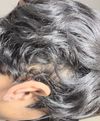
User discusses Eucapil for hair loss treatment and asks if it helps with itchy scalp. People share their experiences and results, including maintenance or slight improvement.
Microneedling at depths greater than 0.6 mm may damage miniaturized hair follicles, with 0.5 mm showing better results for hair regrowth. Combining microneedling with minoxidil enhances absorption, but caution is advised to avoid damaging follicles.
The conversation discusses a user's two-year hair regrowth progress using finasteride, minoxidil, and microneedling. One user asks for a timeline of progress, another comments on hair length, and the original poster mentions using microneedling sporadically.
The conversation is about using a dermastamp for hair loss treatment and concerns about a potentially scam product, pp405. It suggests sticking with known treatments like finasteride and minoxidil.
A user's scalp issue that may be causing their hair loss and potential treatments, such as salicylic acid, finasteride, minoxidil, ketoconazole shampoo, and visiting a dermatologist.
User had minor hair transplant in 2020, used Fin since 2008, Min since 2014, and added microneedling in 2022. Routine was irregular with no severe effects.
The user had a hair transplant of 3400 grafts, primarily focusing on the hairline, and is happy with the results four months post-surgery. They used topical minoxidil, oral minoxidil, finasteride, and topical dutasteride, along with microneedling and Nizoral, and the procedure cost around $12,000.
Ell-Cranell and Eucapil are discussed as hair loss treatments, with Ell-Cranell being a weak estrogen and DHT inhibitor that may reduce hair loss without systemic side effects. Alfatradiol is the active ingredient in these products.
User experienced hair loss due to anorexia and stress, leading to a difficult journey with wigs and self-esteem. Hair regrowth occurred with spironolactone, but recent hair loss returned, causing uncertainty and emotional struggles.
The conversation is about microneedling for hair loss. The conclusion is that there are differing opinions on the depth and frequency of microneedling, with some studies suggesting positive results with 1.5mm depth once a week, while others prefer lower depths and less frequent sessions.
A user shared an 8-month update on their hair transplant surgery, which used 1800 grafts for aesthetic refinement, resulting in a natural-looking hairline and improved confidence. The procedure was performed by Dr. Abhinav Kumar, and the user is pleased with the results.
User experienced significant hair regrowth with multiple treatments, but then had a brutal shedding period, losing progress. Others questioned the number of treatments used and potential side effects.
A potential non-invasive topical treatment targeting the WNT Signaling Pathway for hair regeneration is being researched, with positive results on human hair follicle cells. Current effective treatments for hair loss include Minoxidil, finasteride, and hair transplantation.
The user shared progress pictures showing improvement in hair growth after one year of using finasteride and minoxidil. They are considering microneedling to further improve their hairline and have chosen to use a derma stamp.
The conversation is about the struggles of dealing with diffuse thinning at a young age and the lack of significant improvement after using treatments like finasteride and minoxidil. Some suggest additional methods like derma rolling, microneedling, and hair fibers, while others share their own experiences and encourage persistence with treatment.
The user has been using Roman 3-in-1 topical treatment (finasteride 0.3%, minoxidil 6%, tretinoin 0.025%) and a 0.25 mm dermaroller for four months to address crown thinning. They are seeking advice on whether to continue with the current regimen, switch to oral finasteride, or try dutasteride for better results.
The potential hair regrowth benefits of ASC-J9, a synthetic modified version of curcumin that is said to be more effective than Minoxidil and Finasteride. Reports from users suggest good thickening and temple regrowth with topical use at 0.025% concentration.
Clascoterone 5% shows promising hair growth results but is criticized for high cost and unclear effectiveness compared to other treatments like finasteride. Glenmark is testing a combination of Clascoterone 7.5% and Minoxidil 5% in India.
Minoxidil and microneedling are causing new hair growth, particularly in the center of the hairline, creating a more prominent M shape. Users discuss the progress and potential benefits of the treatment.
A user is using Minoxidil, finasteride, saw palmetto, and Minimalist RCP serum to address hair thinning, with some success but concerns about the long-term benefits of Minimalist. They plan to continue Minoxidil and finasteride for another year before considering a hair transplant.
Combining therapies like scyllo-inositol, alpha-ketoglutarate, and autophagy-inducing supplements may enhance hair growth and prevent hair loss. Reporting individual results can accelerate progress in hair loss treatments.
The conversation is about someone's progress with hair loss treatment using topical finasteride, minoxidil, and weekly manual microneedling. A reply indicates that they have made noticeable progress.
A user who experienced significant hair regrowth over the course of one year by following a regimen including finasteride, minoxidil, Nizoral shampoo, dermarolling, biotin vitamins, vitamin D3 and collagen peptides. The post includes before/after photos and details on the brands used.
After 10 months, the user's hairline and midscalp look thick following a 6100 graft FUE hair transplant in Turkey. They plan to address the crown in a few months.
The user experienced significant hair regrowth using topical finasteride for 8-9 months, topical minoxidil for 3 months, and weekly microneedling with a stamp. They reported no side effects from the topical treatments and are considering a hair transplant for further improvement.
The conversation discusses applying a topical solution containing 0.01% tretinoin, 1.5% azelaic acid, and 5% minoxidil for hair loss. It is recommended to apply tretinoin at night and use sunscreen during the day to prevent skin damage.
A user is experiencing temple hair recession and is seeking alternatives to finasteride. They are considering castor oil, coconut oil, and derma rolling, and have seen some improvement with Zenegen.