PP405 might take 3-4 years to be available, but some claim Everychem offers a similar product, though its effectiveness is debated. Users discuss the risks of using untested grey market products and the potential for adverse effects.
Hair follicle stem cells remain in bald individuals, but progenitor cells do not, raising questions about hair regrowth claims by Pelage. PP405 is discussed as a potential treatment, with skepticism about its effectiveness compared to existing treatments like Minoxidil and Finasteride.
The conversation discusses using microneedling with copper peptides, specifically GHK-Cu, for hair loss treatment. Some users combine it with minoxidil and topical finasteride, applying peptides either topically or through injection.
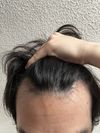
The conversation is about a user assessing their hair loss as Norwood 1.5 and discussing their use of oral minoxidil and finasteride for 2.5 years, which improved their hair density. They are content with their current progress but hope to reach Norwood 1.
The conversation discusses alternatives to 5AR inhibitors for hair loss treatment, suggesting options like minoxidil, KX-826, pyrilutimide, microneedling, and topical bicalutamide. Concerns about side effects and the effectiveness of these treatments are also highlighted.
A breakthrough in hair follicle cultivation using induced pluripotent stem cells (iPSCs) has been achieved, producing large hair follicles suitable for transplantation. Clinical trials for this hair multiplication technology are planned in partnership with Yinguan Biotechnology.
Hair loss discussion includes treatments like Minoxidil, Finasteride, and RU58841. Eucapil (fluridil) is approved as a cosmetic hair-care agent in Europe, but users question the level of testing required for approval.
The conversation discusses using RU58841, topical finasteride/minoxidil, MK677, and microneedling as treatments for hair loss. MK677 is mentioned as a growth hormone that improves hair health and recovery from microneedling.
The user switched from finasteride to 2.5 mg dutasteride daily and added 1% pyrilutamide to address persistent scalp itch, but the itch remains. They also use 2% ketoconazole and 2.5% selenium sulfide shampoo for temporary relief.
PP405 shows potential for hair growth by increasing terminal hair and converting vellus hairs, but results are modest and more waiting is needed. It complements existing treatments like minoxidil and finasteride, but won't replace them.
Hair loss treatments discussed include Minoxidil, Finasteride, and RU58841. A user asks about alfatradiol's availability, public perception, and usage in Germany.
Pyrilutamide, a potential topical treatment for male pattern baldness, and the user's anticipation of its Phase 2 trial results. Several users discussed their experiences with Finasteride and RU58841, while others voiced skepticism about the efficacy of Pyrilutamide.
The conversation discusses skepticism about the effectiveness and formulation of a $10 RU58841 gel from a Korean brand, questioning if ethanol is used to hold the active compounds. Concerns are raised about the feasibility of selling it at such a low price.
The conversation discusses potential advancements in two hair loss drugs, KX-826 and GT20029, and the interest in whether transitioning from oral finasteride to these drugs would maintain hair growth. One reply expresses skepticism about the compounds' representation.
Capilia Longa and Scandinavian Biolabs are discussed, with skepticism about their effectiveness and value. The conversation suggests avoiding these products due to high cost and perceived lack of results.
PP405 and ABS-201 are promising treatments for male pattern baldness. PP405 shows rapid hair growth in human trials, while ABS-201 shows significant regrowth in animal studies but is still in early human trials.
FOL-005 claims to be more effective than Minoxidil and Finasteride but lacks anti-DHT properties, leading to potential reduced efficacy over time. Concerns are raised about misleading marketing and the safety of alternative treatments like Pyrilutamide and Clascoterone.
Minoxidil is commonly used for male pattern baldness, but Procapil is considered to have fewer side effects and be more effective. The user seeks information or experiences regarding Procapil.
The conversation discusses the application frequency of Koshine 1% for hair loss, with conflicting instructions between Amazon and the main website. The user is unsure whether to apply it once or twice daily.
Breezula's phase 3 results are expected in July or August, with commercialization possibly in two years. There are concerns about delays and effectiveness, and the cost may be high.
PP405 is being discussed as a potential treatment for hair loss, with uncertainty about its effectiveness compared to existing treatments like finasteride, dutasteride, and minoxidil. There is cautious optimism, but its impact on hair transplants remains unclear.
Discussing and researching different treatments for hair loss, including RU58841, Dutasteride, Spironolactone, Retin-A, Stemoxydine (Neogenic), Copper peptides, Superoxide Dismutase, NANO, and Eucapil.
The user is taking 0.5mg finasteride and 0.5mg Loniten orally daily, using Eucapil twice weekly, and Minoxidil foam once daily for hair loss. They believe Eucapil effectively stops hair loss despite side effects like breast growth.
The conversation discusses verteporfin as a potential treatment for hair regeneration, which could lead to unlimited hair transplants by healing the donor area. Some users are considering using verteporfin now, while others are hopeful it will be available for future hair transplants.
The user completed a Clascoterone study with no observable changes in hair loss and plans to try microneedling and Minoxidil next. They will microneedle weekly and apply Minoxidil twice daily, except on the night of microneedling, and compare results after six months.
A user inquired about purchasing KX-826 for hair loss if approved in China. Another user provided links to purchase it without waiting for U.S. approval.