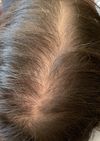
Stem cell-related treatments and drugs like RCGD423 and WAY are being tested for hair growth. Clinics are conducting tests on patients who haven't had previous treatments.
The user experiences histamine intolerance with alcohol-based hair loss treatments like Rogaine foam and seeks alternatives. Suggestions include alcohol-free and PPG-free topical minoxidil or finasteride, and trying Spectral products with different solvents.
A 22-year-old male is experiencing hair loss and has been using topical minoxidil and anti-dandruff shampoo for six months without improvement. Suggestions include adding finasteride to the routine and considering treatments for potential scalp issues like seborrheic dermatitis.
Bryan Johnson used a customized hair restoration formula from Roots byGA, which includes Minoxidil, Cetirizine HCl, Latanoprost, Dutasteride, Melatonin, Caffeine, Tretinoin, Vitamin D3, and Vitamin E. Many users are skeptical of the effectiveness and uniqueness of the treatment, suggesting that standard treatments like Minoxidil and Dutasteride are more reliable.
Focus on scalp health, not just DHT suppression, is crucial for hair regrowth. Effective treatments include Hair Restoration shampoo, LLLT laser cap, microneedling, and topical finasteride.
Upcoming hair loss treatments for those who can't tolerate DHT blockers, focusing on Minoxidil, microneedling, and ketoconazole. Promising treatments include GT20029, PP405, KX-826, and RU58841, though RU58841 may not be safe.
The user has been dealing with hair loss since middle school and has tried various treatments like mesotherapy, PRP, and red light therapy without success. Currently, they use minoxidil, finasteride, and dutasteride but are considering a hair transplant due to limited improvement.
A product that makes hair look thicker and healthier without promoting regrowth. Discussions include treatments like minoxidil, finasteride, red light therapy, and a serum with caffeine and peptides, with mixed effectiveness opinions.
Hair regrowth treatment involving 3aHSD enzyme shows 6% improvement in 18 weeks. Sulforaphane, L-Menthol, and Dexpanthenol are potential ingredients for new hair loss solution.
The conversation discusses a hair loss treatment formulation containing cyclosporin, minoxidil, and tacrolimus, and mentions ongoing research on hair color reversal. The treatment showed high efficacy in restoring hair color in trials with 40 to 50 people.
Maneup GHK-Cu peptide was used for hair loss, resulting in some hair growth in the receded hairline, but the new hairs were dry and split easily. Users discussed their experiences with this treatment.
Combining therapies like scyllo-inositol, alpha-ketoglutarate, and autophagy-inducing supplements may enhance hair growth and prevent hair loss. Reporting individual results can accelerate progress in hair loss treatments.
RU58841 is used by some for hair loss when finasteride and minoxidil are ineffective. Users report mixed results, with some experiencing side effects like chest pain and mood changes.
A user reported less hair shedding using melatonin spray and is considering trying topical oxytocin or estrogel for hair growth, but is concerned about potential side effects like breast development. Topical oxytocin has been found to promote hair growth by increasing growth factors.
The conversation discusses the use of pyrrolidinyl diaminopyrmidine oxide (triaminodil) compared to minoxidil for hair loss treatment. The user is considering switching from 5% minoxidil to a product containing 5% triaminodil.
User plans to use hair fibers regularly and asks about re-application, consistency, rain protection, and Boldify vs Toppik. Others provide advice and share experiences.
The conversation discusses treating male pattern baldness in a transgender woman using cyproterone acetate, finasteride, and biotin. The original poster shared their experience for others who might be in a similar situation.
The conversation discusses Shiseido's RepliCel Hair-01 technology for hair regeneration, which aims to stop hair loss with minimal regrowth. Treatments mentioned include Minoxidil, finasteride, and RU58841.
The conversation is about trying unconventional treatments for hair loss, such as green tea, coffee, cocoa, multivitamin pills, red wine, onion, honey, herbs, and hydrogen peroxide. The user is seeking feedback on these methods to avoid ineffective ones.
The conversation is about using GHK-Cu, a copper peptide, for hair loss treatment. Users discuss their experiences, dosages, and additional benefits like improved skin and energy.
Copper peptide topical is being discussed for hair health, with some users noting it may improve hair volume. There is uncertainty about its effectiveness against hair loss.
Researching the effects of scalp trauma on hair growth, with some users suggesting experimenting with a soldering iron or derma pen, and others bringing up studies that suggest this may be an effective treatment.
Dutasteride and high-dose Minoxidil are the primary treatments maintaining hair, with additional supplements and therapies like red light offering minimal extra benefit. The discussion criticizes promoting expensive hair care products when basic medications are doing most of the work.
Using detox or clarifying shampoos like OUAI Detox Shampoo and K12 Detox Shampoo can help reduce hair fall caused by mineral buildup from hard water. Rinsing hair with soft water after showering is also recommended.
OP is experiencing significant hair loss despite GFC and PRP treatments and has abnormal lab results. They are advised to consult a hair-focused dermatologist for further evaluation.
If treatments like finasteride, minoxidil, PRP, microneedling, and exosomes fail, opinions differ on using a hair system or shaving. Some choose shaving for simplicity, while others consider hair systems despite maintenance concerns.
Taking care of hair condition through the use of shampoo, conditioner, oils and scalp scrubs, as well as advice on using Nizoral and Naturebox Olive Shampoo. Replies also included discussion about whether a bad shampoo could be causing hair loss.
Shiseido's S-DSC hair regenerative treatment in Japan focuses on improving existing hair by thickening miniaturized follicles, not creating new ones. There is limited patient feedback and long-term data available.