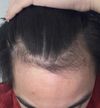
The user has been taking oral finasteride for 2 months, experiencing more hair loss but noticing some fuzzy hair growth on the scalp. They are questioning if this new hair growth is significant.
Exosomes combined with fractional picosecond laser treatment were effective in treating androgenetic alopecia and promoting repigmentation in white hair patches. The role of exosomes in hair repigmentation, particularly in conditions like poliosis, is not well-studied.
The conversation discusses treating male pattern baldness in a transgender woman using cyproterone acetate, finasteride, and biotin. The original poster shared their experience for others who might be in a similar situation.
A 20-year-old male has been experiencing hair loss for three years due to a vitamin D deficiency and has seen no improvement after 3.5 months of taking supplements. Another person suggested that if the hair loss follows a pattern, it might be regular baldness rather than due to the deficiency.
A user's scalp issue that may be causing their hair loss and potential treatments, such as salicylic acid, finasteride, minoxidil, ketoconazole shampoo, and visiting a dermatologist.
User shared 9-month hair regrowth progress using a Fin/Min spray from HIMS, with additional microneedling. Other users praised the results and discussed the effectiveness of topical treatments.
Dermatologists use treatments like oral minoxidil, finasteride, and RU58841 for male-pattern baldness, considering side effects and patient preferences. Photobiomodulation is noted as mildly effective but costly, while PRP is debated for its effectiveness compared to microneedling.
The user is experiencing aggressive diffuse thinning despite using 1mg oral finasteride daily, topical minoxidil twice, microneedling, and Nizoral for seborrheic dermatitis. They are considering switching to dutasteride or RU58841 but are advised to seek a second opinion to determine the cause of hair loss.
User experienced scalp itching and hair loss, but found relief with oral minoxidil. Others suggest "DHT itch" as a possible cause and recommend finasteride and ketoconazole to address it.
A user plans to experiment with creating new hair follicles using methods like derma rolling, applying lithium chloride, tannic acid, and various other substances including caffeine, ketoconazole, and raspberry ketones. They also consider using anti-inflammatories, immunosuppressants, and DHT inhibitors to potentially improve results.
A 34-year-old woman is experiencing diffuse hair loss and irregular periods, possibly due to long-term spironolactone use. She is considering minoxidil and finasteride for treatment and seeking medical advice for androgenic alopecia and hormonal imbalances.
Increased Malassezia and Cutibacterium in the scalp microbiome are linked to higher sebum production and inflammation in androgenetic alopecia (AGA). Treatments include ciclopirox shampoo, benzoyl peroxide shampoo, clobetasol propionate, calcipotriol, minoxidil, finasteride, and dutasteride.
Minoxidil, PRP, low-level light therapy, stem cell therapy, mesotherapy, Acell, and microneedling are discussed as treatments for thickening fine hairs in NW5 hair loss sufferers. A hair transplant may be necessary for significant improvement.
Individuals with oily scalps, dandruff, and diffuse thinning hair loss who have managed to either halt the loss or regrow their hair by using topical finasteride and minoxidil as well as microneedling and ketoconazole 2% shampoo.
People who experience diffuse thinning of their hair and how they cope with going swimming. People discussed wearing a swimming cap, making jokes out of it and accepting that it's genetics.
The conversation discusses using CB0301/Clascoterone as a potential treatment for hair loss, especially for those experiencing side effects from finasteride and dutasteride. The user currently uses oral minoxidil and considers combining it with other treatments like kx826, DHT blocker supplements, and 2% Nizoral shampoo.
The user experienced new hair growth after switching from oral finasteride to topical RU58841 with minoxidil and undergoing stem cell therapy. They noticed new hairs at the hairline and temples, but are unsure which treatment is responsible.
The user experienced temporary peach fuzz growth using a product with procapil and later tried minoxidil and finasteride without significant results. Their boyfriend has used minoxidil and finasteride consistently for over five years with sparse hair improvement.
A user is treating their advanced hair loss with a regimen including topical finasteride, minoxidil, hydrocortisone, stem cell serum, peptide serum, multivitamins, he shou wu tea, derma pen, argan oil, and a derma roller. Replies suggest it's too early to judge progress and recommend staying consistent, with one suggesting oral minoxidil as an additional option.
The conversation discusses hair regrowth, with users sharing experiences and advice on using finasteride, minoxidil, and dermarolling to stimulate hair growth. Many users report seeing small hairs, which they consider a positive sign, though opinions vary on whether these hairs will develop into thicker, terminal hairs.
The conversation discusses severe hair shedding and thinning, with the original poster using finasteride, oral minoxidil, and other supplements without improvement. The discussion highlights the possibility of telogen effluvium and the importance of addressing potential underlying health issues, such as stress and gut health, rather than assuming diffuse unpatterned alopecia (DUPA).
Eli Lilly's drug baricitinib showed effectiveness in treating alopecia areata, with higher doses resulting in significant hair regrowth compared to placebo. The treatment is not for male pattern baldness.
A user is trying fluridil/topilutamide for hair loss and experiencing side effects like pain in the testicles and genital discomfort. They previously had adverse effects with finasteride, dutasteride, and RU58841, and are considering other treatments like topical dutasteride and spironolactone for maintenance before a hair transplant.
The user experienced initial hair density improvement with finasteride, but later felt scalp pain and a plateau in results. They added alfatradiol for scalp inflammation and divi scalp serum to their routine, and are curious if others have similar experiences.
The conversation discusses using Pyrilutamide, Alfatradiol 0.1%, and Minoxidil for hair loss treatment. Pyrilutamide is described as a strong antiandrogen, and Alfatradiol is noted for its effectiveness in inhibiting DHT on the scalp.
The user is experiencing severe hair loss and color change despite low testosterone levels and healthy lifestyle changes. They have tried ketoconazole shampoo and consulted a dermatologist, who found no scalp issues but suggested using Toppik for coverage.
The user "Bishiop" shared a comparison of their hair progress over 9 months using oral finasteride, topical minoxidil, and microneedling. Other users commented on the results and shared their experiences with hair loss treatments.
The user treated seborrheic dermatitis by cutting sugar, improving sleep, using four different shampoos, and occasionally using steroids. Their hair is growing back thicker and new hair is appearing.