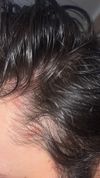
The conversation discusses hair loss treatments, specifically mentioning pyrilutamide, minoxidil, and finasteride. The consensus suggests starting treatment early, with finasteride being a preferred option.
A medical student experienced hair loss slowing with Finasteride but developed severe, treatment-resistant insomnia. They tried various medications with little effect, suspecting Post-Finasteride Syndrome, and others suggested the insomnia might be linked to Finasteride's impact on neurosteroids.
Minoxidil's effectiveness varies due to genetic differences in the SULT1A1 enzyme, affecting how well it converts to its active form, minoxidil sulfate. Hyper-responders may experience rapid hair growth and increased side effects, such as pericardial effusion, even at low doses.
A 19-year-old male experienced significant hair loss, initially thought to be male pattern baldness (MPB), and used minoxidil and briefly finasteride. After realizing the issue was telogen effluvium (TE), he improved his diet and supplemented with vitamins, which led to substantial hair regrowth.
Pelage Pharmaceuticals is developing PP405, a topical treatment for hair growth, currently in Phase 2a trials. There is skepticism about the company's claims, and no fast-tracking approval timeline has been detailed.
A user experimented with applying hot water to their scalp to potentially stimulate hair growth, noting reduced dandruff but uncertain hair loss results. They started this method due to side effects from minoxidil and are considering taking a break to observe changes.
RU58841 is a strong non-steroidal antiandrogen for hair loss but may cause cardiovascular issues in some users. Alternatives like Pyrilutamide and Breezula are suggested due to better safety profiles and lower systemic risks.
Hair loss treatments like finasteride, dutasteride, minoxidil, and RU58841. Users discuss "DHT itch" at receding hairlines and suggest using dutasteride or ketoconazole shampoo for relief.
Switching from spironolactone to bicalutamide caused severe hair shedding, despite using treatments like dutasteride, minoxidil, and estradiol injections. The user is experiencing androgenetic alopecia and is seeking solutions to stop the hair loss.
The user is experiencing scalp irritation and hair thinning, possibly due to stress, with red patches on the face and dry skin. They are considering seeing a dermatologist and have used tea tree and rosemary oil.
The conversation is about whether it is safe to take Xeljanz, a JAK inhibitor, while also taking finasteride for hair loss. The concern is that Xeljanz weakens the immune system, which could be risky.
The conversation is about hair loss treatment using topical minoxidil, finasteride, and arginine, showing noticeable progress in one month. The user suggests adding arginine serum for better results.
A user reports a dry and flaky scalp after starting treatment with 5% minoxidil and 0.05% tretinoin, and is seeking advice on using olive oil or face moisturizer on the scalp. They also take finasteride and have tried microneedling, and are asking for the best time to moisturize after applying minoxidil.
The user did not respond to minoxidil and is considering using tretinoin to improve results. They also explored finasteride, microneedling, adapalene, red light therapy, and oral minoxidil as potential treatments.
High-dose Dutasteride slightly reduces scalp itch, but adding RU58841 eliminates it completely. Some users report reduced itchiness and oiliness with Dutasteride, while others find topical anti-androgens more effective.
The user experienced side effects from spironolactone and is seeking alternatives for androgenetic alopecia (AGA), considering saw palmetto but unsure of its effectiveness. They are also exploring the possibility of using topical spironolactone, despite availability challenges.
The user is considering switching to topical finasteride or pyrilutamide to stabilize hair loss before a hair transplant, currently using oral minoxidil and finasteride. Suggestions include sticking to the current regimen as it is already potent, and caution against using pyrilutamide from unreliable sources.
The user switched from topical to oral minoxidil (5mg daily) a year ago, saw no improvement, and experienced chest pain and trouble sleeping after stopping. They are considering whether to resume and taper the dosage due to stress and anxiety.
User experienced hair kinking after starting minoxidil, despite being on finasteride for two years. Another user confirmed similar issues and suggested switching brands due to propylene glycol in minoxidil.
The conversation is about finding the best method to lower scalp prolactine, with suggestions like P5P and Melatonin. The user also mentions HMI115 as a potential treatment and seeks feedback from those who have tried these methods.
A user experienced rapid hair loss and was prescribed Desonide cream for mild Alopecia. They are seeking feedback on its effectiveness and potential side effects.
KX-826/pyrilutamide is undergoing an additional one-year safety and efficacy trial in China after a six-month study. Some participants speculate on the reasons for the extended trial and discuss the potential of other treatments.
The user reports some hair regrowth after two months of using 1.5mm microneedling with Minoxidil and Nizoral shampoo. They note reduced pain and skin flaking, attributing changes to skin thickening and collagen induction.
The user is experiencing side effects from fluridil after switching from finasteride due to severe side effects. They are uncertain whether to continue with fluridil, considering it might be their body adjusting, a nocebo effect, or a permanent issue.
The conversation discusses using USB microscopes for scalp photos and provides a link to an overview of trichoscopy. Treatments mentioned include Minoxidil, finasteride, and RU58841.
A female in her late 30s experienced hair thinning due to health issues and treatments, including antibiotics and stress. She started using minoxidil, biotin, and vitamins from **hers** and is currently dealing with shedding and possible weight gain.
The user is using minoxidil, finasteride, and recently added tretinoin to address hair loss, specifically around a receding hairline. They are seeking advice on application methods and mention experiencing mild skin rashes potentially from tretinoin.