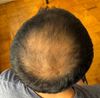
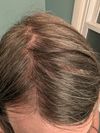
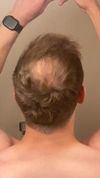
A 24-year-old has been using finasteride, oral minoxidil, and microneedling for hair loss. They reduced minoxidil due to heartburn and are considering a hair transplant.
Landon Donovan recently had a hair transplant, leading to noticeable changes in his appearance. The conversation revolves around his confidence and reactions to his new look.
GT20029 is a topical treatment that degrades androgen receptors to prevent hair thinning and loss, potentially offering fewer side effects than systemic treatments like finasteride. Concerns include its impact on hair texture and potential systemic effects, with market availability speculated in 3 to 5 years.
A 43-year-old with a history of hair transplants and long-term finasteride use reports seeing hair regrowth after adding oral minoxidil, micro-needling, and resuming topical minoxidil. Users agree that the hair appears thicker and denser.
A US federal judge ruled that using patients' stem cells for medical treatments is not under FDA jurisdiction, potentially speeding up development of stem cell-based hair loss therapies. Some users are optimistic about increased research and development, while others express skepticism about the ruling's impact on safety and efficacy standards.
A doctor criticized the use of Finasteride for hair loss, suggesting Minoxidil and a hair transplant instead, despite the patient experiencing no side effects from Finasteride. The patient disagreed, arguing that Minoxidil doesn't address the root cause and that Finasteride is necessary to protect donor hair in transplants.
A user shared their positive experience with hair regrowth using finasteride and minoxidil chewables over 20 months, along with a specific conditioner and a new treatment, GHK-Cu. Others discussed their own hair loss experiences and treatments, including oral finasteride/minoxidil and considering hair transplants.
User regrew lost hair using microneedling, minoxidil, finasteride, Nizoral, fish oil, and collagen peptide. Progress was slow but constant, and patience was important.
New hair loss treatments like PP-405, AMP-303, and SCUBE3 are being discussed, but none are confirmed to fully restore hairlines. Current treatments like Minoxidil, Finasteride, and RU58841 are still widely used, with some hope for future advancements in hair regrowth.
The user has been using oral finasteride, oral and topical minoxidil, RU58841, and microneedling to treat hair loss, with recent additions of oral dutasteride, GHK-Cu serum, and increased microneedling. They report visible thickening and new hair growth, expecting significant improvement by next June.
After a hair transplant, using finasteride and minoxidil is common to support graft survival and prevent future hair loss. Dermastamping can enhance effectiveness, while saw palmetto may offer weak DHT blocking benefits.
A user with diffuse hair loss for a decade tried various treatments, including LLLT Helmet, supplements, topicals, and hair transplants. They found relief from scalp inflammation and itching using a topical solution made from crushed Xeljanz pills mixed with ethyl alcohol.
SCUBE3 is a promising new molecule that can restart hair growth by reawakening dormant hair follicles. Users express skepticism about its availability timeline, with some hoping for release by 2026.
Stemson Therapeutics announced a breakthrough in hair growth technology using stem cells. Users discussed the potential high cost and skepticism about the treatment's accessibility.
A 40-year-old considering a hair transplant after using finasteride and oral minoxidil for hair maintenance. They have maintained hair well with these treatments and seek opinions on whether a transplant would improve their appearance.
Kintor Pharma completed enrolling subjects for a Phase III trial of KX-826 for male hair loss treatment. The trial includes a 24-week treatment period and a 4-week safety follow-up, with results expected in about 6-7 months.
Hair restoration after FUE surgery, with discussions on using finasteride, dutasteride, and oral minoxidil for hair maintenance and growth. Users share experiences with these treatments, noting varying side effects and effectiveness.
The conversation discusses a user's positive experience with hair regrowth using topical finasteride, minoxidil, and microneedling after 2.5 months, noting initial shedding but improved hair density, especially at the temples, possibly eliminating the need for a hair transplant. The user is satisfied with the current treatment and is hesitant to try the experimental drug RU58841, hoping the current routine will suffice for further improvements.
The conversation discusses the lack of experiments combining verteporfin and microneedling for hair loss treatment. The user expresses interest in participating in a group buy to try this method.
AMP-303, a new injectable treatment for androgenetic alopecia, showed promising results in increasing hair count and density with minimal side effects. The treatment demonstrated significant hair regrowth and durability, offering new hope for those with hair loss.
User is 25, using oral finasteride for 4 years, topical minoxidil for 3 years, and microneedling. They ask if hair transplant can be done without scarring when shaving head completely bald later.
Microneedling's effectiveness for hair growth is debated, with some suggesting it enhances minoxidil absorption, but evidence is inconclusive. Concerns exist about its impact on hair transplants, and opinions vary on its use with other treatments like RU58841 and stemoxydine.
Theo Von discussed undergoing a hair transplant and is reportedly using finasteride. Joe Rogan also had hair transplants but faced challenges due to thin donor areas and not using finasteride.
Tressless GPT is now free and accessible for hair loss advice. Treatments discussed include Minoxidil, finasteride, RU58841, dutasteride mesotherapy, topical melatonin, microneedling, and rapamycin.
The conversation is about Jordan Peterson allegedly getting a hair transplant, with various users mocking his way of speaking and debating the ethics of him potentially hiding the procedure. Some users discuss the natural look of the transplant and the implications of getting one at an older age.
The conversation discusses hair loss treatments, specifically Minoxidil, finasteride, and RU58841. It mentions a CEO becoming the first patient for HairClone.
New hair loss treatments PP405 and VDPHL01 are discussed with skepticism and hope, alongside existing treatments like minoxidil and finasteride. Users express frustration over limited progress since the 1980s but remain cautiously optimistic.
Hair transplantation involves a detailed consultation, preparation, and a long-term recovery process with stages like initial shedding and gradual new hair growth over months. Setting realistic expectations is crucial for patient satisfaction.
A 3-month update on a microneedling-only project to treat hair loss, which has not had significant results in terms of thicker hair but may have seen some acceleration in hair growth and an increase in vellus hairs. The user plans to continue the journey for 6 months before making any changes, such as adding minoxidil or finasteride.