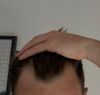
User seeks advice for regrowing temples, currently using Fin, oral Min, and dermarolling. Suggestions include improving scalp environment and considering RU58841 or dutasteride.
A 38-year-old male is experiencing temple hair loss and is considering treatments like topical Finasteride and Minoxidil, despite concerns about side effects and shedding. He is also contemplating a hair transplant and seeking advice on additional shampoos or supplements.
A user shared their hair progress after three steroid cycles, using 5% minoxidil and 100mg RU58841 daily. They are considering a hair transplant due to paranoia about shedding.
The conversation humorously discusses diverting DHT from head to body hair and explores the idea of transplanting body hair to the scalp. It also mentions the potential for treatments to prevent DHT from affecting hair follicles.
Some actors are believed to use treatments like finasteride, minoxidil, or hair transplants to maintain their hair, while others are thought to have naturally good genetics. Opinions vary on whether celebrities like Brad Pitt have natural hair or use enhancements.
A trans woman is using finasteride, minoxidil, microneedling, and HRT to address hair loss, with noticeable improvement in hairline shape and presence of vellus hairs. She is considering hair transplants if these treatments don't yield desired results within a year or two.
A user recovered their crown using finasteride, dermarolling, and vitamins, and had a hair transplant for their hairline. They experienced no side effects from finasteride except increased libido and also take zinc, biotin, trace minerals, kelp, and vitamin D.
A transgender individual began MTF HRT with estradiol and spironolactone at 39 and is monitoring hair regrowth before starting minoxidil. They are hopeful about not needing wigs permanently.
The conversation discusses GT20029, a compound by Kintor Pharma that degrades androgen receptors and is in trials, with potential as a hair loss cure. Another promising treatment mentioned is an antibody that blocks prolactin and has shown positive results in macaques.
Stem cell and exosome injections for hair loss are discussed, with skepticism about their effectiveness and concerns about using non-genetically related stem cells. Dr. Deyarmin's treatments are mentioned, with some users questioning their legitimacy and others expressing curiosity.
Chime Biologics and Hope Medicine are speeding up the launch of a first-in-class antibody drug, HMI-115, for endometriosis and androgenic alopecia. The treatment involves a series of subcutaneous injections, has shown promising results in phase 1, and continues to promote hair regrowth even after the treatment is stopped.
PP405 is seen as a potential breakthrough for converting vellus hairs to terminal hairs, with users expressing both hope and skepticism. It is compared to treatments like minoxidil and finasteride, with discussions on side effects and marketing concerns.
Sulforaphane shows potential for hair regrowth, with users reporting reduced shedding and regrowth. Some users combine it with Minoxidil and finasteride for better results.
The conversation is about someone's six-month hair transplant outcome, with a user suggesting the use of finasteride and minoxidil to improve hair growth. Another user commented on the poor condition of the donor hair area.
The conversation is about enhancing dermarolling for hair loss by using topical peptides like tb-500 or GHK-Cu to aid in healing and hair growth, and whether anyone has experienced significant results from this method.
The GT20029 tincture, a topical androgen receptor degrader, showed significant hair growth and good safety in a China Phase II trial for male androgenetic alopecia (AGA), with the 1% dose twice weekly identified as optimal. The company plans to initiate Phase III trials in China and Phase II in the U.S., and the treatment also shows promise for acne.
The user experienced significant hair regrowth using high doses of dutasteride, minoxidil, and finasteride, but still considers a hair transplant due to thin hair and limited temple improvement. They face challenges accessing medication and are exploring additional treatments like microneedling.
The user had a hair transplant with 2000 grafts in the frontal and mid-scalp areas and has been using finasteride and minoxidil for 3 months. The crown area is expected to improve with continued treatment, and results are generally positive so far.
The user is using RU58841, Revivogen, Regenepure ketoconazole shampoo, and plans to use a stimufield cap to address hair loss. They aim to avoid finasteride and minoxidil while hoping to stop hair loss and regrow hair.
Barcelona goalkeeper Ter Stegen's hair growth regimen, which is believed to include a transplant and other treatments such as finasteride, minoxidil, PRP injections, DUT injections, and possibly stem cells.
The conversation discusses hair cloning trials expected to start in 2020-2021 and mentions concerns about potential delays due to the Coronavirus. Treatments like Minoxidil, finasteride, and RU58841 are referenced.
Hair cloning is expected to be significantly more expensive than hair transplants, potentially reaching six figures. Treatments mentioned include Minoxidil, finasteride, and RU58841.
The conversation discusses post-hair transplant care, specifically about removing scabs gently after a week, using Vitamin E oil. The user wonders if using harsher methods like steel wool would affect results, but others reassure that if there was no pain or bleeding, it's likely fine.
A drug that regrows body parts, but not hair, sparking debate on hair loss treatments. Discussions include the use of finasteride, dutasteride, and the potential for new methods to restore hair.
A user shared their successful hair regrowth journey using finasteride, oral minoxidil, and oral dutasteride, expressing gratitude for the support received. The conversation includes congratulations and encouragement from others.
Some users believe people falsely claim hair restoration results from finasteride and minoxidil alone, while actually having hair transplants. Finasteride and minoxidil, often used with microneedling and nizoral, are effective for many, but results and opinions on dosages vary.
Sulforaphane, found in broccoli sprouts, promotes hair growth by degrading DHT. Users discuss its potential benefits and joke about unconventional application methods.
The conversation discusses the potential use of verteporfin for hair loss treatment, with one user mentioning their surgeon's interest in trying it and another noting its research status and clinical use as a YAP inhibitor. Some users debate the market size, availability of generics, and the optimism in the hair loss community regarding new treatments.
A new hair loss treatment, PP405, is moving from phase 2A to 2B in clinical trials, sparking discussions about its potential to regrow dormant hairs and its impact on existing treatments like Minoxidil and finasteride. Some users express skepticism, while others are hopeful about its future effectiveness.