Search
for
Sort by
Community Join
930-960 / 1000+ resultscommunity Rate my regimen - Is it fine to do everything at once as long as the min is dry?
The user is using a hair loss treatment regimen that includes double the recommended dose of Minoxidil foam once nightly, a mix of RU58841 and stemoxydine after the Minoxidil dries, ketoconazole every other day, and weekly microneedling with alternating depths. They are also considering starting finasteride soon.
community New Preprint: Retinoic Acid Supports Verteporfin-Induced Regeneration
community My Last Post on this Subreddit: Nuclear Option
User starts final hair loss regimen with various treatments and plans to leave subreddit for mental health. Others believe user's hair is fine and the regimen is unnecessary and potentially harmful.
community 4 months , On( 5%min,1mg oral fin,D-Biotin ) daily. Derma rolling .5mm twice a week. * 3 Prp sessions taken per month,missed 1
The user reports a stable receding hairline with new hair growth after using 5% minoxidil, 1mg oral finasteride, D-Biotin daily, derma rolling twice a week, and three PRP sessions per month. They plan to update their progress in four months.
community Why do some people (specially those with diffuse balding) experience more regrowth just with DHT blockers?
Diffuse thinners often experience more hair regrowth with DHT blockers like finasteride, possibly due to less DHT sensitivity and the presence of miniaturized, not completely bald, follicles. However, regrowth varies widely among individuals, influenced by factors like genetics, the stage of hair loss, and treatment methods such as minoxidil, microneedling, and dermarolling.
community AHK vs GHK for hair growth in the crown area?
AHK and GHK are discussed for hair growth in the crown area, with questions about side effects and safety after microneedling. Users share experiences and concerns about these treatments.
community min/fin results on my scalp | 19 (M)
A 19-year-old male shared progress pictures showing hair regrowth on his scalp after starting a treatment with Minoxidil and Finasteride on November 24th. He noted improved hair texture and a halt in hair shedding for the past two weeks.
community Why is scalp DHT suppression lower than systemic?
Dutasteride reduces DHT more effectively in hair follicles than finasteride, but some individuals still experience hair loss despite treatment. Combining oral and topical finasteride may improve results, and some users experiment with topical dutasteride despite uncertainties about its absorption.
community The theory that explains everything. Community Crowdfund
3aHSD enzyme's role in hair loss and a crowdfund for research. Goal: explore new treatments, study RU58841, and develop natural topical product.
community two months on 2-deoxy-d-ribose (2ddr)
The conversation discusses hair regrowth using 2-deoxy-d-ribose (2DDR) combined with minoxidil, with some users noting new hair growth. The original poster has been using minoxidil for 12 years and is considering combining 2DDR with finasteride, despite past side effects.
community 6 months progress on Topical FIN/MIN, Topical DUT for NW7
User made progress with topical Finasteride/Minoxidil and topical Dutasteride for hair loss. Microneedling at 1.5mm daily was also mentioned as part of the treatment.
community PP405 - hair stem cell stimulation
PP405, a topical LDH inhibitor, has shown to stimulate hair follicle stem cell proliferation in humans with moderate hair loss. They are advancing to more detailed trials this year.
community Switched to DUT from Fin after 30 months of no progress
community "14" peptides will be able to be legally compounded by US pharmacies soon, according to RFK Jr. podcast comments.
Peptides are being discussed for potential hair loss treatments, but most are not proven effective for this purpose. Minoxidil and finasteride are mentioned as more reliable options for hair growth.
community 3 months progress on fin and min + micro needling (19m)
A 19-year-old male shared his 3-month hair regrowth progress using finasteride, minoxidil, and microneedling, with noticeable improvement. He uses 1mg oral finasteride daily, 5% minoxidil foam twice a day after day 80, and microneedles with a 1.5mm derma stamp every 1-2 weeks.
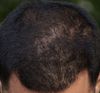
community Weird Hair Loss Pattern – Worth a Biopsy?
The user is experiencing a strange hair loss pattern despite using dutasteride for 3 years and minoxidil with tretinoin for 1.5 years. They recently added microneedling and are considering a scalp biopsy to understand the cause.
community Combining topicals together or use them separately
Combining Minoxidil with Finasteride or RU58841 may cause interference, irritation, or reduced absorption. It might be better to apply one topical at a time and wait an hour before applying another.
community GFM Gel - High concentration topical gel of Mimicking Growth Factors (GFm), a complex of polypeptides that mimic the action of endogenous growth factors and promote physiological hair regrowth. Helps strengthen the hair bulb and redensify the hair.
The conversation discusses using GFM Gel, a topical gel with polypeptides that mimic growth factors to promote hair regrowth and strengthen hair. It also mentions treatments like Minoxidil, finasteride, and RU58841 for hair loss.
community Am I a hyper-responder? Age 30, on FIN and Topical MINOX
A 30-year-old is using topical minoxidil 6% and finasteride for hair loss, showing significant progress over five months. They also use dermastamping, nizoral shampoo, and had a hair and scalp treatment.
community 📈 Solving for very low dose topical finasteride titration intervals
The conversation discusses using very low dose topical finasteride to achieve specific serum DHT reduction percentages. It concludes that finasteride dosage increases linearly between 5-30% DHT reduction but requires exponential increases for reductions up to 70%.
community Hair follicle cloning is already possible
Hair follicle cloning is claimed to be possible but not widely available due to potential safety issues, such as cancer risks. Current treatments like finasteride and dutasteride are not effective for everyone, and there is frustration over limited access to these medications.
community 3 & 7 months progress on Topical Min and Topical Fin
The user shared progress pictures showing hair regrowth over 7 months using topical Minoxidil, topical Finasteride, and multivitamins with biotin, noting more regrowth at 3 months than at 7 months. They suspect a shedding phase and are considering the impact of not continuing microneedling.
community 24 topical min 2x a day and fin 1mg results + microneedling
The user shared positive results from using Minoxidil twice daily, Finasteride 1mg, and microneedling for hair loss, noting improved hair density and mental health. They emphasized the importance of consistency and patience, mentioning initial shedding phases but no significant side effects.
community Any good clinics for PRP (double centrifuge) or exosome hair treatments in Belgium or nearby countries?
The conversation is about finding reputable clinics in Belgium, the Netherlands, France, or Germany for PRP with double centrifugation or exosome therapy for hair loss. The user seeks recommendations based on personal experiences or good reviews.
community Efficacy and Systemic DHT Suppression of Topical Finasteride vs Dutasteride
Topical dutasteride may have limited absorption due to its higher molecular mass compared to finasteride, potentially affecting its efficacy in suppressing DHT locally. Microneedling might enhance dutasteride absorption, possibly offering stronger local DHT suppression with fewer systemic effects.
community Has anyone tried this method? I have never heard of this before.
community Got my Oleic fatty acid they used in Korean study. Fuck you mice!
Oleic acid and microneedling are being explored for hair regrowth, but results are mixed. Addressing DHT and fibrosis is crucial, with treatments like finasteride, minoxidil, and scalp massage also discussed.
community 2 Years of Dut. Can these miniaturized hairs still recover?
community A new study by Deng and colleagues set out to explore differences between balding and non balding scalps...
Balding scalps have more androgen receptors, leading to increased TGF-beta, which causes blood vessel loss and hair follicle miniaturization. Blocking androgen signaling and TGF-beta may help prevent hair loss.