Search
for
Sort by
Community Join
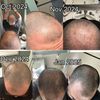
720-750 / 1000+ resultscommunity Almost 5 month on treatment. Fin and min some vitamins. I micro needled maybe 4 times. I’m sorry these are the best pictures for comparison. Ask me any questions!
The conversation is about a person's nearly 5-month progress using finasteride, minoxidil, some vitamins, and occasional microneedling to treat hair loss, with noticeable improvement in hair growth. They also mention not using creatine or performance-enhancing drugs.
community Mature hairlines in general and defining them
A "mature hairline" is subjective and may not indicate future stability. Finasteride and minoxidil are suggested treatments for hair loss.
community which vitamin D test should one take before starting hair treatment ?
Vitamin D tests like D2, D3, and 25-hydroxyvitamin D are discussed before starting hair treatment. Vitamin D can be obtained from food, but overdose has side effects.
community Microneedling must reach the stem cells in the upper hair shaft
Microneedling should target depths of 0.5mm to 1.5mm for hair loss, with weekly sessions at 1mm recommended. Combining microneedling with Minoxidil is common for improved results.
community 5 months progress on Dut/Min/Needling
community 1 Year Update - 40 y/o, Topical Min/Fin, 1.5 mm Microneedle Weekly
The post is a 1-year update on hair loss progress using topical minoxidil and finasteride treatments. The user has seen good progress, especially in transitioning from a Norwood 3 to a Norwood 2 hair loss pattern.
community Am I shedding? Cooked? Progress seems to be regressing
The user started taking 1 mg finasteride daily in September 2024 and began derma stamping twice a week, noticing progress initially but now experiencing increased scalp visibility. They are considering adding oral or topical minoxidil to their routine for further improvement.
community GHK-Cu peptide injections - what is your experience?
GHK-Cu peptide injections are discussed for hair growth, but users report mixed results and suggest focusing on DHT management first. Some users combine GHK-Cu with treatments like Minoxidil and Dutasteride, but emphasize its benefits for skin rather than hair.
community dht becoming active since the scalp is tight en cause inflammation
User discusses tight scalp causing hair loss and suggests treatments like scalp massages, PRP, saw palmetto, and eucapil. They share their experience with saw palmetto and eucapil and consider adding PRP and scalp massages for better results.
community What’s the best microneedling protocol?
Microneedling for hair loss involves using a derminator pen at a depth of 1-1.5mm, typically once a week or biweekly, with a 12-24 hour wait before applying minoxidil. Cleaning involves alcohol wipes, and it's advised to change needles after each use and avoid styling products on the day of microneedling.
community Hair density progress update year 7. (4 years of photos)
OP shared a 7-year hair density progress update using Minoxidil, Finasteride, and dermarolling. Creatine use was discussed, with mixed opinions on its impact on hair loss.
community *OMG* INTERVIEW W/ DR TSUJI - The GOD of Hair Cloning! MUST WATCH
The conversation discusses an interview with Dr. Tsuji about hair follicle stem cell multiplication and the financial challenges of starting human clinical trials. It also mentions the need for funding to secure a patent for a protein that promotes hair growth.
community 35 MtF | 16 Months | Minoxidil + Dutasteride + Microneedling + Exosomes. Note that since I'm early in my transition (and I was coming from a bald state), I still have short hair. Very few MtF progress pictures here, I figure this might help some of you.
A 35-year-old transitioning female (MtF) shared her hair regrowth journey using Minoxidil, Dutasteride, Microneedling, and Exosomes, starting from a bald state. Commenters discussed the impressive results, skin care routine, and the effects of estrogen on hair and skin.
community I’m 18 im doing prevention research but it may have gone a little bit further
Hair loss is influenced by scalp tension, stress, and environmental factors, not just hormones. Treatments like tretinoin, microneedling, scalp massage, and Botox can reduce tension and improve hair health.
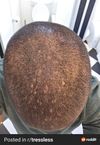
community What hair loss pattern is this?
The user noticed small circular hairless spots after a buzz cut and has been using finasteride, dutasteride, and oral minoxidil for hair loss. They are experiencing continuous shedding and thinning, and it is suggested they consult a dermatologist for a scalp examination and possible biopsy to determine if it's alopecia areata or androgenetic alopecia.
community I guess I’m cooked. 1mg fin/day 2.5 mg min/day + topical tretinoin (3x/week) + topical min/day. June 2023-june 2025
The user has been using 1mg finasteride daily, 2.5mg minoxidil daily, topical tretinoin three times a week, and topical minoxidil daily from June 2023 to June 2025 without noticeable improvement in hair loss. Suggestions include switching to dutasteride and increasing oral minoxidil to 5mg daily, but concerns about long-term health effects are raised.
community How do exosome injections for Hair Growth work?
Exosome injections stimulate hair growth by using exosomes' healing potential to awaken dormant hair follicles and promote new hair cell creation. The procedure increases scalp blood circulation, encourages collagen and elastin formation, and regenerates hair follicles, improving hair thickness and quality.
community 3 months progress - fin / min.
A user shared their 3-month progress using 1mg oral finasteride daily and applying topical minoxidil once daily, noting no side effects and darker hair. Another user praised the progress, anticipating even better results at the 6-month mark.
community Regrowth Progress. Nuclear Stack. Dut, Min, RU, Keto, Monthly Microneedling 30M.
The conversation is about hair regrowth progress using a combination of treatments: dutasteride, minoxidil, RU58841, ketoconazole, and monthly microneedling. The user reports that microneedling and topical minoxidil had the most impact on their hairline.
community Potential ( but not yet confirmed ) pp405 leak through korean media.
A peptide-based hair loss treatment, PP405, reportedly increased hair density by 62% in 90 days, but these claims are unverified and met with skepticism. Users compared PP405 to Minoxidil and Finasteride, expressing doubts about its effectiveness without more evidence.
community How am I getting on? Progress pics over 13 months, fairly nuclear stack
A 49-year-old is sharing progress on hair regrowth using PRP sessions and a combination of treatments, including minoxidil, but not oral finasteride or dutasteride. Users suggest adding oral treatments like dutasteride or minoxidil for better results.
community Japan-led "Third Cell" Discovery: Is this the missing link for full follicle regeneration?
A new "third cell" discovery in Japan could be key to fully regenerating hair follicles, with human trials possibly starting in 2027-2028. AI is expected to accelerate medical discoveries, potentially leading to a hair loss cure within a few years.
community topical exosomes - experimenting
The conversation is about experimenting with topical exosomes for hair loss treatment, alongside microneedling, Happy Head's gel-like topical, and Ordinary's hair serum. The user also mentions the availability of treatments like latanoprost and Redensyl.
community Why I am not balding unlike my family?
The user is questioning why they are not experiencing hair loss like their family members. They are considering whether genetics or preventive treatments like Minoxidil, finasteride, or RU58841 might be influencing their hair retention.
community Testosterone and DHT levels through the roof yet has better hair than the majority of guys who are “healthy” genetics are everything
The conclusion of this conversation about hair loss is that genetics play a significant role in determining hair loss, and specific treatments like finasteride may not be effective against certain compounds like masteron and trenbolone.
community Close ups of just above forehead and crown. Images on left are 1 month into treatment, images on right are 3 months in.
The user experienced hair regrowth and thickening using 1mg oral finasteride, 3mg oral minoxidil, biotin, vitamin D, red light therapy, and microneedling. Some shedding occurred around 4-6 weeks into the treatment.
community only microneedling and supplements
The user used microneedling, zinc, vitamin D3, biotin, magnesium, saw palmetto, pumpkin seed oil, and a DHT-blocker shampoo with biotin for hair loss. They are considering adding minoxidil due to stagnation in progress.
community 4C Afro results (your hair texture can change while on treatment) 5 months- Minoxidil 1ml 2x/day, dutasteride 0.5mg 3x/week, no micro needling. No regrets
The post is about a user's hair loss progress using Minoxidil and dutasteride treatments. The conclusion is that the user has seen positive results after 5 months of treatment and has no regrets.
community From n5 to n3 going n2 , 1 year 2mos progress
The user improved their hair loss from stage 5 to stage 3 using Minoxidil, Finasteride, and a Dermapen. They saw results after 6 months, experienced a shedding phase, then saw more gains, advising others not to be discouraged during the shedding phase.