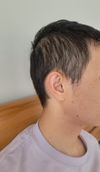
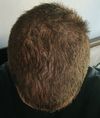
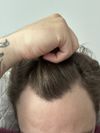
The user is experiencing excessive hair thinning and is unsure of the cause. They are seeking opinions on treatments like Minoxidil, finasteride, and RU58841.
Kintor edited their Amazon page, removing claims that KX-826 provides "real" visible results from clinical experiments. The discussion includes treatments like Minoxidil, finasteride, and RU58841.
The conversation is about using micro needling and PTD-DBM for hair loss treatment. The user applies PTD-DBM drops on weekdays and performs micro needling weekly.
The conversation discusses the potential role of prolactin in hair loss and mentions treatments like HMI115, mucuna pruriens, Zinc, and B6 P5P for lowering prolactin levels. It also touches on the use of natural compounds and the lack of studies due to funding issues.
The conversation is about a user expressing concerns over the safety of a new drug called Pyrilutamide (also known as KX-826) for hair loss. The user will only trust the drug if it's permitted by EU regulations and sold by a reputable company.
CRISPR Cas9 could potentially treat baldness by targeting specific genes in hair follicles without affecting other body functions. There is optimism about its future use, despite ethical concerns and the current reliance on treatments like minoxidil and finasteride.
The user is experiencing severe hair loss and color change despite low testosterone levels and healthy lifestyle changes. They have tried ketoconazole shampoo and consulted a dermatologist, who found no scalp issues but suggested using Toppik for coverage.
A user shared their experience with a hair and beard transplant in Istanbul, performed by Dr. Selahattin Tulunay, noting successful results after 12 months. The procedure cost 5000 €, and the user is open to questions about combining procedures or traveling for surgery.
A 48-year-old man's 11-month progress using 1mg finasteride for hair loss treatment, with significant improvement and no side effects. Other users share their experiences, with some also seeing positive results, while others have not been as successful.
Micronutrient testing and deficiencies related to hair loss, particularly androgenetic alopecia (AGA). Discussion includes the impact of iron, selenium, zinc, copper, folate, B12, vitamin E, vitamin D, amino acids, and fatty acids, alongside treatments like dutasteride or finasteride.
NMN shows promise in promoting hair growth by reducing oxidative stress and weakening androgens. It may be a beneficial addition to hair loss treatments like Minoxidil and Finasteride.
Eirion Therapeutics is recruiting for phase 1 of ET-02 in Texas, which showed promising hair growth results in non-clinical studies. ET-02 demonstrated significantly more hair growth compared to Minoxidil.
A user's six month progress with Pyrilutamide, a hair loss treatment; they experienced positive results such as stopped itching and shedding, as well as regrowth, without any side effects.
A 16-year-old is experiencing thinning hair at the front and shedding during showers. He is concerned about potential early baldness and is considering seeing a doctor and taking multivitamins.
The user is seeking a knowledgeable trichologist or dermatologist in Belgium for a thorough scalp examination due to diffuse thinning and a previous diagnosis of male pattern baldness. They are interested in procedures like a trichogram and scalp biopsy.
Gene editing for hair loss is not yet viable due to technological and economic challenges. Current treatments like Minoxidil, finasteride, and hair transplants remain the most practical options.
The user began experiencing hair loss a few years ago at age 22 and is a diffuse thinner with a Norwood scale rating of 2. They have a naturally athletic build and gain muscle easily, with a hairy chest and stomach.
MCL-1 is important for hair follicle stem cell survival, but its impact on human hair regrowth is unclear. Minoxidil and finasteride are the main treatments, with doubts about new discoveries leading to effective human solutions soon.
The conversation is about seeking updates on new hair loss treatments, specifically mentioning scube3 and GT20029, with one person mentioning HMI_115 as showing promising results.
A 14-year-old experiencing hair loss is seeking advice after using minoxidil and derma stamping without noticeable results. They are advised to continue using minoxidil, as it may take time to show effects.
The conversation discusses the results of a group buy for Ky19382 related to hair loss treatments. Specific treatments mentioned include Minoxidil, finasteride, and RU58841.
A 17-year-old is experiencing genetic hair loss and is considering treatments like Minoxidil, Rosemary oil, or Finasteride. They have a vitamin D deficiency but believe it is not the cause of their hair loss.
The conversation discusses the use of pyrilutamide for hair loss, specifically its impact on shedding. The user is inquiring if others have experienced increased or decreased shedding after starting pyrilutamide.
A user is trying 2-deoxy-D-ribose with distilled water for hair growth, observing new hair and skin pigmentation changes. Others compare it to Minoxidil, expressing interest and caution about its effectiveness and safety.
Hair cloning trials by Stempsen Therapeutics and Hairclone have no updates, and it may take at least 15 years for hair cloning to be available. The conversation also mentions treatments like Minoxidil, finasteride, and RU58841.
Hair loss treatments like finasteride, minoxidil, ketoconazole, PRP, and microneedling helped maintain hair for 20 years. Research and try evidence-based treatments for best results.
A 28-year-old is assessing their hair loss on the Norwood scale, considering adding topical minoxidil and dermastamping to their current regimen of oral finasteride and minoxidil. They feel their hair loss is worsening and seek opinions on their condition.
The user has been using oral finasteride for 15 months and oral minoxidil for 6 months, and developed alopecia areata, for which a dermatologist prescribed calcipotriol/betamethasone. The treatment is helping, but the user is experiencing another shedding phase and is concerned about the effects of the steroid cream and the cause of hair loss.
The conversation is about finding a clearnet vendor for clascoterone, also known as Winlevi, for hair loss treatment. The user is seeking recommendations via direct message.
A 27-year-old man shared his hormonal panel results after one year of taking finasteride 1mg/day for hair loss, showing his DHT levels nearly doubled. He reported stabilized hair loss with mild side effects that resolved, and he is considering a hair transplant but is concerned about the increased DHT levels and potential treatment options.