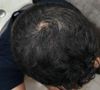
A 32-year-old male with diffuse thinning and seborrheic dermatitis has been using finasteride for 8 months without improvement. He is considering COQ10 + PQQ supplements for scalp inflammation and hair loss.
A 23-year-old male reported significant hair improvement using 0.5 mg finasteride and 2.5 mg minoxidil daily, along with 0.5 mg dutasteride twice a week. He noticed increased hair thickness, density, and darker color, attributing the changes mainly to oral minoxidil and DHT blockers.
Dutasteride at 0.5mg blocks 50% of scalp DHT, while higher doses like 1mg and 2.5mg block more, with 2.5mg blocking up to 80%. Some users report better results with lower doses, and there's confusion about the effectiveness of different dosages on scalp versus serum DHT.
A 23-year-old is using 0.25mg Finasteride for hair loss and experiencing increased shedding after initial reduction. Advice given is to wait longer for results, as hair cycles take time to adjust, and consider increasing the dose if no improvement occurs in a few months.
A 22-year-old is experiencing increased hair shedding and a greasy scalp after two months on 1mg finasteride. They are documenting their progress and seeking advice, with feedback suggesting that shedding is normal and results may take 6-12 months.
1 mg of finasteride is commonly prescribed because it is more effective for a larger number of people compared to lower doses, despite only slightly reducing serum DHT more than 0.2 mg. Serum DHT and scalp DHT are different, and 1 mg is believed to reduce scalp DHT more effectively, contributing to better hair growth results.
The conversation is about the delay in the release of GT20029 phase 2 results by Kintor. It also mentions Minoxidil, finasteride, and RU58841 as treatments for hair loss.
The conversation discusses hair regrowth progress from Norwood scale 4 to 2.5 over a year using daily 8.5-9% RU58841, topical Dutasteride 0.1%, RU58841 5% 1.5 times a week, and daily caffeine redensyl scalp treatment.
PP405 is moving to late-stage trials, showing potential for hair regrowth, with 31% of male patients experiencing a 20% increase in hair density. Veradermics is developing an oral minoxidil version, and there is interest in combining treatments for better results.
The conversation discusses a patent filed by Shiseido for cloning Dermal Papilla (DP) cells to treat hair loss. The method involves using viral vectors to maintain the cells' growth-inducing properties, differing from Replicel's approach with Dermal Sheath Cup (DSC) cells.
The hair transplant at Eugenix in New Delhi resulted in poor density and texture, with only about 2,500 grafts surviving out of 4,500. The user is considering holding the clinic accountable and exploring options like shaving, using hair fibers, or seeking another transplant.
The DNA Trichotest is considered unreliable for predicting hair loss treatment responses, and topical spironolactone is questioned for its effectiveness and safety in cis males. Finasteride and Dutasteride are recommended as more reliable treatments for androgenic alopecia.
A 23-year-old with diffuse thinning for 2 years is using Finasteride 1mg, prescribed by a dermatologist, and is seeking advice on regrowth expectations. Replies suggest continuing Finasteride, possibly adding Minoxidil, and being patient with results.
A 24-year-old male experiencing diffused thinning discusses his DHT levels and hair density issues. He has not used finasteride or dutasteride and is considering AR inhibitors.
GT20029 showed promising results for hair growth in a Phase II trial, with the 1.0% twice-weekly regimen being the most effective. Some users expressed skepticism and humor about the product's effects and market availability.
PP405 and GT20029 are new hair loss treatments with different mechanisms from traditional options like Minoxidil and Finasteride. PP405 targets hair follicle stem cells to reactivate growth, while GT20029 works as an androgen receptor deleter, both requiring ongoing use for effectiveness.
Dutasteride at 0.5 mg and 2.5 mg doses may eventually yield similar hair growth results over time, with 0.5 mg being sufficient for many users. Higher doses may not significantly increase benefits and could lead to diminished returns.
A 22-year-old male started taking finasteride a month ago and is seeing some progress in hair loss treatment. He is concerned about high estradiol levels but plans to continue the medication and consult an endocrinologist.
A user discusses a company, Roots by Genetic Arts, that offers a genetic test for hair loss to create personalized treatments, and is curious about its legitimacy and the science behind it. The company tests 16 genes related to hair loss and compounds a topical treatment based on the results.
The conversation discusses the use of 12.5mg cyproterone every other day for hair loss. There's a concern about reducing testosterone potentially increasing DHT and negatively affecting hair.
The conversation is about finding a legitimate source for Procyanidin B2 or Apple Extract with a clear percentage of Procyanidin B2 for making a topical solution. The user reports thicker and darker body hair after taking Oral Apple Polyphenols extract.
The user is taking 1mg Dutasteride, 2.5mg oral Minoxidil, topical Minoxidil, 28mg iron, vitamin D3 + K2, and Selenium daily. They are concerned about their receding hairline despite good hair density and crown.