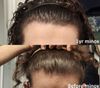
The conversation discusses hair loss treatment using daily topical minoxidil and finasteride, daily 0.5mm dermarolling before application, and 2% ketoconazole shampoo three times a week. Users believe dermarolling enhances the absorption of the treatments and expect significant improvements over time.
The daily regimen includes oral finasteride, topical minoxidil, and witch hazel toner to reduce itchiness. Witch hazel is noted for its hydrating properties and affordability.
A user is joining a clinical trial for Clascoterone, a drug approved for acne but being tested for hair loss. They previously tried finasteride with limited success and plan to share updates on their experience with the new treatment.
Hair loss discussion involved Finasteride, Minoxidil, and RU58841. User experienced sudden shedding after 1.5 years of Finasteride and Minoxidil use, seeking advice.
A user is seeking alternatives to **Curatio Triclenz Hair Cleanser** and **Triflow Hair Conditioner** due to issues with hair weight and scalp pimples. They need recommendations for mild shampoos available in Europe, preferably Sweden.
The user experienced hair shedding and follicle shrinkage when using retinoic acid, despite trying different concentrations and frequencies. The hair loss persisted for six months but regrew after stopping the treatment.
Finasteride, minoxidil, and derma rolling are currently the best treatments for hair loss. New treatments like TDM-105795, GT20029, PP405, HMI 115, Tsuji, Scube 3, RU, JW0061, Topilutamide, and verteporfin show promise but have uncertain timelines.
A user with diffuse thinning noticed stubble-like hairs on their scalp after using 2% ketoconazole shampoo, dermarolling, castor oil, Vitamin D3, biotin, and iron supplements. They are unsure if this indicates regrowth or miniaturized hairs.
The user experienced significant hair improvement with minoxidil and finasteride but later faced shedding and diffused thinning after developing seborrheic dermatitis. They are seeking advice after trying treatments like ketoconazole, coal tar shampoos, fluconazole, and hydrocortisone cream.
Minoxidil can cause scalp itchiness, often due to propylene glycol, and users suggest alternatives like foam formulations without PG, using moisturizing oils, or reducing application frequency. Some recommend ketoconazole or zinc pyrithione shampoos to help with inflammation and itchiness.
Hair loss treatments like spironolactone often require lifelong use to maintain results. Stopping the medication can lead to increased testosterone levels and potential hair loss.
User tried topical fin, dut, min, tret, hydrocortisone, microneedling, nizoral, collagen, propidren supplements, and laser helmet for hair loss with slow progress. They ask if topical spironolactone is a safer, effective alternative to RU for suppressing testosterone and treating hair loss in men.
The conversation discusses creating a personalized topical treatment for hair loss, with ingredients like finasteride, minoxidil, tretinoin, melatonin, caffeine, and others. Users share their ideal formulations, including combinations of minoxidil, finasteride, tretinoin, adenosine, and other compounds, while also discussing the importance of managing inflammation.
User is using a topical solution with .1% finasteride, 6% minoxidil, and .0125% tretinoin for hair loss, along with a .25 derma roller once a week. They are concerned about the necessity and potential side effects of using the derma roller.
The user is seeking advice on improving their hair loss treatment regimen, considering changes to their topical solution, and is curious about others' daily routines and recommendations for medications and supplements. They are contemplating switching Tretinoin for Tazarotene, Latanoprost for Bimatoprost, and possibly adding Alfatradiol, Topical Melatonin, or a topical androgen receptor antagonist.
User discusses a topical hair solution containing Tretinoin, Dutasteride, and Ketoconazole, and asks if it's safe to combine and leave in hair. Concerns include Ketoconazole being left in hair and Tretinoin's effects with Dutasteride and Ketoconazole.
A user's six-month update on their hair loss treatment plan, which includes topical finasteride and minoxidil, dermarolling, and ketokonazole. Replies to the post appreciate the comparison pictures and commend the results achieved from the treatments.
The user stopped oral treatments due to side effects and switched to a regimen of topical minoxidil, tretinoin, azelaic acid, and dermaneedling, with recent addition of topical finasteride. They are questioning the long-term effectiveness of non-hormonal methods and considering hair transplantation.
The conversation is about identifying the cause of a burning red scalp from a topical hair loss formula. Retinoic acid and ethyl alcohol are suspected irritants, with retinoic acid being considered for removal.
The user experiences histamine intolerance with alcohol-based hair loss treatments like Rogaine foam and seeks alternatives. Suggestions include alcohol-free and PPG-free topical minoxidil or finasteride, and trying Spectral products with different solvents.
The conversation discusses using Tretinoin for treating androgenic alopecia. Specific treatments mentioned include Minoxidil, Finasteride, and RU58841.
Combining minoxidil, pyrilutamide, and copper peptide is questioned, with advice to apply them separately to avoid reactions. Finasteride and minoxidil are recommended for effectiveness.
A 21-year-old is concerned about androgenic alopecia and has been using minoxidil for a year, noticing some stabilization in the hairline but fears using it on the whole scalp due to seborrheic dermatitis. Another person suggests considering a psychiatrist for stress management, using Nizoral shampoo, and possibly trying a small dose of finasteride.
A woman with androgenic alopecia has been using birth control, spironolactone, finasteride, and oral minoxidil for hair loss. She sought to change her medications to dutasteride and bicalutamide, but her new dermatologist refused to prescribe them for off-label use.