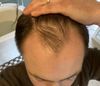
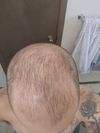
Balding seems to worsen with each generation, possibly due to stress, diet, and environmental factors. The user started treatments like Minoxidil and finasteride.
A man shared his hair regrowth progress from 2020 to 2024 using finasteride, minoxidil, microneedling, and a good hair care routine. People reacted positively, asking about specific treatments and tools used, and he received compliments on his natural-looking results.
The post discusses a user's six-year progress with finasteride and a Follicular Unit Transplant (FUT) for hair loss. The user shared before and after photos in reverse order, leading to confusion, but overall, the community responded positively to the user's hair regrowth.
Concerns about the long-term safety of VDPHL01, an extended-release minoxidil, due to potential risks similar to Cantu syndrome, were raised, highlighting the lack of monitoring for chronic connective tissue changes. The conversation suggests that while the treatment may improve hair growth, it could lead to issues not detected in short-term trials.
A 20-year-old is using oral minoxidil, finasteride, and a dermastamp to address hair loss but is concerned about continued thinning and lack of visible regrowth after six months. They are questioning if diet, vitamin deficiencies, or dosage adjustments could impact progress.
The user has been using finasteride for 18 years to manage hair loss and is considering starting minoxidil and possibly a hair transplant. Despite some regrowth, they are exploring additional treatments like dutasteride and oral minoxidil due to continued hair thinning.
The user experienced significant hair regrowth using a combination of minoxidil, finasteride (later switching to dutasteride), and tretinoin over two years. They noticed regrowth almost immediately, with no major initial shedding phase, and reported recession and diffuse hair loss patterns.
The user "PowerfulAide6677" shared progress pictures of their hair loss journey, mentioning that they have been on finasteride for 8 years and are considering adding oral minoxidil to fill in their hairline. Some users advised against adding oral minoxidil, suggesting that the user's current maintenance with finasteride is sufficient.
A user humorously questions if they should shave their head due to hair loss, mentioning Ronald Reagan's impressive hair genetics. Replies include jokes and comments about jealousy and distrust towards older individuals with full heads of hair.
The user is using oral finasteride, topical minoxidil, and microneedling for hair loss. Progress has slowed, with the crown showing little change, but the hairline is improving with more thin baby hairs.
Hair regrowth using estradiol, spironolactone, minoxidil, and finasteride, showing significant improvement over four years. HRT is not advised for cis men solely for hair loss due to feminizing effects.
Oral minoxidil may cause dry skin and dark eye bags but doesn't significantly age the skin. Topical minoxidil is toxic to cats, and some users prefer finasteride.
The conversation discusses a user's six-month progress in treating hereditary hair loss using a regimen that includes minoxidil, finasteride, dutasteride, and other medications. Opinions vary on the effectiveness and logic of the treatment, with some users suggesting additional methods like microneedling.
A user discusses their habit of analyzing others' hair due to their own hair thinning at 18. Another user mentions starting finasteride in 2010 and still having a full head of hair.
A 19-year-old male using 1 mg finasteride every two days for hair loss reports no side effects and believes maintaining his current hair condition is progress. Some users see no difference in hair regrowth, attributing changes to lighting.
A 31-year-old man shared his hair growth progress from July 2024 to March 2026 using oral finasteride (1mg) and minoxidil (2.5mg), with no significant side effects. He is considering switching treatments but is advised to continue with the current regimen due to its effectiveness.
A user shared their one-year hair loss treatment journey using finasteride, dutasteride, and minoxidil, noting initial success with minoxidil but experiencing relapses. They questioned the effectiveness of dutasteride compared to finasteride and expressed frustration with the non-linear progress and the inconvenience of using both oral and topical treatments.
A man struggled with hair loss from age 18, tried various methods without success, and finally sought medical help at 23. He was prescribed oral finasteride, topical minoxidil, and Nizoral shampoo, which after two years of consistent use, significantly improved his hair condition.
A 34-year-old male has been using 1mg finasteride daily and 5% topical minoxidil twice a day for over two years, experiencing no side effects. He stopped microneedling after two years as it seemed ineffective, but despite periodic shedding, his hair grows back stronger.
The user is experiencing hair thinning and bald spots, using Nizoral, rosemary oil, fluocinolone, and receiving PRP treatments. They are considering oral minoxidil and finasteride but are hesitant due to age and financial constraints.
A 21-year-old with a family history of early balding is advised to see a dermatologist to confirm androgenetic alopecia (AGA) and consider treatments like finasteride or dutasteride to prevent further hair loss, and minoxidil, possibly with tretinoin, to regrow hair. Caution is advised with oral minoxidil, and a cardiologist should be consulted before use.
A 32-year-old man has been using topical minoxidil for 11 years and oral finasteride for 1 year, along with a dermaroller, and is happy with his hair regrowth progress without experiencing side effects. Commenters are impressed and some are considering starting finasteride after seeing his results.
The conversation is about a 26-year-old man's hair regrowth progress after three months of taking oral Minoxidil and Finasteride. There was a mix-up with the photo dates provided for comparison.
An 18-year-old noticed hairline retreat at 17.5 and is seeking advice on whether to accept baldness or try treatments like Minoxidil, finasteride, or RU58841. They are concerned about safety and effectiveness at their age.
A 49-year-old is documenting their hair regrowth journey using tretinoin cream, minoxidil foam, and finasteride. They report thicker hair and improved confidence, though progress feels slow and mentally challenging.
The user started oral minoxidil in February 2025 and noticed hair improvement, but paused due to pregnancy. They experienced minimal shedding and some facial hair growth as a side effect.
A 23-year-old Asian male shared progress pictures after 3 months of using minoxidil, microneedling for 1.5 years, and taking vitamin supplements. Replies suggest adding finasteride or dutasteride for long-term hair maintenance.
A new hair loss treatment, PP405, showed promising Phase 2a results with 31% of patients experiencing over 20% hair density increase without systemic absorption, avoiding hormonal side effects. The treatment is expected to be expensive, with Phase 3 trials starting mid-2026, and there is skepticism about the data's strength.
User reports 3-month progress using daily 1mg finasteride, 0.5ml minoxidil (2x daily), 0.5ml dutasteride, and derma rolling 0.5mm 1-2 times per week. They see increased density on crown and top of head, slight progress in corners and temples, and recently added cosmerna.
The conclusion of the conversation is that oral minoxidil has been effective in saving and restoring hair, but it may have diminishing returns as you age. It is suggested to consider using finasteride in addition to minoxidil for better results.