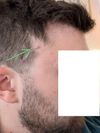
A user experienced severe scalp itching with MPB and found Nizoral ineffective. A doctor diagnosed seborrheic eczema and prescribed Betacap, which relieved the itching.
A 30-year-old with diffuse thinning and a balding crown is using a treatment regimen of a 2-in-1 pill containing finasteride, minoxidil, and biotin, along with various supplements. After two weeks, no side effects have been experienced, and updates with pictures will be posted monthly.
Sprocketshead asks if pyrilutamide can be applied with minoxidil, and inquires about its consistency and odor. They want to know if it's more high maintenance than topical minoxidil.
Clascoterone is a topical treatment for androgenetic alopecia, showing modest to moderate hair regrowth, and may be available by 2027-2028. It is considered safer than finasteride, with discussions on its effectiveness compared to RU58841 and pyrilutamide.
Betnovate and mometasone furoate were tried for scalp issues, but Zoryve and Selsun shampoo were recommended for relief. Itraconazole was suggested for stronger treatment if topicals fail.
A user with alopecia totalis, borderline universalis, seeks advice on getting into a Xeljanz trial or appealing insurance for coverage. They experienced significant hair regrowth but are now seeing hair loss again and want to try Xeljanz.
The conversation discusses using a low dose of topical finasteride to achieve hair benefits with minimal systemic exposure. Users share experiences and opinions on dosing, systemic buildup, and side effects of both topical and oral finasteride.
User used sublingual minoxidil for 5 months and saw progress. Also used topical dutasteride, alfatradiol, tretinoin, and reduced oral finasteride dose.
A woman with hair loss discovered she has thyroid cancer, which was found during an MRI and confirmed with an ultrasound. She advises others with symptoms to see a doctor and shares that her cancer was detected after her dog sniffed her neck and she experienced neck pain.
The user is experiencing increased hair loss and was diagnosed with male pattern baldness. They are considering using oral or topical finasteride to manage the condition and are contemplating cutting their hair short.
The conversation discusses switching from oral to topical finasteride due to side effects like nipple soreness. The user seeks advice on diluting and applying topical finasteride to minimize adverse effects.
The user has been using liposomal topical finasteride since late 2022, progressively increasing the dose, but DHT serum levels remain largely unchanged. Despite using finasteride, minoxidil, microneedling, and ketoconazole, hair condition has neither improved nor worsened.
The user diagnosed with DUPA tried treatments like dutasteride, finasteride, RU58841, and minoxidil without success and is considering a hair system. They hope for a future cure, possibly with PP405, and others suggest options like scalp biopsy and SMP.
A 27-year-old male with diffuse hair loss, including the donor area, did not respond to finasteride, dutasteride, or minoxidil. He suspects his hair loss may be linked to a mild connective tissue disorder, possibly affecting the structural support of hair follicles, rather than being purely hormonal.
Cosmo Pharmaceuticals has enrolled about 850 out of 1400 patients for their phase 3 clinical trials of clascoterone (Breezula) and claims to be on schedule. The conversation is about hair loss treatments.
The conversation discusses a small patch of missing hair and whether treatments like Minoxidil, finasteride, or RU58841 could help. The user is seeking advice on addressing this specific hair issue.
The conversation discusses using topical Calcipotriol and Valproic Acid for hair loss, focusing on their mechanisms involving the VDR receptor and Wnt/beta-catenin pathway. Specific treatments mentioned are Minoxidil, Finasteride, and RU58841.
User shares a topical hair loss solution using melatonin and cetirizine to help reduce shedding and itching. Instructions provided for creating and using the mixture, with additional lifestyle tips for overall hair health.
The conversation discusses topical androgen receptor blockers for hair loss, mentioning Clascoterone, Pyrilutamide, GT20029, and RU58841. Ketoconazole's effectiveness and application methods are also debated.
A user discusses a topical treatment combining Minoxidil, Betamethasone Valerate, Canrenone, Finasteride, and Dutasteride for hair loss. The treatment is RX-only and provided by a dermatologist.
The conversation discusses scalp itching and tenderness after microneedling, despite using medicated shampoos and proper sanitation. The user plans to see a dermatologist and is concerned about possible infection or allergic reaction.
A topical treatment called 1961, containing multiple products, is discussed for its compatibility with finasteride. It is suggested that 1961 does not negatively affect finasteride's effectiveness and may even enhance its absorption.
Using a blunt tip syringe is an effective method for applying liquid topicals like minoxidil and RU58841, especially for those with thick or long hair experiencing diffuse thinning. The user found significant hair regrowth and increased density after using these topicals for less than three months.