Actifolic RU-58841 powder and GhK-Cu peptide were tested and found to be accurate. The user is satisfied with the product's authenticity for hair loss treatment.
Kintor's KX826 (pyrilutamide) is ineffective at 0.5% and overpriced at 1%, leading to user frustration and calls for fair pricing. Users suggest sticking with proven treatments like Minoxidil and Finasteride.
The conversation is about finding a clearnet vendor for clascoterone, also known as Winlevi, for hair loss treatment. The user is seeking recommendations via direct message.
Pyrilutamide (KX826) sourcing and pricing, with users discussing the legitimacy and cost of grey market versus official sources. The conversation highlights the high cost of official products and the effectiveness of grey market versions.
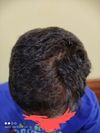
The user is experimenting with GHK-Cu and AHK-Cu to stop hair loss and promote hair growth, using a serum from Etsy and injectable GHK-Cu. They supplement this with dermastamping and ketoconazole shampoo.
The conversation discusses a hair loss treatment regimen including oral dutasteride, oral minoxidil, tadalafil, and the recent addition of RU58841. The user shares experiences with these treatments, noting significant hair regrowth and stabilization, and discusses the cost and preparation of RU58841.
A user's success in hair regrowth after taking oral and topical medications, such as minoxidil and dutasteride, and using microneedling. Other users shared their experiences and advice with treatments used to reverse hair loss.
The conversation discusses concerns that Anagenic's version of GT20029 might not be as effective or safe as Kintor's, with comparisons to issues faced by pyrilutamide. The chemical structure of the drug has been published.
KPV, a peptide patented by L'Oreal, may promote hair growth and reduce hair loss by extending the anagen phase and has anti-inflammatory properties. It could be combined with treatments like minoxidil for enhanced effects.
KX-826 (Pyrilutamide) 0.5% and 1.0% solutions showed promising results in increasing hair count for male androgenetic alopecia, with the 0.5% dose slightly outperforming the 1% dose. The treatment was well-tolerated with no sexual side effects, but skepticism remains due to past inconsistencies in trial results.
The conversation is about making a topical solution from clascoterone powder, with references to using a RU58841 mixing guide for guidance. Concerns about product authenticity and bulk purchase requirements are also discussed.
Dr. Muñoz's discovery suggests that targeting potassium channels in fibroblasts could reactivate hair growth, offering new treatment possibilities for alopecia. Potential strategies include using minoxidil, diazoxide, and other potassium channel openers, as well as bioelectric devices and direct growth factor applications.
RU58841 can be ordered as a powder and compounded at home, but it should be stored at room temperature to avoid crystallization. Pyraulatmide may follow a similar principle.
The conversation is about purchasing KX-826 (Pyrilutamide) on Amazon, now called Koshine. A user mentioned their order is expected to arrive between August 22 and September 13.
The conversation discusses the potential of a new hair loss treatment, GT20029, which targets androgen receptors in the scalp and is in phase 1 trials in China. Users express hope that this treatment will be more effective than current options like Minoxidil and Finasteride.
The user maintained their hair for 7 years using alfatradiol, fluridil (later switched to pyrilutamide), minoxidil 5%, and Nizoral shampoo without finasteride due to side effects. Despite some family history of hair loss, the user believes their hair loss is not aggressive.
Breezula (clascoterone) is expected to be available by late 2026, showing good long-term results with minimal side effects. KX-826 (pyrilutamide) acts faster but is still in earlier development stages.
The conversation is about a user seeking advice on adding GHK-Cu to RU58841 for hair loss treatment, while already using oral minoxidil, dutasteride, ketoconazole shampoo, and considering LLLT. They are unsure about the concentration and carrier solution for GHK-Cu.
The user is using RU58841, Revivogen, Regenepure ketoconazole shampoo, and plans to use a stimufield cap to address hair loss. They aim to avoid finasteride and minoxidil while hoping to stop hair loss and regrow hair.
A 19-year-old is using minoxidil, finasteride, tretinoin, caffeine, and oils for hair regrowth, with positive results and no side effects. They are considering increasing finasteride dosage and possibly switching to dutasteride in the future.
User seeks KX-826 anti-androgen product and asks for purchase suggestions and experiences. Dave-8D recommends buying powder from the same website and making a topical solution, mentioning possible high dosage from Minoxidil max causing side effects.
The conversation is about hair loss treatment progress using finasteride and GHK-CU over six months. Users discuss application methods and share experiences with GHK-CU and AHK.
The conversation discusses GT20029, a compound by Kintor Pharma that degrades androgen receptors and is in trials, with potential as a hair loss cure. Another promising treatment mentioned is an antibody that blocks prolactin and has shown positive results in macaques.
A South Korean company, Therazyne, has developed a promising hair loss treatment using a WNT chain surrogate that binds to Frizzled 7, with human follicle testing expected soon. Current treatments like minoxidil and finasteride are not seen as cures, and while optimism exists for future solutions like PP405, approval processes are lengthy.
The user is considering whether to add RU58841 or Nizoral shampoo to their current hair loss treatment of finasteride and minoxidil, noting budget constraints and concerns about hair dryness. They are unsure if RU58841 is worth adding or if they should use both treatments to see the effects.
![[GHK-Cu+AHK-Cu experiment] Stopping hair loss and promoting hair growth](/images/assets/a2fe9e48-31eb-4e92-a763-614a7d32f7cd/small/20559.jpg)