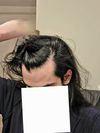
A 30-year-old male is experiencing hair loss and is concerned about his receding hairline, seeking advice on his Norwood scale classification. He is apprehensive about using Minoxidil and finasteride as treatments.
The post is about a user considering using topical Melatonin for hair loss and asking if any melatonin spray can be used for this purpose. The user also seeks clarification on the required percentage of Melatonin in the spray, while a respondent shares their experience of the spray making them sleepy.
The conversation discusses the approval of Kintor Pharmaceutical's AR-PROTAC (GT20029) for clinical trials in China for acne and androgenic alopecia. One user expresses optimism about new treatments being developed and seeks clarification on how the new drug works, specifically if it temporarily degrades the AR protein to reduce DHT sensitivity in hair follicles.
A 23-year-old man shared his 4-month hair regrowth progress using 1mg oral finasteride daily, 5% minoxidil with finasteride topical twice a day, multivitamins, microneedling, head massages, and ketoconazole shampoo. He's unsure of his current Norwood scale classification and is asking for help to determine it, with suggestions ranging from NW4 to NW4.5.
User shares 3.5-month hair transformation using 0.5 mg Dutasteride daily and Minoxidil 2x daily. Others express amazement and discuss safety profiles of treatments.
The conversation discusses a five-year study on dutasteride, a medication for male hair loss. The study found that 89.9% of patients saw improvement or prevention of hair loss progression, with varying success rates based on different balding patterns. Side effects were mostly sexual and decreased over time. Dutasteride was concluded to be a long-term, safe, and effective treatment for male hair loss.
The user switched from finasteride to dutasteride while continuing minoxidil, noting thicker and faster hair growth with minimal side effects. Other users discussed transitioning between these treatments, with some experiencing side effects like gynecomastia and erectile dysfunction.
The user experienced significant hair improvement using daily dutasteride (0.5mg) and oral minoxidil (5mg), along with ketoconazole shampoo twice a week. They reported no significant side effects, except for mild hypertrichosis, and plan to continue the regimen for a few years before reducing the dosage.
DUPA and retrograde alopecia may not be solely DHT-based, and a biopsy is crucial for accurate diagnosis and treatment. Treatments mentioned include dutasteride, oral minoxidil, pioglitazone, clobetasol, calcipotriol, ketoconazole, and doxycycline, depending on the specific condition.
FOL-005 claims to be more effective than Minoxidil and Finasteride but lacks anti-DHT properties, leading to potential reduced efficacy over time. Concerns are raised about misleading marketing and the safety of alternative treatments like Pyrilutamide and Clascoterone.
A user taking 1.25mg finasteride and 2.5mg oral minoxidil for hair loss, questioning if the dosage is enough for scalp hair regrowth. Another user reassures that hair will regrow stronger after initial shedding.
A 21-year-old male has been using minoxidil and finasteride since July 2023 to combat hair loss but is considering embracing a bald look due to mixed results. Many commenters agree he looks better bald, praising his appearance and suggesting he maintain the shaved look.
DHT blockers like finasteride are not recommended for teenagers due to potential impacts on sexual development, though some users report no side effects. It's generally advised to wait until at least 18 and consult a doctor.
A 16-year-old is experiencing hair thinning and has been using 5% minoxidil for three months and finasteride for one month. They are considering adding dutasteride but are concerned about potential side effects like prostate cancer.
The user regrets not using medication after a failed hair transplant and is now using a combination of minoxidil, finasteride, derma rolling, oils, and ketoconazole shampoo to try to improve hair regrowth. They are seeking feedback on progress and considering further treatment options.
The user has maintained hair with topical minoxidil (8%) and finasteride (0.01%) for 7.5 years, experiencing mild regrowth and no side effects. They also use rosemary oil, jojoba oil, and magnesium oil for hair care.
The user experienced hair regrowth using a combination of Minoxidil, Finasteride, and RU58841, with Minoxidil used initially and the other treatments added later. The user believes the combination of Finasteride and RU58841 contributed to the regrowth, with RU sourced from MVsupplement.
A user is considering using melatonin for hair recovery on the side and neck area but is unsure about the best options in Europe and whether a dietary supplement form can be applied to the scalp. They found a product but are hesitant and seeking opinions on its use for alopecia.
A user discusses using a 1.5mm dermaroller daily in the shower for hair loss, noting redness but no bleeding, and applying coconut oil afterward. They are concerned about a receding hairline and slight hair loss near the temple.
Celebrities may use Dutasteride for hair loss, but Finasteride is more commonly used due to its extensive research and long-term safety. Dutasteride is considered more effective but is often used off-label or as a secondary option.
A 21-year-old experienced severe hair loss after stress and tried PRP, mesotherapy, and a topical finasteride + minoxidil solution, which was costly and inconvenient. They switched to dutasteride, experienced heavy shedding, and are considering switching to finasteride, with advice to consult a qualified doctor for further guidance.
Finasteride is effective in promoting hair growth and reversing hair miniaturization in men with androgenetic alopecia, with improvements seen in various studies over different durations. Some users report initial side effects like ball ache, which often resolve as the body adjusts.
0.5mg dutasteride reduces scalp DHT more than 1mg finasteride, leading to better hair regrowth results. Users report significant improvement with dutasteride compared to finasteride.
A woman with AGA is using spironolactone, dutasteride, finasteride, oral minoxidil, bicalutamide, and anti-androgenic birth control but still experiences worsening hair loss. Steroid shots temporarily stop her hair shedding, leading her to question her biopsy results.
A user experienced androgenic alopecia starting at the vertex without frontal hairline recession and is seeking information on this pattern. Another user noted that vertex or diffuse hair loss is common among men.
User decided to get hair transplant and is happy with results. Others compliment the change and suggest hair loss concealers or SMP for further improvement.
There is an inconsistency between the molecular weight and formula listed on EveryChem's product page and the analytical PDFs for 3HP and PP30, suggesting a possible error in the product description. Concerns are raised about EveryChem's business practices and lack of transparency in testing and manufacturing.
A 19-year-old is experiencing excessive hair shedding despite using minoxidil, finasteride, and dutasteride. They are seeking advice on why these treatments aren't working and if their current regimen is appropriate.
Starting hair loss treatment early is crucial for better results. Dutasteride and finasteride are effective, with dutasteride often considered superior, while oral minoxidil shows better gains than topical.