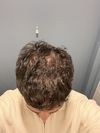
Pyrilutamide, a possible hair loss treatment, ceasing to be traded due to patent laws; and the hope that this indicates it may be a legitimate treatment.
A 51-year-old on TRT plans to use steroids and is concerned about hair loss, considering topical treatments like Hair Rescue with RU58841 and finasteride, along with Nioxin shampoo. They are cautious about using oral DHT blockers due to potential interactions with steroids like Tren and Anavar.
SCUBE3 and GT20029 are potential treatments for hair loss, with SCUBE3 stimulating hair growth and GT20029 protecting against DHT. A combined approach using SCUBE3, finasteride or dutasteride, and later GT20029 could provide a comprehensive treatment for androgenetic alopecia.
Hair loss sufferers becoming hyper aware of shedding, and the various treatments available for reducing shedding. The conversation also discussed differentiating between shedding and balding, as well as the potential side effects from using certain treatments.
The conversation discusses using a multimodal approach to treat androgenic alopecia, including substances like gamma-linolenic acid, DHA, sulforaphane, melatonin, cetirizine, astaxanthin, fisetin, apigenin, curcumin, limonene, genistein, and berberine. Users also mention using ketoconazole, minoxidil, and low-level laser therapy (LLLT) as part of their hair loss treatment regimens.
A user discusses a company, Roots by Genetic Arts, that offers a genetic test for hair loss to create personalized treatments, and is curious about its legitimacy and the science behind it. The company tests 16 genes related to hair loss and compounds a topical treatment based on the results.
The conversation discusses using 1% cetirizine, an antihistamine, as a potential treatment for androgenetic alopecia (hair loss). One user plans to try cetirizine instead of finasteride, while others are curious or skeptical about its effectiveness, discussing the role of inflammation in hair loss.
The conversation is about the double standard in the hair loss community regarding shedding when using different treatments. The conclusion is that shedding is considered normal when starting finasteride or minoxidil, but not when starting dutasteride, despite the fact that dutasteride is more effective at reducing DHT.
The conversation is about someone inquiring if anyone has tried Olumiant or its active ingredient, Baricitinib, for hair loss, mentioning the cost and that they have ordered Baricitinib.
The user experienced reduced hair shedding after three months of injecting 1mg BPC-157 into the scalp, while continuing to use dutasteride and minoxidil. The injections are painful, and the user sometimes switches to injecting into the buttocks.
The conversation is about someone wanting to import RU58841 or CB-03-01 from China for hair loss treatment but being concerned about receiving counterfeit products. Specific treatments mentioned are RU58841 and CB-03-01.
The conversation is about a user interested in participating in hair cloning clinical trials due to their fine hair and previous positive experience with clinical trials. They are seeking information on how to volunteer for such trials.
The conversation is about a potential new hair loss treatment called Breezula CB-03-01. Users are discussing updates on its development and sharing personal experiences with making or using it.
A 32-year-old black male shared the hair products he uses, receiving positive feedback for his genuine approach and hair results. Specific treatments were not mentioned in the provided text.
The user began experiencing hair loss a few years ago at age 22 and is a diffuse thinner with a Norwood scale rating of 2. They have a naturally athletic build and gain muscle easily, with a hairy chest and stomach.
GT20029 and CosmeRNA are both potential hair loss treatments; GT20029 breaks down the androgen receptor, while CosmeRNA prevents its production. Continuous use is needed, but less frequently than current treatments like Minoxidil and Finasteride.
The conversation discusses androgenetic alopecia (AGA) and questions why treatments focus on lowering DHT levels instead of building resistance to it. It also touches on hair transplantation techniques using body hair.
The conversation discusses whether to use finasteride for hair loss, considering its role in inhibiting DHT and 5AR, which can affect brain function and mood. Some users report anxiety and depression from finasteride, while others do not experience these side effects and emphasize the importance of DHT for brain and prostate health.
CB-03-01 is a topical anti-androgen with low absorption, offering potential as a side-effect-free alternative to Finasteride/Dutasteride for hair loss. It's in stage 2 clinical trials for acne and showing promise for male pattern baldness.
Injectable GHK-CU and BPC157 were discussed for hair loss, but users did not notice significant hair changes. BPC157 was noted to help with shoulder issues.
A 22-year-old with high estradiol levels is considering starting finasteride for hair loss. They have an upcoming endocrinologist appointment to discuss whether they should proceed with the treatment.
KX826 shows promise as a hair loss treatment with a 10% increase in hair count, but concerns about Kintor's marketing practices and the systemic effects of treatments like GT20029 and RU58841 remain. Users express skepticism and hope, with some preferring traditional treatments like finasteride and minoxidil.
The conversation discusses a hair loss treatment regimen using Alfatradiol, Pyrilutamide, and Minoxidil. The user shares their current stack of these treatments.
KX-826 (Pyrilutamide) 0.5% and 1.0% solutions showed promising results in increasing hair count for male androgenetic alopecia, with the 0.5% dose slightly outperforming the 1% dose. The treatment was well-tolerated with no sexual side effects, but skepticism remains due to past inconsistencies in trial results.
A new topical treatment, TH07, combining finasteride, latanoprost, and minoxidil, is entering phase III trials with promising early results. Some users express skepticism, noting the treatment uses existing products.
RU58841 is being discussed for its effects on hair loss. The user has started using RU58841 with finasteride and is curious about its potential for hair maintenance or regrowth.
Dutasteride and finasteride for hair loss, with dissatisfaction expressed about dutasteride and consideration of switching back to finasteride. Users share varied experiences, noting individual responses to treatments differ.