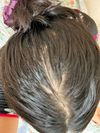
A user who was losing their hair and found an effective solution; they asked for opinions on it and discussed treatments such as Minoxidil, Finasteride, and RU58841, as well as SMP.
A user decided to use a hair system after 10 years of hair loss, avoiding surgery and supplements due to potential side effects. They were nervous but hopeful for natural-looking results.
Hair fibers can effectively cover thinning hair when used with minoxidil and hairspray but require daily application and can be inconvenient in certain conditions. Some users prefer treatments like finasteride, dutasteride, microneedling, or wigs due to the maintenance and limitations of hair fibers.
A person dealing with hair loss is considering shaving their head, using scalp micropigmentation to cover a FUT scar, or trying a hair system. They are also contemplating treatments like minoxidil, finasteride, and dutasteride.
A user who has started to go bald and decided to try wearing a hair piece, discussing the experience of doing so and sharing tips for maintenance. The conversation includes discussion about confidence in relation to wearing a wig or hair piece, as well as advice on getting it cut and attached professionally.
AMP-303 and AMP-601 are new hair loss treatments targeting dermal papilla cells, with AMP-303 showing early efficacy in transitioning vellus hairs to terminal hairs after one injection. Further clinical trials are planned, and these treatments are seen as promising due to their biologic approach and less frequent application compared to daily treatments.
KX-826, Breezula, PP405, and Stemson are potential future treatments for hair loss, with varying timelines and mechanisms like blocking DHT and stem cell activation. Users express skepticism about the timeline and mention current options like hair transplants and minoxidil.
Using a blunt tip syringe is an effective method for applying liquid topicals like minoxidil and RU58841, especially for those with thick or long hair experiencing diffuse thinning. The user found significant hair regrowth and increased density after using these topicals for less than three months.
Exploring the idea of transplanting miniaturized hair follicles to healthier areas to potentially reverse hair loss, with concerns about DHT sensitivity and scar tissue formation. The conversation also humorously considers using mice for hair growth experiments.
The conversation discusses hair regrowth using dissolvable microneedles loaded with rapamycin and epigallocatechin gallate nanoparticles. Specific treatments mentioned include Minoxidil, finasteride, and RU58841.
A user is developing a tool to track hair density, aiming to help those using treatments like minoxidil. They seek feedback on the tool's usefulness and are considering a low-cost model to cover expenses.
A user shared their positive experience using keratin hair thickening fibers to conceal a balding crown after six months on finasteride. Other users discussed various hair loss solutions, including minoxidil, dermarolling, and scalp micropigmentation.
Hair transplants and hair loss treatments like oral Fin and Min are discussed, with some humor about public figures' hair. Missing a single day of these treatments typically has little impact, but longer gaps can affect results.
A 29-year-old tried various hair loss treatments, including minoxidil, finasteride, dutasteride, derma stamp, and a hair transplant, but ultimately chose a hair system to cover baldness and boost confidence. The hair system looks natural and is praised by others for its appearance and feel.
Hair loss discussion mentions fibers like toppik becoming difficult to use and questions if there's a better alternative, such as a spray or dermmatch.
A user with diffuse thinning alopecia uses a custom full cap wig for an active lifestyle, costing $450 and lasting about 10 months. They share their positive experience with the wig as an alternative for those for whom treatments like Minoxidil, finasteride, or RU58841 don't work.
Body hair transplants may look better if kept very short. People with limited donor regions or waiting for Verteporfin or FAK Inhibitors could consider this option.
Hair transplants in Bangkok are praised for their natural appearance, with a zigzag hairline design being favored over straight lines. The clinic Hairtran and Dr. Patty receive positive feedback, though some users express skepticism about photo filters and the authenticity of results.
The conversation discusses potential hair loss treatments, including hair cloning, setipiprant, and topical finasteride, questioning their availability and effectiveness as permanent cures. The user is inquiring about the release dates and efficacy of these treatments.
The user uses Toppik hair fibers to thicken their hairline and has switched from finasteride to dutasteride and oral minoxidil, noticing more hair thickening. Most responses indicate the hair fibers are not noticeable, and many suggest the user doesn't need them as their hair looks natural and good for their age.
The struggles of hair loss at a young age and available treatments, such as medication (Finasteride, Minoxidil, Dutasteride, Derma Rolling) and potential options for hair systems or cloning in Japan. People discussed their own experiences with trying to cope with the emotional aspects of this condition.
A 29-year-old female is experiencing severe hair loss and bald patches, seeking advice on shampoos, conditioners, hair masks, or topical medications. A user suggests starting an oral supplement.
Hair cloning may become available in 1-2 years in Japan, but widespread availability and affordability could take 7-15 years. Current treatments like finasteride are effective but may lose effectiveness over time.
The user is considering another hair transplant or scalp micropigmentation (SMP) for a congenital bald spot, but previous transplants were less effective due to scar tissue. Suggestions include using hair fibers, changing hairstyles, or doing nothing, as the spot is not very noticeable.
Various peptides are discussed for treating male pattern baldness, with some available for topical use like GHK-Cu and Ac-KGHK, while others remain in research stages. Users are interested in experiences and sourcing these treatments.
Some prefer hair systems for better appearance and confidence, while others find them costly and inauthentic. Alternatives like minoxidil, finasteride, and hair transplants are also considered.
The conversation discusses hair loss treatments, specifically mentioning Minoxidil, finasteride, and RU58841. It also references Epibiotech's hair multiplication and cell therapy as potential solutions.
How easy it is to fake hair growth, and the skepticism of progress pictures on the subreddit. Some treatments mentioned include finasteride, minoxidil, microneedling, Toppik/Hair Fibers, Dermmatch and a hair transplant.
Hair follicle cloning is claimed to be possible but not widely available due to potential safety issues, such as cancer risks. Current treatments like finasteride and dutasteride are not effective for everyone, and there is frustration over limited access to these medications.