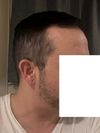
The user is pleased with their hair transplant results after six months and seeks feedback. The conversation is positive, with others affirming the success of the procedure.
The user diagnosed with DUPA tried treatments like dutasteride, finasteride, RU58841, and minoxidil without success and is considering a hair system. They hope for a future cure, possibly with PP405, and others suggest options like scalp biopsy and SMP.
GT20029 is a topical treatment that degrades androgen receptors to prevent hair thinning and loss, potentially offering fewer side effects than systemic treatments like finasteride. Concerns include its impact on hair texture and potential systemic effects, with market availability speculated in 3 to 5 years.
A user is treating hair loss with Dutasteride, Minoxidil, RU58841, Derminator 2, Vitamin D, Biotin, and Zinc. After 6 months, there's no significant visual improvement, but the user feels less insecure about Retrograde Alopecia.
The conversation is about hair loss treatments, specifically discussing RU58841, with concerns about its safety and lack of research. Alternatives like finasteride, dutasteride, and minoxidil are mentioned, with some users sharing personal experiences and side effects.
Justin Trudeau's full head of hair at 53 is humorously attributed to unpredictable genetics and possible use of finasteride. The conversation jokes about a resemblance to Fidel Castro, suggesting genetic luck or treatment use.
The user is experiencing ongoing hair loss despite using a comprehensive treatment regimen including dutasteride, oral minoxidil, cyproterone acetate, transdermal estradiol, and topical bicalutamide. They suspect cyproterone acetate may be worsening their hair loss and are considering switching to injection monotherapy.
Hair loss treatments like GT20029, pyrilutamide, and Follica show promise in 2022. Phase 1 and 2 trials are underway, and new hair growth studies have been published.
Winlevi is being considered for hair loss by someone who wants to avoid systemic hormonal changes. Minoxidil, finasteride, and RU58841 are also mentioned as treatments.
The conversation is about a hair loss treatment regimen including finasteride, oral minoxidil, Stemoxydine, a multi-peptide serum, and ketoconazole. A suggestion was made to add dermastamping and tretinoin.
The user has been taking 1mg finasteride daily for a year with no improvement in hair loss and reports low cortisol levels, sleep issues, and anxiety changes. The conversation includes discussions on the potential effects of finasteride on cortisol and neurosteroids, with suggestions to consult a doctor and consider other factors.
The conversation discusses GT20029, a compound by Kintor Pharma that degrades androgen receptors and is in trials, with potential as a hair loss cure. Another promising treatment mentioned is an antibody that blocks prolactin and has shown positive results in macaques.
The conversation is about the effectiveness of Fluridil (Eucapil) for hair loss compared to RU58841, with the original poster considering Fluridil a safer and potentially more effective alternative.
The conversation discusses the effectiveness of finasteride and microneedling for treating hair loss. The linked article is seen as an advertisement for these treatments.
OP is using 5% minoxidil and a foligain supplement for hair loss, with blood test results showing high cortisol levels. OP is considering starting finasteride, while another user shares their experience with finasteride and hair loss challenges due to malabsorption issues.
People are discussing the potential of a new hair loss treatment, pp405, and its approval timeline, comparing it to existing treatments like Minoxidil and finasteride. There is skepticism about its effectiveness and concerns about the time it will take for approval and availability, especially in Europe.
The user experienced severe scalp itching and hair loss while on dutasteride, which they linked to caffeine and masturbation. They plan to cut out both to see if their hair density improves.
A 56-year-old user shared progress pictures from January to June 2024, detailing their hair loss treatment journey. They used Nanoxidil, oral Minoxidil, Finasteride (later switched to Dutasteride), RU58841, and LLLT therapy, noting slow but visible improvements.
A user is seeking alternatives to finasteride for hair loss during a planned break for family planning reasons. They inquire about pyrilutamide, cosmern, and other potential future treatments.
The conversation is about disappointment with pyrilutamide's performance as a hair loss treatment, with some users expressing interest in other treatments like Verteporfin, GT20029, and RU58841, while others suggest sticking with established treatments like finasteride or dutasteride.
Young men experiencing early hair loss and discussing treatments like Minoxidil, finasteride, and RU58841. Many share feelings of frustration and coping strategies, with some finding solace in treatments and mindset shifts.
The user is considering RU58841 and has been using dutasteride since age 17. They are seeking affordable SARD options, mentioning ASC-J9, GT20029, and AH001.
The user experienced side effects from ecklonia cava similar to those reported with finasteride, including depression, brain fog, anxiety, and testicular pain. Despite these issues, the user is still considering using topical finasteride in the future.
A group buy for testing a compound targeting Twist1 protein as a potential hair loss treatment. Inhibiting Twist1, which keeps hair follicles in growth phase, may prevent hair loss with minimal side effects.
The conversation is about a hair loss product that claims to use stem cells and ingredients like Capixyl, Redensyl, and Baicapil, with the user asking if anyone has looked into it. No specific treatments were discussed.
PP405 may damage hair follicles if used long-term, suggesting cycling might be necessary. Combining it with finasteride could help maintain hair growth.
The conversation discusses hair loss treatments, including minoxidil, finasteride, biotin, folic acid, zinc, micro-needling, niacin, and cipaxil, with the user preparing for a hair transplant. The user experiences side effects with topical finasteride and is hesitant to try oral dutasteride.
A user proposed an alternative hair loss treatment stack using topical caffeine, copper, microneedling, and red light as a natural option for those experiencing side effects from finasteride or minoxidil. Other users expressed skepticism, emphasizing that finasteride and minoxidil remain the most effective treatments, while the proposed alternatives are unlikely to provide long-term results.