A user noticed increased hair loss after taking B12 supplements for two months, with B12 levels rising to 1500. They are seeking help as other tests show normal levels of minerals and vitamins.
The effects of smoking cigarettes on DHT levels and its potential effect on hair loss, with some people sharing experiences in relation to their own hair loss. Various treatments for reducing or reversing hair loss were discussed, such as quitting smoking, minoxidil, finasteride and RU58841.
The conversation is about choosing the right concentration of tretinoin cream to enhance the absorption of minoxidil for hair loss treatment. The options discussed are 0.5, 0.05, 0.25, and 1mg/g concentrations.
The user is concerned about high prolactin levels and low testosterone levels after stopping finasteride for three weeks. They are considering resuming finasteride but are worried it might further increase prolactin levels.
JeremySoCa's DHT level was 29 ng/dl, considered low, and Estradiol was 26.1 pg/dl within the normal range. They are using topical finasteride for hair loss and had a thyroidectomy due to Graves' disease.
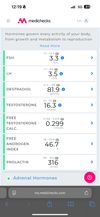
After 4 months of using topical finasteride and minoxidil, blood tests showed increased E2, Test, and Prolactine levels. The user is concerned about potential side effects like gyno and is seeking advice on managing these values.
Finasteride can affect hormone levels within two weeks, and a break of several weeks is recommended for baseline results. Monitoring E2 and testosterone is suggested to assess the risk of gynecomastia.
The conversation discusses hair loss treatments, focusing on vitamin D and B12 deficiencies, and mentions using finasteride. It also suggests getting a biopsy to differentiate between MPB and other conditions.
A 32-year-old male with diffuse thinning and seborrheic dermatitis has been using finasteride for 8 months without improvement. He is considering COQ10 + PQQ supplements for scalp inflammation and hair loss.
Dutasteride effectively reduces DHT levels and significantly increases testosterone levels. Users are cautious about adding oral minoxidil due to potential heart issues and are considering dosage adjustments with medical guidance.
The conversation discusses the use of peptides C60 and GHK-Cu for hair growth. Participants are sharing their experiences or knowledge about these treatments.
User experienced high E2 levels after taking finasteride and sought advice on lowering E2 with supplements like Tonkat ali, Fadogia, and Boron. They also used DIM, zinc, and magnesium but avoided using an AI.
A person considering finasteride for hair loss checked their hormone levels before starting treatment. They are concerned about the potential increase in estradiol and its effects, as well as the impact on their sex hormone-binding globulin (SHBG) and free testosterone levels.
Finasteride and dutasteride are discussed for hair loss, with concerns about their effects on neurosteroids and potential side effects like depression. Alternatives like topical estrogen and lifestyle changes are considered, with varying opinions on mental health and hair regrowth.
Users discussed increasing oral minoxidil from 2.5mg to 5mg for hair regrowth, with some considering higher doses despite potential side effects. They also mentioned using 1mg oral finasteride alongside minoxidil.
The conversation is about someone planning to start finasteride for hair loss and wanting to interpret pre-treatment blood panels to assess the risk of side effects like gynecomastia. They list various tests to measure hormone levels and other health indicators.
Chlorine dioxide was discussed as a potential hair growth treatment, with a method involving spraying it on the scalp and covering it with a cap. Concerns were raised about its safety, comparing it to bleach.
One study suggests a 0.2% caffeine concentration is nearly as effective as 5% minoxidil for hair loss, while other findings indicate that concentrations between 0.001% and 0.005% are more effective, with 0.001% being the most effective. There is no clear consensus on the optimal caffeine concentration for hair loss treatment.
A user with high pre-finasteride estrogen levels is asking if they need to normalize their hormone levels before starting finasteride and whether they should postpone dermarolling until they begin finasteride. The user is 21.5 years old.
The user had lab work done to check for thyroid issues and other factors related to hair loss. They are seeking advice on which lab results are important for understanding hair loss and what the optimal levels should be.
A user shared their baseline bloodwork results before starting Finasteride 1mg every other day, seeking comparison with others who have done similar tests. They are interested in any changes observed after beginning the treatment.
The user checked iron, ferritin, B12, zinc, testosterone, DHT, and estrogens to understand hair loss causes and the effects of dutasteride. They also noted increased heart rate and paleness with oral minoxidil.
The conversation is about a user planning a blood test to monitor health while on hair loss treatments: Finasteride, Minoxidil, and Dutasteride. Recommendations include testing for androgens, thyroid function, micronutrients, and basic health markers, with additional suggestions for PSA, prolactin, and estradiol.
OP is using 5% minoxidil and a foligain supplement for hair loss, with blood test results showing high cortisol levels. OP is considering starting finasteride, while another user shares their experience with finasteride and hair loss challenges due to malabsorption issues.
Clascoterone 5% solution showed a 539% improvement in hair count compared to placebo, but the actual increase in hair growth is minimal. Users express skepticism about the effectiveness of hair loss treatments.
Gut microbiota significantly influences androgen metabolism, impacting hair loss treatments like finasteride. Probiotics, dietary changes, and fecal microbiota transplants may help manage DHT levels and improve hair health.
PP405 is a potential hair loss treatment that inhibits mitochondrial pyruvate carriers, increasing lactate dehydrogenase activity and stimulating hair follicle stem cells. In a phase 1 trial, 31% of participants showed over 20% hair density increase with PP405 treatment.
Low oxytocin levels in hair are linked to reduced empathy and may affect hair growth. Cinnamic acid can promote hair growth by activating oxytocin receptors.
The conversation is about a user concerned about a prescribed 5 mL daily dose of 5% minoxidil for seborrheic dermatitis and hair thinning, which seems excessive compared to the typical 2 mL recommendation. The user is advised to consult their dermatologist and consider additional treatments like ketoconazole and CBD+MCT.
Switching from 2% liquid minoxidil to 5% foam minoxidil reduced scalp irritation but increased eyebrow flakiness and thinning. The user speculates that propylene glycol in the liquid formulation might have been protecting against seborrheic dermatitis while causing contact dermatitis.