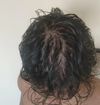
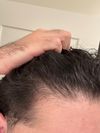
Addressing hair loss by checking vitamin D and iron levels is crucial before adding more treatments. Supplementing these deficiencies can significantly reduce shedding.
The user is experiencing progressive hair thinning despite using finasteride and dutasteride. A biopsy confirmed male pattern baldness, and minoxidil was suggested as an additional treatment.
The user switched from finasteride to dutasteride while on TRT to protect against hair loss but is experiencing thinning hair. They are unsure if the issue is due to dutasteride or TRT.
A 24-year-old male started using finasteride, minoxidil, biotin, and vitamin D for hair loss but noticed worsening thinning and white patches on his temples. He seeks advice on improving his regimen, which includes topical minoxidil and a shampoo for seborrheic dermatitis.
Many users experienced increased diffuse thinning after starting finasteride, with some switching to dutasteride or adding minoxidil in hopes of improvement. Thyroid issues and low ferritin levels were also discussed as potential factors affecting hair loss.
The user is concerned about hair thinning and has been using finasteride 1mg and minoxidil 5%, along with Alpecin caffeine liquid and vitamins. Others suggest continuing the treatment, as it seems to be stabilizing the hair, and advise against stopping the medication abruptly.
Hair loss is primarily caused by genetic sensitivity to DHT, not lifestyle factors like diet or exercise. Treatments like Minoxidil and Finasteride can help, but it's important to consult a dermatologist to determine the best approach for individual cases.
The conversation is about the struggles of dealing with diffuse thinning at a young age and the lack of significant improvement after using treatments like finasteride and minoxidil. Some suggest additional methods like derma rolling, microneedling, and hair fibers, while others share their own experiences and encourage persistence with treatment.
The user is experiencing irritation from using PG with RU58841 and is seeking alternative solutions like K&B in the UK. They report redness, itchiness, and flaky skin from the current treatment.
Exosomes are discussed as a new hair loss treatment, but skepticism is expressed about their effectiveness. Other treatments mentioned include Minoxidil, finasteride, and RU58841.
The conversation is about a user preparing to join the ABS-201 clinical trial for hair loss treatment, which involves a prolactin inhibitor. The user plans to update others on their progress if enrolled.
A 24-year-old experiencing severe hair thinning has been using minoxidil for 2 years but is still shedding hair. A doctor recommended plasma treatment over a DHT blocker for better and healthier results.
Hair loss treatment with latanoprost, minoxidil, and biotin showed progress. Latanoprost, a glaucoma drug, stimulates anagen phase and increases conversion of vellus hair to terminal hair.
The user was rejected from participating in a clinical trial for an extended-release oral Minoxidil due to having rheumatoid arthritis, despite initially being accepted. They had stopped using Dutasteride and Minoxidil to qualify but continued using other treatments like RU58841 and red light therapy.
A user is treating hair loss with Dutasteride, Minoxidil, RU58841, Derminator 2, Vitamin D, Biotin, and Zinc. After 6 months, there's no significant visual improvement, but the user feels less insecure about Retrograde Alopecia.
ABS-201 shows promise for male hair regrowth by blocking the prolactin receptor, with higher expected efficacy than current treatments. The discussion also covers dosing differences between macaques and humans for hmi115, highlighting a significant dosage disparity.
Finasteride reduces DHT production, so blood tests can track hormonal changes. Pyrilutamide blocks androgen receptors without altering hormone levels, making blood tests less useful for detecting its effects.
The user noticed increased hair loss over the past three years and is seeking advice. A suggestion was made to consult a dermatologist or trichologist and consider blood tests, particularly for vitamin D levels, to address potential androgenetic alopecia (AGA).
The conclusion of the conversation is that some individuals may experience a condition called reactionary hypergonadism when taking dutasteride for hair loss. This condition can lead to an increase in testosterone levels, which may worsen hair loss instead of improving it.
A user has been on finasteride for 6 months and feels their hair quality has worsened, experiencing more hair loss and scalp irritation. They are considering seeing a dermatologist, while others suggest the issue might be unrelated to finasteride, possibly due to deficiencies or other conditions.
The user diagnosed with DUPA tried treatments like dutasteride, finasteride, RU58841, and minoxidil without success and is considering a hair system. They hope for a future cure, possibly with PP405, and others suggest options like scalp biopsy and SMP.
A 22-year-old male experienced hair thinning and found minoxidil ineffective, with blood tests showing deficiencies in zinc, vitamin B12, vitamin D3, and possible hypothyroidism. Another user suggested adding topical finasteride to the regimen, which helped them regrow hair effectively without side effects.
Despite using treatments like Dutasteride, Minoxidil, RU58841, and GHK-Cu injections, the individual continues to experience aggressive hair thinning and is seeking a specialist for further help. Suggestions include trying finasteride, dermarolling, or another hair transplant.
Whey protein may slightly increase hair loss in men with androgenetic alopecia (AGA) due to elevated IGF-1 and testosterone levels, but the effect is minimal compared to treatments like finasteride and dutasteride. Many users argue that whey protein's impact on hair loss is negligible and that maintaining a healthy lifestyle is more important.
The user experienced increased hair loss and scalp itchiness despite using finasteride and plans to resume minoxidil and start microneedling. They are considering using clay, Aveda thickening tonic, and a beanie to manage the appearance of thinning hair.
Hair loss treatments like finasteride, minoxidil, and RU58841 are becoming more known, but many remain unaware of their effectiveness. There is hope for future advancements despite skepticism and misconceptions about current treatments.
OP is using 5% minoxidil and a foligain supplement for hair loss, with blood test results showing high cortisol levels. OP is considering starting finasteride, while another user shares their experience with finasteride and hair loss challenges due to malabsorption issues.
The conversation discusses hair loss treatments, focusing on Tsuji's hair cloning and Shiseido's RCH-01, with skepticism about their effectiveness on humans. It compares these to PRP, noting PRP's higher efficacy in studies.