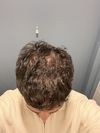
Minoxidil regrowth may be slowed by low vitamin D and ferritin levels. The user is experiencing slow hair regrowth and is considering addressing these deficiencies.
Caffeine may interfere with oral minoxidil because caffeine increases blood pressure while minoxidil lowers it. Users discuss potential interactions and effects on hair loss treatment.
The user has been using oral minoxidil 2.5mg and finasteride 1mg for 3 months and is unsure if they are experiencing hair regrowth or if it's an illusion. Some responses suggest it is regrowth, while others think it's an illusion due to angles and lighting.
The conversation is a satirical discussion about a user joking that their dog is balding and needs hair loss treatments like finasteride, with others commenting on the creepiness of an AI-generated image of a dog with human features.
A user regrets not starting hair loss treatments like Minoxidil, finasteride, or RU58841 sooner. Others comment on hair loss patterns and concerns about side effects.
People with hair loss experience emotional struggles and body dysmorphia. Treatments like minoxidil, finasteride, and dutasteride are used, but results vary and can take time.
A 38-year-old user discusses their experience with hair loss and the impact of comments about their bald spot, despite using treatments like topical finasteride, minoxidil, and tretinoin. The conversation highlights the emotional impact of unsolicited comments on appearance and suggests exploring additional treatments like oral minoxidil and finasteride for further improvement.
The conversation discusses HMI-115, a potential cure for hair loss. Users share mixed opinions, with some expressing skepticism and others sharing anecdotal evidence of its effectiveness, including photos of significant hair regrowth from a trial participant.
Stopping antihistamines may resolve neurological side effects when using finasteride. Users experienced muscle aches, headaches, and lethargy when combining the two.
Dutasteride at 0.5mg may have fewer sexual side effects than expected, with many side effects attributed to psychological factors (nocebo effect). The placebo group experienced more side effects, suggesting fear and anxiety might contribute to perceived side effects.
Many people become hyper-aware of hair loss in themselves and others, often leading to feelings of jealousy or self-consciousness. Treatments like finasteride, minoxidil, and dutasteride are commonly discussed as solutions to combat hair loss.
White rice may lower DHT and potentially cause symptoms similar to post-finasteride syndrome. The user experienced muscle wasting, depression, and other symptoms after consuming large amounts of white rice.
A 20-year-old feels defeated about hair loss and struggles with consistent minoxidil use due to ADHD. They plan to visit an endocrinologist for finasteride and consider shaving their head while continuing treatments.
Balding can be traumatic for many, affecting self-esteem and social interactions, while others accept it more easily. Treatments mentioned include finasteride, minoxidil, and RU58841.
The user is experiencing hair loss, possibly due to androgenic alopecia or telogen effluvium, and is considering treatments like Minoxidil, Finasteride, or RU58841. They also mention potential iron deficiency and sleep deprivation as contributing factors.
The user is considering starting finasteride for hair loss prevention, expressing concerns about potential side effects like reduced libido and erectile dysfunction. They are currently taking saw palmetto, vitamin D, zinc, vitamin C, and biotin but are unsure if these will be effective.
The user is experiencing potential side effects from a 3-in-1 pill containing Finasteride, Minoxidil, and Biotin, including dizziness, blurry vision, and reduced libido. They are considering tapering off the medication as advised by their dermatologist to see if symptoms improve.
A user shared their experience with finasteride, noting improved hair thickness but reduced libido and erection issues. They stopped finasteride, saw a return of libido but also rapid hair loss, and are now considering using Cialis to manage sexual side effects while on finasteride.
A humorous discussion on hair loss, suggesting girlfriend ASMR might counteract finasteride's effects, with a proposed experiment involving finasteride, ASMR, and control groups. Participants joke about evolutionary theories, ASMR, and the effects of DHT on balding.
Setipiprant trial for hair loss failed, showing no difference between placebo and treatment. Discussion also noted placebo users reporting side effects.
The user is experiencing sleep issues after starting finasteride for hair loss and is considering using magnesium or melatonin to improve sleep. Other users suggest that sleep disturbances are a common side effect initially, but may improve over time.
Clascoterone (CB) shows an excellent safety profile with no serious side effects, but its effectiveness may decline after six months, making it more suitable as an adjunct treatment with finasteride and minoxidil rather than a standalone solution. Some argue it could be better than finasteride due to its protection against testosterone, but its long-term efficacy remains debated.
Finasteride significantly lowers allopregnanolone levels, while dutasteride's effect is less clear and may vary. Some users speculate that dutasteride might be healthier for the brain due to its different inhibition pathways.
Diffuse thinning is worse than a receding hairline as it affects the entire scalp, complicating styling and hair transplants. Treatments like finasteride, minoxidil, dutasteride, and RU58841 are mentioned, with some users noting improved hair density.
Corticosterone inhibits GAS6, affecting hair follicle stem-cell activity, with potential implications for stress-related hair loss. Ashwagandha and Vitamin K are suggested for reducing cortisol, but their effectiveness is debated.
The user is considering using CB or clascoterone for hair loss, potentially as an alternative to RU. They're also contemplating asking a dermatologist for topical clascoterone cream to apply to their temple.
The conversation is about a user feeling hopeless due to hair loss despite using finasteride, dutasteride, and OM for over a year. Responses suggest therapy, self-improvement, and changing perspectives on appearance.
A 19-year-old has been using finasteride for 3 months to treat hair loss and is experiencing side effects like erectile dysfunction and dizziness. They plan to continue with a reduced dosage while monitoring their health and are seeking advice from others with similar experiences.
The user experienced a significant drop in libido and energy after taking saw palmetto, which they believe caused these changes. They are seeking advice and reassurance, with some users suggesting that the effects may not be permanent and could improve over time with a healthy lifestyle.