Amplifica starting clinical trials for new hair loss drug. SCUBE3 protein discovered, stimulates hair growth, could be alternative to Minoxidil and Finasteride.
Treatment options for female alopecia androgenetica, discussing the availability of spironolactone online in The Netherlands and other potential treatments like finasteride, minoxidil and RU58841.
The conversation discusses various theories of hair loss, including DHT sensitivity and genetic factors, with the user willing to use themselves for research due to having a hair loss gene but different hair loss patterns compared to their brothers. Specific treatments were not mentioned in the provided text.
Dutasteride is more effective than finasteride for hair loss, especially at the crown and midscalp, but both have similar side-effect profiles with low incidence of sexual adverse events. Improvement is measured visually, and significant results may take over 12 months to appear.
A user needs to stop finasteride for 7 days to donate blood due to haemochromatosis. They are concerned if this break will affect their hair loss progress after 6 weeks of use.
Recruitment for a verteporfin trial and a separate hair cloning trial using verteporfin and other methods is underway, with locations in Jordan, NYC, Beverly Hills, and Memphis. Dr. Bloxham is conducting the hair cloning trial, and interested participants are encouraged to contact him directly.
Pyrilutamide, a nonsteroidal antiandrogen drug under development for the potential treatment of androgenic alopecia. The conversation discusses its binding affinity to the androgen receptor and the timeline for possible availability after trials are completed in the United States and China.
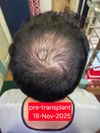
A 28-year-old male shares his 7-month progress after a crown hair transplant, using topical minoxidil foam, finasteride, and microneedling. He seeks feedback on whether his crown's progress is typical and if further thickening is expected between months 7 and 12.
The conversation discusses androgen receptor degraders for hair loss, highlighting their potential advantages over traditional AR blockers like RU58841 and pyrilutamide. Concerns about the safety and cost of these treatments are also mentioned.
The post and conversation are about the role of the enzyme 3alpha-hydroxysteroid reductase in hair loss and the potential of compounds like procyanidin B2 and sulforaphane to boost its activity for hair regrowth. Further research is needed to develop effective treatments based on this theory.
A user discusses a company, Roots by Genetic Arts, that offers a genetic test for hair loss to create personalized treatments, and is curious about its legitimacy and the science behind it. The company tests 16 genes related to hair loss and compounds a topical treatment based on the results.
Post Finasteride Syndrome (PFS) may result from epigenetic changes and gut microbiota alterations. Supplementing with Allopregnanolone might protect against these adverse effects.
DHT causes hair loss by driving cells into senescence, and a polyphenol in black chokeberry may reverse this. A product using this theory is being considered for use alongside finasteride, minoxidil, and microneedling.
Hair loss theory involves 3alpha-hydroxysteroid reductase (3AHD) converting DHT to androstenol. Discussion explores potential treatments and encourages more research.
A 17-year-old is concerned about potential hair loss due to maternal genetics and wonders if treatments like Minoxidil, Finasteride, or RU58841 will be effective. They hope their paternal genetics will help prevent hair loss or make treatments more effective.
The conversation discusses whether a longtime NW7 scalp has vellus hairs under a microscope or is completely smooth. Treatments mentioned include Minoxidil, finasteride, and RU58841.
Comparing the effectiveness of RU58841, Pyrilutamide and CB-03-01 as treatments for hair loss, with people discussing different aspects such as binding affinity, time of inhibition, safety data and cost.
Mixing RU58841 with cetosomal minoxidil is discussed due to scalp irritation from ethanol PG vehicles. A mixture of the two turned bright pink when left to dry.
The user is experiencing hair loss and has tried various treatments including topical and oral finasteride, minoxidil, dutasteride, and ketoconazole, but continues to lose hair. They are considering alternative solutions like hair systems due to the lack of improvement and a scalp condition called CVG.
Increasing the sult1a1 enzyme on the scalp may improve response to topical minoxidil. The user suggests using a baking soda solution, DMSO, and tretinoin to enhance enzyme activity and minoxidil effectiveness.
GT20029 is a new hair loss treatment in Phase 3 trials in China, using PROTAC technology to target androgen receptors, potentially with fewer side effects than finasteride and minoxidil. VDPHL01, a second-generation minoxidil, is also mentioned as potentially more effective.
Finasteride is effective for DHT/AR-driven hair loss but not for chromosome 20-driven cases, where treatments like minoxidil, prostaglandin analogs, and low-level laser therapy may be more beneficial. Genetic testing can help determine the underlying cause of hair loss to tailor treatment effectively.
PP405 is considered a promising potential cure for hair loss, with phase 2 trial results expected in February 2025. Hair cloning is also discussed as a potential ultimate solution, despite significant scientific challenges.
BPC-157 may promote hair growth by increasing angiogenesis, similar to how Minoxidil works, though no direct research confirms this yet. Users report combining BPC-157 with Minoxidil and finasteride for better results, but concerns about long-term safety exist.
KX-826 (Pyrilutamide) being tested in the US for hair loss treatment and that they have found enough people to participate in phase II clinical trials. Other treatments discussed are Minoxidil, finasteride, and RU58841.
The conversation discusses the mechanism of action of alfatradiol (17 alpha estradiol) in treating hair loss. It explores theories that it either inhibits 5 alpha reductase to prevent T->DHT conversion or aromatizes scalp T into 17-alpha-estradiol to save hair.
AHK-cu peptides are discussed for hair growth, with users comparing them to GHK-cu peptides and sharing sources to buy. AHK-cu is noted as more expensive, and users express interest in finding cheaper, reliable vendors.
A user shared a 7-month update on hair regrowth using finasteride daily and minoxidil once a day, noting improvement in hair health. Others suggested adding micro-needling, ketoconazole shampoo, and considering a hair transplant for better results.
A 7-month progress report of using finasteride and minoxidil, as well as keto dieting and derma stamping; the discussion also touched on RU58841 and its potential side effects.