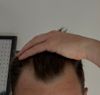
The user experienced noticeable hair regrowth after one year using finasteride and minoxidil, with improvements seen around 5-6 months. They report no side effects and use liquid minoxidil twice daily.
Minoxidil is showing noticeable hair regrowth, but users suggest adding finasteride for better results and longer-lasting effects. Concerns about finasteride's side effects are discussed, but many users report minimal issues.
The user experienced side effects from switching to Dutasteride and is considering whether to lower the Dutasteride dose or return to daily Finasteride. They are uncertain about the best approach due to mixed results from different studies.
The conversation discusses using pumpkin seed oil and rosemary oil for hair thinning, with skepticism about their effectiveness compared to pharmaceutical options like finasteride and minoxidil. Some users suggest trying natural treatments, while others emphasize the proven success of pharmaceuticals.
The user experienced hair improvement over a year using finasteride, topical minoxidil, tretinoin, ketoconazole, and microneedling. The hair density and hairline have strengthened with this routine.
Ketoconazole shampoo can be very drying, especially for curly hair, and may not be suitable for those who need to maintain moisture. Some users suggest using oils or masks to mitigate dryness, while others recommend avoiding it unless necessary for conditions like dandruff.
Combining topical minoxidil and pyrilutamide (KX-826) for hair loss treatment. It is suggested to apply minoxidil first, wait 20 minutes, then apply pyrilutamide for better absorption.
The conversation is about exploring additional hair loss treatments, with suggestions including topical melatonin, caffeine-based shampoos, redensyl, copper-peptides, pumpkin seed oil, saw palmetto, ketoconazole shampoo, and fluridil. Caution is advised against using products from AliExpress and Temu due to potential safety concerns.
The user experienced stable hairline but diffuse thinning after switching from oral finasteride to a topical solution of minoxidil and finasteride. They are concerned about the effectiveness of the topical treatment and are considering other options due to a recent decline in hair density.
A 22-year-old male shared his 4-month progress using topical minoxidil, topical finasteride, dermarolling, ketoconazole shampoo, and supplements for hair loss, showing significant improvement. Users discussed his potential for further recovery, shared purchasing tips for finasteride, and mentioned possible side effects like reduced libido.
A user shared a 6-month update on using a daily tablet combining finasteride, minoxidil, biotin, and vitamins C, B5, and B6 to address hair thinning. They are pleased with the results, despite experiencing some facial hair regrowth as a side effect.
The user shared hair regrowth results after 6 months using finasteride, minoxidil, ketoconazole shampoo, and dermastamp, considering adding dutasteride or a hair transplant. They previously had a hair transplant and did not take medications initially, leading to further hair loss.
The user shared their hair growth journey using minoxidil, finasteride, and ketoconazole shampoo, along with vitamins and serums, reporting significant progress in five months. They emphasized the importance of stress management and plan to add a derma roller, castor oil, and a high-protein diet.
The conversation discusses hair loss treatments, specifically PRP, Minoxidil, and Finasteride. The user is considering PRP but is concerned about its effectiveness and potential side effects, while another user suggests starting with Minoxidil and possibly adding Finasteride later.
The user switched from finasteride to dutasteride and oral minoxidil, experiencing better hair maintenance and some regrowth. They also addressed vitamin deficiencies, which may have contributed to their progress.
Omega 3 and 6 supplements are considered ineffective for hair growth by most users, with some suggesting they only help if combined with other nutrients or if the diet is poor. Users generally find traditional treatments like minoxidil and finasteride more effective.
Hot weather can increase hair shedding, possibly due to dehydration and active sebaceous glands. Using shampoos with salicylic acid or zinc pyrithione may help; daily anti-inflammatory use is not recommended.
A user is considering a 3-in-1 capsule containing Finasteride, Minoxidil, and Biotin for hair loss. Concerns are raised about Biotin's impact on the effectiveness of Finasteride and Minoxidil, and the cost is unclear without logging in.
Dutasteride, finasteride, and minoxidil are considered the top hair loss treatments. Other suggested treatments include Nizoral shampoo, tretinoin, pyrilutamide, zinc, biotin, and low light laser therapy, though opinions on their effectiveness vary.
Dutasteride and oral minoxidil are commonly used in Spain for hair loss, with a typical dose of 0.5 mg dutasteride and 2.5-5 mg oral minoxidil. Some users report side effects like erectile dysfunction when using finasteride and minoxidil.
A 21-year-old male is experiencing a receding hairline and has tried tea tree oil and hair growth shampoo without success. He is considering products from companies like Hims, Happy Head, and Dermose for treatment.
Selenium sulfide shampoo helped with a sore scalp but may cause hair root damage. Users experienced hair loss with selenium sulfide and ketoconazole, suggesting reducing use if hair loss occurs.
Saw palmetto, derma pen, rosemary oil, scalp massages, pumpkin seed oil, green tea extract, and B complex are discussed as natural treatments for hair loss, with mixed results reported. Some users consider adding finasteride for more effective results.
Tretinoin may enhance minoxidil absorption, potentially improving hair regrowth when combined with microneedling. Users discuss various treatments like minoxidil, finasteride, dutasteride, and microneedling, with mixed results and concerns about side effects and scarring.
A user is seeking a European supplier for a 3-in-1 hair loss medication containing Minoxidil, Finasteride, and Biotin. Suggestions include using forwarding services and a UK-based provider, with discussions on potential import taxes.
The user is experiencing hair miniaturization despite using dutasteride 0.5mg daily and oral minoxidil 3mg daily for three months. They are advised to continue the treatment as full effects may take up to a year.
A user in their 20s is experiencing hair growth after two months of using minoxidil and finasteride, focusing on the hairline and temple areas. They also addressed vitamin deficiencies (B12, D3, and iron) and are considering additional treatments like derma stamping.
A user had a 2250 graft hair transplant using both FUT and FUE methods, and is currently using finasteride, minoxidil, multivitamins, and biotin. Opinions vary on the effectiveness and appearance of the procedure, with some suggesting additional treatments or considering alternative options like shaving or using a hair system.
KX-826 Max combines KX-826, Kopyrrol, and Kopexil as a potential alternative to minoxidil and finasteride for hair loss, but users express skepticism about its effectiveness and high cost. Some users believe traditional treatments like minoxidil, finasteride, and others are more reliable.
A user discusses a dermatologist-prescribed topical solution for hair loss containing 7% Minoxidil, 0.0125% Tretinoin, and 0.1% Dutasteride, questioning its safety. Responses suggest the concentration is generally safe, though there is skepticism about daily use at high concentrations, and similar products like HairStim and Happy Head are mentioned.