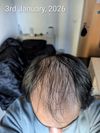
The conversation is about using a blend of coconut oil, peppermint oil, and rosemary oil with minoxidil for hair loss, and whether it's safe to apply this blend after microneedling.
The conversation discusses a hair loss and scalp care routine involving ciclopirox shampoo, benzoyl peroxide, clindamycin gel, clobetasol propionate, and calcipotriol to manage seborrheic dermatitis, folliculitis, and inflammation. It also touches on the role of diet and other treatments like oral minoxidil and pioglitazone for scalp health.
A user shared a beard growth protocol involving hydration toner, azelaic acid, tretinoin, moisturizer, 5% topical minoxidil, and SPF 30+ sunscreen. The regimen spans a year to a year and a half, with specific application schedules for different phases.
Microneedling with minoxidil significantly boosts hair growth, even for non-responders to minoxidil alone. The routine includes a 1.5mm dermaroller weekly and minoxidil twice daily, with some users adding finasteride and tretinoin.
Using castor oil, coconut oil, rosemary, tea tree oil, peppermint oil, and other essential oils for hair loss prevention. Emu oil and derma rollers are also discussed, with caution advised for coconut oil's comedogenic properties and taking castor oil orally.
The conversation discusses using sunflower oil as a carrier oil with rosemary oil for hair loss treatment, as it doesn't leave the scalp overly oily like hemp seed oil. The user also mentions avoiding minoxidil due to side effects and using rosemary oil to reduce hair fall and promote new growth.
Keto 2% can dry out hair, especially wavy or curly types. Users suggest using oils like olive, coconut, or argan, and following up with a good conditioner or hair mask to maintain hair health.
Coconut oil may act as a natural conditioner but can clog pores, while castor oil might promote hair growth and help with dandruff. Users suggest trying lighter oils like apricot or grapeseed for better results.
The conversation discusses the risks and methods of ingesting liquid minoxidil for hair loss. Concerns include dosing accuracy, safety of ingredients, and potential side effects compared to using oral minoxidil tablets.
The user is experiencing scalp irritation from using RU58841 with a 70% ethanol and 30% propylene glycol vehicle and is considering switching to a less irritating vehicle, such as 30% ethanol with 70% squalane or emu oil. They are seeking feedback on the effectiveness and irritation levels of these alternative carriers.
A 21-year-old has been using daily oral finasteride, minoxidil, biotin, and vitamins since January 2026 for hair loss, adding topical treatments and microneedling in May. They observed initial shedding and scalp issues but noted significant progress after adjusting their routine.
The "DHT itch" is real and likely due to inflammation at the hair follicle, exacerbated by increased testosterone or androgens. Treatments mentioned include dutasteride, minoxidil, finasteride, and various topical solutions.
Hair loss treatments include Finasteride, Minoxidil, Ketoconazole shampoo, and Microneedling. Additional options are Dutasteride, oral Minoxidil, and hair transplants.
The conversation discusses potential causes of pigmentation around hair follicles, suggesting sebum buildup, autoimmune conditions, or dermatitis. Treatments mentioned include finasteride, dutasteride, and an anti-inflammatory diet, with a recommendation to consult a doctor for a proper diagnosis.
Hair follicle stem cells remain in bald individuals, but progenitor cells do not, raising questions about hair regrowth claims by Pelage. PP405 is discussed as a potential treatment, with skepticism about its effectiveness compared to existing treatments like Minoxidil and Finasteride.
Fatty acid metabolic signaling can activate epithelial stem cells for hair regeneration. Oleic and palmitoleic acids showed the best results, but practical application on humans remains uncertain.
Excessive scalp sebum, worsened by DHT, can lead to inflammation and hair loss, with clascoterone mentioned as a treatment. Diet changes seem ineffective for scalp sebum, and treatments like minoxidil and finasteride are suggested.
Excess sebum rich in cholesterol and triglycerides can lead to hair loss through inflammation, with treatments like Ciclopirox shampoo, Benzoyl Peroxide shampoo, and Clindamycin gel recommended for managing conditions like seborrheic dermatitis and folliculitis. Pioglitazone is suggested for Lichen Planopilaris, while Omega-3s and reducing processed foods may improve sebum quality, though genetic factors play a significant role.
Oleic acid and microneedling are being explored for hair regrowth, but results are mixed. Addressing DHT and fibrosis is crucial, with treatments like finasteride, minoxidil, and scalp massage also discussed.
A gel of keratin microspheres promotes hair follicle growth, showing similar effectiveness to minoxidil in mice. The treatment activates hair growth pathways and reduces inflammation, with potential applications in drug delivery for hair-related disorders.
The user is experiencing new hair growth after using oral dutasteride, topical minoxidil, and microneedling, but is concerned about black dots on the hairline, which might be clogged pores or dormant follicles. The user previously used a topical minoxidil/finasteride spray and had good results, despite a shedding phase after switching treatments.
The conversation discusses concerns about the potential risk of cancer from creating new hair follicles through microneedling, due to stem cell division. Specific treatments mentioned include microneedling, caffeine-containing anti-hair loss shampoos, and other unspecified topicals.
Increased Malassezia and Cutibacterium in the scalp microbiome are linked to higher sebum production and inflammation in androgenetic alopecia (AGA). Treatments include ciclopirox shampoo, benzoyl peroxide shampoo, clobetasol propionate, calcipotriol, minoxidil, finasteride, and dutasteride.
Osteopontin, a protein involved in hair growth on moles, may help with hair loss. However, it is also linked to Alzheimer's, cancer, and bone development, so caution is advised.
The conversation discusses managing hair loss and scalp issues, with users sharing experiences using treatments like dutasteride, finasteride, ketoconazole, sulfur soap, and topical anti-androgens. Suggestions include trying sulfur soap, scalp massages, spironolactone, and dietary changes to reduce sebum production and dandruff.
The conversation discusses using scalp antiandrogens like RU58841, pyrilutamide, or fluridil on the face to reduce sebum production, noting that clascoterone (winlevi) is an approved facial antiandrogen with underwhelming reviews.
Mallia Aesthetics has developed MAL-838, a hormone-free product derived from sCD83, which stimulates hair growth without disrupting the skin microbiome. sCD83 promotes hair growth by activating hair follicles and preventing cell death, offering a localized treatment without systemic side effects.
A user plans to experiment with creating new hair follicles using methods like derma rolling, applying lithium chloride, tannic acid, and various other substances including caffeine, ketoconazole, and raspberry ketones. They also consider using anti-inflammatories, immunosuppressants, and DHT inhibitors to potentially improve results.
A healthy scalp barrier is crucial for hair growth, and ceramides may play a key role in maintaining it. The conversation suggests that focusing on scalp health, alongside treatments like Minoxidil, Finasteride, and RU58841, could improve hair follicle health.
Dihydrotestosterone (DHT) impacts various skin conditions, including Androgenetic alopecia and seborrheic dermatitis, by causing overactivity in sebaceous glands. Topical medications Tacrolimus and Clobetasol can reduce these inflammatory conditions, and treatments like RU58841, Minoxidil, and Finasteride may also be beneficial.