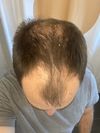
A user's experience with finasteride for hair loss, and their progress after one year of taking it daily. Others encouraged the user to keep going and asked about their results.
A 57-year-old man with severe hair loss since age 14 tried various hair loss treatments over two years, including finasteride, dutasteride, minoxidil, and supplements, with some minor regrowth. He also experimented with topical treatments and microneedling, but results were not cosmetically significant.
A user shared their positive 3-month experience using finasteride, minoxidil, and vitamin D to treat hair loss, noting significant regrowth and minimal shedding. They also discussed potential side effects and the low likelihood of experiencing them, while being open to answering further questions.
A 20-year-old experiencing hair thinning is considering treatments like minoxidil, finasteride, and various oils but is hesitant due to potential side effects. Users advise starting minoxidil and finasteride for effective results, while oils and supplements are seen as less effective.
Setipiprant may help with hair maintenance but is not a guaranteed solution for everyone. Other treatments like minoxidil, finasteride, and topical spironolactone are discussed, with varying opinions on their effectiveness.
Oral minoxidil is causing body hair growth but not improving scalp hair, despite using dutasteride and finasteride. Users suggest waiting longer for results, checking vitamin levels, and considering additional treatments like topical minoxidil, dermarolling, and supplements.
A user shared that while finasteride improved their hair, it didn't solve all their insecurities, suggesting that self-acceptance is key. Others in the conversation expressed varying opinions, with some feeling that finasteride significantly boosted their confidence and quality of life, while others acknowledged it as a solution to hair loss but not a cure-all for other personal issues.
The conversation humorously discusses inducing goosebumps to potentially reverse hair loss, with mentions of using cold therapy and muscle exercises. It also references other unconventional ideas like removing a testicle to lower DHT.
The user shared their successful hair regrowth journey using a combination of oral Dutasteride and a topical mix of Finasteride, Minoxidil, Tretinoin, and Ketoconazole. They experienced no side effects and noted significant improvement, except for one persistent thinning area.
A 39-year-old is starting a hair loss treatment with 1.25mg finasteride and 2.5mg oral minoxidil twice daily, sharing baseline pictures and hoping for significant results. Progress updates will follow.
The user experienced significant hair regrowth over three months using 1.25mg oral finasteride, 5mg oral minoxidil, and weekly dermarolling. Initial side effects included mood swings, but these stabilized over time.
Creatine does not increase DHT levels or cause hair loss. Personal experiences vary, but scientific evidence shows no link between creatine and hair loss.
Switching from finasteride to dutasteride can cause increased hair shedding, which may last several months before potential regrowth. Some users suggest combining both medications or waiting up to a year for improvement, while others report better results with finasteride alone.
The user has been using 5% minoxidil, finasteride, and dutasteride, along with microneedling and ketoconazole, to treat hair loss, showing significant progress over a year. Side effects mentioned include brain fog, watery semen, and facial dryness.
Exercise has minimal impact on hair loss, with weight lifting slightly increasing DHT and cardio potentially decreasing it. Finasteride and dutasteride are effective treatments for managing hair loss, even for those who exercise regularly.
The user applied Kindor's KU, followed by a solution of Finasteride, Minoxidil, and Tretinoin for alopecia. They experienced no side effects from Kindor's KU.
RU58841, a potential hair loss treatment, was not commercialized due to marketability issues and lack of long-term safety data. Concerns about its formulation and delivery methods further complicate its use.
A 23-year-old with diffuse thinning for 2 years is using Finasteride 1mg, prescribed by a dermatologist, and is seeking advice on regrowth expectations. Replies suggest continuing Finasteride, possibly adding Minoxidil, and being patient with results.
A user switched from Kirkland minoxidil to a cheaper Amazon brand called Adellina, which includes Biotin, Ginseng extract, and Collagen, and saw significant hair growth within a week. They also transitioned from oral to topical finasteride after achieving their hair growth goals.
Tretinoin can make minoxidil more effective for hair loss treatment, but some users did not see improved hair density with this combination and had better results with dutasteride.
The user is concerned about hair loss despite using oral finasteride, oral minoxidil, and topical minoxidil. They are seeking advice on additional blood tests to identify potential causes.
The user achieved significant hair regrowth using oral and topical minoxidil, finasteride, microneedling, ashwagandha, and amla powder. They experienced some side effects like low libido from finasteride but reported no major issues with minoxidil.
The post and conversation are about a user's successful regrowth of hair using topical minoxidil and rosemary shampoo. Other users discuss the potential limitations of minoxidil and recommend using finasteride to maintain hair growth.
User OmniStrife experienced amazing hair regrowth using 1/4 of a Finasteride pill daily for 6 months. Others discussed their results, availability of pills, and side effects.
This user has conducted data scraping of 365 Reddit posts on the hairloss drug Pyrilutamide over the last year to analyse efficacy and side effects. The findings, which are available in a 19 page report with graphs, suggest that 22% of Pyrilutamide users experience positive results while 63% experience symptoms. A larger analytics project is proposed for other drugs with enough demand.
Treatments for hair loss, including the use of minoxidil and microneedling; as well as discussing the potential of using finasteride or a ketoconazole shampoo.
User "yungnickyyp" shares 5-month progress using Fin/Min/Niz/Derm for hair loss. Others express jealousy and amazement at the significant hair regrowth.
The conversation discusses hair loss treatments beyond the commonly known three, focusing on separating effective treatments from myths. Dutasteride and low-dose oral Minoxidil are mentioned as having clinical evidence for increasing hair counts, but with potential side effects.
A user shared their 10-week progress using Minoxidil and 1mg Finasteride daily, reporting no side effects and increased sex drive. Replies praised the noticeable improvement in hair thickness and hairline definition.
The user has been using finasteride, minoxidil, microneedling, PRP, and ProCell therapy for hair loss but sees no progress after nine months. They are considering switching to dutasteride and possibly a hair transplant, with suggestions to add oral minoxidil.