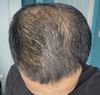
The user is experiencing hair regrowth in small clusters using oral minoxidil, oral finasteride, a red light cap, and Nizoral 2% shampoo. They are hopeful for continued improvement and thicker hair.
The user has been using finasteride for 7 months and is inquiring about Thrive's hair serum, which contains redensyl, procapil, and anagain, seeking feedback from others who have used it.
There is no imminent cure for hair loss, but treatments like Minoxidil, Finasteride, and new drugs such as KX-826, GT-20029, and PP405 are being explored. Current solutions focus on slowing hair loss and stimulating growth, with hopes for better options in the future.
The user experienced significant hair regrowth using finasteride tablets, minoxidil foam, and vitamins since April, alongside previous scalp micropigmentation. They are considering growing their hair out due to improved hair density.
A user shared their 9-month progress using RU58841 at 2% daily for hair regrowth, initially starting at 5% but reducing the dose due to early signs of gynecomastia, which has since mostly resolved. They achieved their goal of regrowing hair at the temples and hairline.
New product Tomorrowlabs HSF targets hair loss through HIF pathway indirectly by removing scalp iron. Minoxidil and Stemoxydine also relate to HIF pathway.
The conversation discusses hair regrowth using finasteride, minoxidil, ketoconazole shampoo (Nizoral), and microneedling as treatments. Users are sharing their experiences and results with these specific hair loss treatments.
The user is concerned about hair regrowth after using 2% minoxidil and keraglow vitamins for three months, noticing shedding but no significant improvement. They plan to switch to 5% minoxidil and consider finasteride for better results, as they have been diagnosed with male pattern baldness.
Minoxidil's effectiveness varies due to genetic differences in the SULT1A1 enzyme, affecting how well it converts to its active form, minoxidil sulfate. Hyper-responders may experience rapid hair growth and increased side effects, such as pericardial effusion, even at low doses.
GHK-Cu and AHK-Cu peptides show limited success for hair loss, with skepticism about their effectiveness and concerns about misleading claims. Users report better results when combined with treatments like finasteride, dutasteride, minoxidil, and other methods.
Taking CoQ10 and fish oil supplements may lead to increased body hair growth and a crawling sensation on the scalp and skin. The user suspects these supplements could be linked to hair growth, possibly due to their effects on heart health and cholesterol management.
The conversation discusses the synthesis and potential use of JXL069 and PP405 for hair loss treatment, with skepticism about their effectiveness and concerns about safety. Users mention that JXL069 has shown no results in hair growth, and there is confusion about its identity and effectiveness compared to PP405.
Inflammation plays a significant role in hair follicle miniaturization and androgenetic alopecia, with treatments like ketoconazole shampoo, minoxidil, and finasteride being used to address it. Users discuss the benefits of anti-inflammatory treatments and peptides like KPV, alongside traditional hair loss treatments, to improve scalp health and hair quality.
Vitamin D supplementation may have led to slight hair regrowth and density improvement. Other treatments discussed include finasteride, minoxidil, and maintaining optimal vitamin D levels.
Red light therapy is scientifically proven to promote hair growth by increasing strand density and thickness, and it's an additional treatment to DHT blockers like minoxidil and finasteride. Some users are skeptical about the cost and effectiveness of commercial devices, despite studies showing benefits.
The user is using finasteride 1.25mg three times a week for hair regrowth and reports no significant side effects except watery semen initially. They also use a local caffeine shampoo and are considering haircuts to improve appearance.
Users discuss the effectiveness of low-dose topical finasteride (0.005-0.05%) for hair loss, often combined with minoxidil. Some report stable results or new growth, but it's unclear if improvements are due to finasteride or minoxidil.
A sugar gel is claimed to spark hair regrowth, but users express skepticism, noting that minoxidil and finasteride remain the most effective treatments. Many users joke about frequent "breakthroughs" that work on rats but not humans, and some mention the potential of PP405 as a future treatment.
A user started applying 25mg RU58841 daily for hair regrowth and is considering increasing the dosage. They are seeking advice on effective dosages from others who have experienced regrowth with RU58841.
The conversation discusses hair loss treatments, specifically mentioning Minoxidil, finasteride, RU58841, and TB-500 Thymosin Beta-4. It critiques the credibility of biohacking claims.
PP405 cannot restore extracted hair follicles after a transplant as they are removed, not dormant. Combining verteporphin with wounding and PP405 is suggested but not confirmed effective.
Adding melatonin to minoxidil can improve hair growth and thickness, and it's easy to use with minimal side effects. The recommended concentration for melatonin in the solution is between 0.05% and 0.2%.
Dr. Tsuji's stem cell hair multiplication procedure may offer a future solution for hair loss, but it is initially expected to be very expensive, with prices potentially decreasing over time. In the meantime, users discuss using treatments like finasteride, despite side effects, to manage hair loss.
The user had a hair transplant 5 years ago and is currently using 1 mg finasteride and topical minoxidil but is not seeing an increase in hair volume. They are considering another transplant to improve hair volume.
A Silicon Valley-backed company aims to cure hair loss. Exciting advancements include mRNA therapies, gene editing, hair cloning, AR degraders, anti-androgens, cell-based rejuvenation, and AI-based drug discovery, with hopes for FDA approval of GT20029 within 10 years.
PP405 shows promise in hair loss treatment, but stem cell therapy using adipose-derived stem cells and ATP also successfully reversed androgenetic alopecia in mice. Stem cell therapy is costly, and some doubt the effectiveness of PP405 based on press releases.
PP405 shows promise in hair regrowth, potentially outperforming existing treatments like finasteride and minoxidil, with significant results in just four weeks. The treatment is still in early stages, with further trials needed to determine its long-term effectiveness and optimal dosage.
A 31-year-old experienced significant hair regrowth using a combination of oral minoxidil, dutasteride, and topical treatments, with no side effects. They initially had issues with finasteride but found success with dutasteride, noting improved hair retention and no sexual side effects.