Search
for
Sort by
Community Join
420-450 / 1000+ resultscommunity cosmeRNA finally now it's pyrilutamide turn
Hair loss treatments discussed include cosmeRNA, minoxidil, finasteride, RU58841, and pyrilutamide. Users debate effectiveness, side effects, and upcoming treatments, with some expressing skepticism and others optimism.
community xyon Fin progress photos - 9 months progress
User applied Xyon fin topical gel daily, used Augstinus Bader shampoo, conditioner, and scalp treatment, and applied argan oil twice a week. No Minoxidil, no dermarolling, and no side effects were reported.
community Hair Loss “Cure” for Inflammation: Topical Roflumilast
Topical roflumilast is effective for reducing inflammation in various scalp conditions like seborrheic dermatitis, psoriasis, and eczema, but not proven to stop scarring alopecia. Alternatives like apremilast and Vtama are also discussed for their anti-inflammatory benefits.
community Pyrilutamide - one month update
User on 5th week of Pyrilutamide and oral Minoxidil, no hair loss improvement yet. Others suggest waiting 3 months for results.
community what is the best side treatment? ketoconazole, microneedling, or tretenoin? my opinion below
Microneedling, ketoconazole, and tretinoin are discussed as hair loss treatments, with tretinoin favored for its long-term benefits and potential to turn minoxidil non-responders into responders. Microneedling is recommended for initial use, ketoconazole for dandruff, and tretinoin for continuous use due to its skin benefits.
community minoxidil (15 months) and pyrilutamide (46 days) results.
OP used minoxidil for 15 months and pyrilutamide for 46 days, achieving desired results without side effects. Users discussed alternatives like dutasteride and finasteride, with concerns about side effects like erectile dysfunction.
community 4 months into topical minoxidil+fin solution
community 5 months (.015% fin topical, 5% min, Microneedle .75mm) - How's the Progress?
User is using a homemade topical treatment with .015% finasteride, 5% minoxidil, and microneedling at .75mm depth. They also use 2% ketoconazole shampoo, various oils, and are considering increasing finasteride concentration due to mixed results.
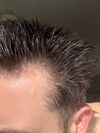
community “Mature Hairline” or Genuine AGA?
A 33-year-old male is experiencing thinning at the temples and hairline, with increased shedding over the past year. The user suspects androgenetic alopecia (AGA) despite AI suggesting a maturing hairline.
community "Clinical efficacy of microneedle combined with 5% Minoxidil solution and finasteride in the treatment of androgenetic alopecia in males"
Microneedling combined with 5% Minoxidil and finasteride significantly improves hair growth compared to using Minoxidil or Minoxidil with finasteride alone. The combination treatment is safe and effective, but further research is needed due to small sample size and short study duration.
community 3 Months on Topical DUT & MIN Female Pattern Baldness
A user shared progress on treating female pattern baldness with a topical solution containing Minoxidil, Dutasteride, Tretinoin, Ketoconazole, and Hydrocortisone, along with supplements like Collagen Peptides, NAC, Vitamin C, and Keratin. Another user commented on the impressive results, noting the use of topical Dutasteride.
community 12 mo update: oral (dut, min), topical (RU, min), microneedling
A user's 12 month update on treatment for hair loss, which include oral dutasteride and minoxidil, topical RU88541 and minoxidil, microneedling with hyaluronic acid and FinDuta, experiencing no side effects, positive results and inspiring other users.
community The "DHT" itch myth - it's more complicated
A user found that scalp itch might be linked to inflammation rather than DHT alone and noticed hair improvement with certain cancer drugs. They also discovered that black seed oil relieved their scalp itch and are experimenting with a mix of essential oils for dry scalp, questioning if oils affect minoxidil absorption.
community Pyrilutamide almost for 9 months
The user has been using pyrilutamide, topical finasteride, and 15% minoxidil for hair growth for almost 4 years. Despite mixed responses from others, the user reports seeing progress, especially with the addition of pyrilutamide, and plans to continue the regimen.
community DHT is required to convert vellus hair into terminal hair?
Finasteride and Dutasteride block DHT, which is needed for vellus hair to become terminal on the beard but not on the scalp. The user considered using DHT cream but learned it's unnecessary for scalp hair.
community Pyrilutamide +Alfatradiol 0.1% , no Hairloss anymore
OP experienced diffuse thinning for 11 years and used Minoxidil and Finasteride previously. They now use Pyrilutamide 0.5% and Alfatradiol 0.1%, resulting in significantly reduced hair loss.
community Topical Dutasteride - Dosage / Frequency (Strut gel formulation)
A user ordered a topical dutasteride gel with tretinoin for hair loss after unsatisfactory results with minoxidil and finasteride. Another user shared their experience with the same product, noting its pleasant smell and feel but difficulty in application and uncertainty about its absorption and frequency of use.
community Comparison of options: topical vs medication
A user diagnosed with AGA is seeking advice on hair loss treatments, comparing topical Minoxidil, Spironolactone, and Finasteride to oral medications and natural methods like dermastamping, PRP, and LED light. They are concerned about side effects and effectiveness, especially given their existing fatigue.
community 22F. Should I even bother getting a biopsy? Is there any point?
A woman who has been experiencing hair loss for several years, and her question of whether there is any benefit to getting a biopsy to check if it's AGA or diffuse alopecia areata when no cure or very effective treatment exists. Treatments such as spironolactone and Minoxidil/finasteride/RU58841 have previously been discussed.
community 3 month progress - dut, oral minox, ketoconazole shampoo, ru58841, dermarolling. Wet hair same lighting
A three-month progress report of using Dutasteride, oral Minoxidil, Ketoconazole shampoo, RU58841 and Dermarolling to combat hair loss. The results have been encouraging so far.
community Dermaneedling/Dermapen with seborrheic dermatitis/dandruff
Using dermaneedling or dermapen for hair loss while managing seborrheic dermatitis and dandruff. Treatments mentioned include ketoconazole, peppermint and jojoba oil, and rubbing alcohol.
community 21m, curious about what's going on with my hair
A 21-year-old male with a thyroid condition noticed his hair thinning uniformly without a receding hairline. He is considering using a 5ARI to prevent further baldness if he starts TRT.
community Topical finasteride/minoxidil/tretinoin for ~9 months
The user shared progress pictures after using topical finasteride, minoxidil, and tretinoin for about 9 months, along with weekly microneedling, cold showers, and a diet free of processed foods. They reported no side effects.
community Tretinoin to counter-act Minoxidil's skin effects?
community Anyone use a custom topical from Skin Medicinals with latanoprost ?
The conversation discusses using a custom topical from Skin Medicinals containing latanoprost for hair loss, which helps move hairs into the anagen phase. The user is curious about the cost and effectiveness of this treatment.
community Making my own topical finasteride
community 2 month update. Fin+minox+ketoconazole+dermarolling+mk677+zink&d3
A user reports significant hair density increase and new growth at the temples after two months of using finasteride, minoxidil, ketoconazole, dermarolling, MK-677, zinc, and vitamin D3, with shedding stopping a week ago. They recently added MK-677 to their regimen.
community 20 weeks progress on Topical ( Min 5% + Fin 0.1% ) & 1mm dermastamp.
A user shared their 20-week progress using topical minoxidil (5%) and finasteride (0.1%) with a 1mm dermastamp, showing significant hair regrowth from NW5 to between NW3V and NW4. They experienced no side effects and plan to update at 12 months.
community 9 Month Update - Topical Fin/Min (0.3%, 6%), Weekly Microneedle 1.5mm, 40 Years Old
9 Month Update: Topical Fin/Min (0.3%, 6%), Weekly Microneedle 1.5mm, 40 Years Old. User shares progress pictures and discusses hair loss treatments used.