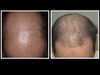
Minoxidil, finasteride, and RU58841 promote hairgrowth by different mechanisms, with minoxidil and prostaglandin E1 being specifically mentioned. Corticosteroids can also cause hairgrowth.
A user discusses a company, Roots by Genetic Arts, that offers a genetic test for hair loss to create personalized treatments, and is curious about its legitimacy and the science behind it. The company tests 16 genes related to hair loss and compounds a topical treatment based on the results.
A 45-year-old from Lahore, Pakistan, shares their 7-month hairgrowth progress after starting a new hair regeneration treatment. Previous treatments with minoxidil and finasteride showed no progress.
Treatments for hair loss, including topical immunotherapy, regenerative treatments, laser and light-based therapies, oral supplements, intralesional steroids, and new drugs like finasteride and minoxidil.
A user who shared progress pictures of their scalp using a microscope camera, demonstrating the difference between healthy and miniaturized hair. Various explanations for the cause of this were discussed, such as DHT build-up in scalp sebum causing an autoimmune response leading to inflammation and eventual hair loss, with some suggesting a do-it-yourself treatment involving adding ascorbic acid powder to shampoo.
Cold shock therapy may promote hairgrowth by stimulating follicular muscles and affecting stem cells. The exact mechanisms and full range of elements involved are not yet fully understood.
Hair loss progress pictures can be misleading due to differences in lighting, hair length, and wetness, making it hard to accurately assess changes. Treatments mentioned include minoxidil and finasteride, with some users expressing skepticism about their effectiveness.
A woman experiencing hair loss and facial hairgrowth suspects PCOS or androgenic alopecia and is considering treatments like Rogaine, but is concerned about the cost. She has tried various hair care methods and is awaiting a hormone doctor appointment, while others suggest she may have a hormonal imbalance and recommend seeing a gynecologist or trying cheaper versions of Rogaine.
A 22-year-old from India is using finasteride, Trichoton AT, and a multivitamin to address hair loss, noticing some regrowth. They are concerned about weight gain and the psychological effects of masturbation but find no strong evidence linking it to hair loss.
The conversation discusses using hair follicle dermal papilla exosomes for hair loss treatment. It inquires about purchasing options for this treatment.
Hair loss discussion includes potential HMI-115 treatment. Topical mucuna pruriens shows good results, blocking prolactin possibly more important than blocking DHT.
GHK-Cu is a potent inhibitor of the type 1 5-alpha reductase enzyme in hair follicles, which may reduce hair loss without the side effects associated with type 2 5-alpha reductase inhibitors. The user previously experienced side effects with 5-alpha reductase inhibitors and is considering GHK-Cu as an alternative.
A 21-year-old shared their 6-month hair regrowth journey using daily finasteride tablets and once-daily topical minoxidil, noting significant improvement in hair thickness, especially at the corners, with minimal side effects. They also mentioned using minoxidil for beard growth with limited success and occasionally using a dermaroller.
The user shared progress pictures showing significant hairgrowth after using minoxidil, dutasteride, and ketoconazole shampoo. They reported seeing results in 1.5-2 months and discussed the effectiveness of oral treatments over topical ones.
The conversation is about someone's improvement in hair density and hairline appearance after consistently using finasteride, topical minoxidil, dermarolling, and ketoconazole. They shared a progress picture showing the best results they've seen since starting treatment.
A 19-year-old shares his hair loss experience and treatment routine, which includes 1mg finasteride daily, 2mg oral minoxidil daily, ketoconazole shampoo every 2 days, and a healthy lifestyle. He notes that oral minoxidil is showing better results than topical minoxidil.
GHK-Cu peptide injections are discussed for hairgrowth, but users report mixed results and suggest focusing on DHT management first. Some users combine GHK-Cu with treatments like Minoxidil and Dutasteride, but emphasize its benefits for skin rather than hair.
The user is seeking advice on hair loss treatments, considering options like finasteride, dutasteride, minoxidil, or a hair transplant. They are concerned about how their mixed hair color might affect a transplant.
Tretinoin can cause non-telogen hair loss in some men by inducing catagen-like changes in hair follicles and through retinoid toxicity, especially when used with minoxidil. Some users report hair loss even when using retinoids on the face, while others experience benefits when combined with treatments like finasteride and minoxidil.
Hair loss in your 20s, with treatments like minoxidil, finasteride, dutasteride, and hair transplants discussed. Opinions vary between accepting baldness and pursuing aggressive treatments.
The user is using oral finasteride, minoxidil, and KX-826 for hair regrowth, noticing small improvements. They plan to add ketoconazole shampoo and consider a hair transplant with verteporfin after a year of treatment.
The user has tried various treatments for hair loss, including finasteride, dutasteride, and oral minoxidil, but is considering a hair transplant due to insufficient progress. Some users suggest that the treatments have at least stabilized hair loss, and recommend consulting clinics for a potential hair transplant while continuing medication.
Checking vitamin and hormone levels is important for addressing hair loss, as deficiencies in vitamin D, zinc, and iron can affect hairgrowth. Treatments like finasteride, minoxidil, and vitamin supplements are used, but addressing deficiencies is crucial for effectiveness.
A user on dutasteride for hair loss noticed hair regrowth on their head but a significant reduction in body hairgrowth. They plan to switch to finasteride and dutasteride and are considering testosterone replacement therapy but are concerned about its effects on hairgrowth.
The user experienced noticeable hair thickening and new growth after two months using a topical solution of minoxidil and finasteride. Continued improvement is expected, with potential for a full head of hair after further treatment and possibly a transplant.
Hair loss treatments discussed include Minoxidil, finasteride, and RU58841. The conversation humorously reflects on past hair loss solutions and the potential of hair cloning.
The conversation is about hair loss and the possibility of maintaining a full head of hair while using anabolic steroids. Some users believe that having good hair genes and taking hair loss protocols can help prevent hair loss while on steroids.
A user is concerned about low hair density 12 months after a hair transplant and is not using finasteride or minoxidil, only taking biotin. They are seeking advice on whether this is normal, if starting medication now would help, and when to consider a second procedure.