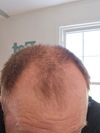
A 33-year-old male restarted finasteride after stopping it to conceive, noticing hairloss, especially in the crown area. His current routine includes finasteride, minoxidil, ketoconazole, and microneedling, and he plans to continue this treatment for 18 months before making any major changes.
Hairloss treatments discussed include Minoxidil, Finasteride, and RU58841. HMI-115, a monoclonal antibody drug, is in phase 1 and 2 trials for different conditions, but its availability on the gray market is unlikely due to high production costs.
The user is experiencing hair regrowth in small clusters using oral minoxidil, oral finasteride, a red light cap, and Nizoral 2% shampoo. They are hopeful for continued improvement and thicker hair.
Progress in hairloss treatments is slow, with current options like Minoxidil and finasteride being the most effective for now. A true cure, possibly involving stem cells or donor multiplication, is still considered far off.
The user discusses their long struggle with hairloss, considering various treatments like hair transplants, hair systems, and natural methods such as micro-needling, vitamin supplements, and a healthy lifestyle. They express concerns about side effects from drugs like finasteride and ultimately lean towards using a hair system for better appearance and confidence.
The user has been using minoxidil, finasteride, a laser cap, and ketoconazole shampoo for hairloss without success and is seeking advice on further tests or treatments. They have a family history of hairloss and have not yet undergone dermatologist or trichology tests.
The user is exploring alternatives to hair transplants due to a weak donor area and is currently using finasteride, minoxidil, dermapen, low-level laser therapy, Nizoral shampoo, and a high-protein diet. They plan to switch to dutasteride and consider adding RU58841, while rejecting hair systems and considering a buzz cut.
The conversation discusses treating male pattern baldness in a transgender woman using cyproterone acetate, finasteride, and biotin. The original poster shared their experience for others who might be in a similar situation.
Hairloss is linked to cellular physiology and the IGF-1 to TGF-B1 ratio, not just androgen sensitivity. The theory lacks evidence, while finasteride and minoxidil are effective treatments.
Participants want to maintain hair until at least age 30, using treatments like finasteride, dutasteride, and minoxidil. Hairloss remains a concern, with some considering hair transplants.
A user shared their 16-year hairloss journey using finasteride and minoxidil, noting slow hair thinning despite a family history of severe balding. They switched from topical to oral minoxidil but stopped for personal reasons, experiencing no significant side effects from finasteride.
The user is experiencing hair thinning and brittleness, possibly due to Telogen Effluvium, which affects body hair and may be linked to stress or nutrition. They are considering using finasteride for treatment but are unsure if it will address their symptoms.
A user claimed to cure their baby's baldness by using finasteride, minoxidil, ketoconazole, dermarolling, scalp massages, and headstands to increase blood flow. Commenters responded with humor, suggesting various exercises and questioning the legitimacy of the transformation.
8 months post hair transplant, OP experiences asymmetrical shedding despite using finasteride and starting minoxidil. The doctor suggests it might correct itself or be due to transplant trauma, recommending a wait-and-see approach.
Hair restoration treatments like finasteride, minoxidil, dutasteride, and hair transplants can greatly enhance self-image and dating life. Opinions differ on whether to embrace baldness or pursue treatments for maintaining hair.
The user is discussing hair regrowth after 3.5 months of using finasteride, questioning if the new growth is baby hairs. They compare photos from December to the present to assess progress.
A 23-year-old achieved significant hairline regrowth using minoxidil, saw palmetto, collagen peptides, biotin, omega-3, iron, ketoconazole shampoo, and scalp care techniques, without finasteride or dutasteride. The user attributes success to this combination but is unsure which element is most effective.
A 28-year-old in Turkey is experiencing hairloss, affecting his confidence and mood. He uses various supplements and shampoos, and is considering topical finasteride/dutasteride and minoxidil for treatment.
A 21-year-old experiencing aggressive hair shedding is considering treatments like Propecia (finasteride) and Rogaine (minoxidil) to slow or stop hairloss. Recommendations include using these treatments along with Nizoral Shampoo, hair vitamins, and a derma roller to maintain and potentially regrow hair.
A 43-year-old male seeks advice on hair regrowth options, considering treatments like Minoxidil, finasteride, and RU58841, or possibly a hair transplant. He has low testosterone and a family history of balding.
A 15-year-old is experiencing hairloss and has tried rosemary and jojoba oils without success. They are advised to see a doctor for thyroid and androgen tests and consider using Minoxidil.
User noticed thinning hair at 18-19, started finasteride at 22 and minoxidil at 24, with positive results. Others shared hairloss experiences and treatments, including finasteride, minoxidil, and hair transplants.
The user observed new tiny white hairs after 12 days of using minoxidil, finasteride, microneedling, and biotin, hoping they will become terminal hairs. Others advise that while some hairs may not fully grow, consistent treatment, patience, and scalp massages could enhance results.
A 22-year-old experiencing hairloss and persistent scalp itchiness since age 16 has tried various treatments, including finasteride, ketoconazole shampoo, and dietary changes, with no success. Suggestions include consulting a knowledgeable dermatologist, considering seborrheic dermatitis, and trying different shampoos like Selsun Blue or those with selenium sulfide.
A 31-year-old male experiencing hair thinning since age 25-26 uses minoxidil, finasteride, a red laser cap, and microneedling to promote hair growth. Users suggest reducing microneedling frequency to once a week to avoid damaging hair follicles.
A dental technician claims malocclusion causes pattern hairloss due to poor scalp circulation. Users debate this, noting treatments like finasteride, minoxidil, and microneedling focus on DHT and blood flow.
A 23-year-old male is experiencing large dandruff flakes causing hairloss, despite using anti-dandruff shampoo. He seeks advice on resolving the issue, noting a family history of baldness.