Search
for
Sort by
Community Join
780-810 / 1000+ resultscommunity Atypical hair loss, weird response to finasteride
community Why hasn’t anybody or any company done experiments on whether minoxidil and finasteride have effects on human collagen and elastin after a year of use compared to placebo? (In vivo not vitro)
The conversation discusses the lack of in vivo studies on the effects of minoxidil and finasteride on human collagen and elastin after a year of use. It highlights the potential benefits of such research for understanding side effects and improving sales, despite challenges like cost and competition.
community Forgotten Hair Loss Peptide by L'Oreal: KPV
KPV, a peptide patented by L'Oreal, may promote hair growth and reduce hair loss by extending the anagen phase and has anti-inflammatory properties. It could be combined with treatments like minoxidil for enhanced effects.
community MSM Supplementation is helping my hairs
The user reports that MSM supplementation has thickened their hair strands while using finasteride and topical minoxidil. They also take zinc, copper, B-complex, vitamin C, vitamin D3, and K2, and plan to add omega-3, magnesium, astaxanthin, and pterostilbene.
community Anyone else buy their Ru58841 direct from a chinese supplier?
The conversation discusses buying RU58841 directly from a Chinese supplier for cost savings. It mentions that companies like Anageninc and Actifolic do the same.
community Transplant Candidate? (26, Male)
A 26-year-old male considering a hair transplant is using topical finasteride and minoxidil, planning to start feminizing hormone replacement therapy (HRT) with estrogen and spironolactone. Many suggest waiting to see the effects of HRT, which may significantly regrow hair, before deciding on a transplant, and recommend adding microneedling and possibly switching to oral treatments for better results.
community Research and Experiences with Stem Cells?
community Isn’t gt20029 more exciting from a maintenance and prevention perspective than pp405 as a true alternative to finasteride
GT20029 and PP405 are discussed as potential alternatives or complements to finasteride for hair loss treatment. GT20029 is entering phase 3 trials, while PP405 is seen as promising for regrowing hair and possibly eliminating the need for other treatments.
community Scalp tension and thickness of the galea aponeurotica, inflammation and potential treatment pathways
Scalp tension potentially affecting hair loss, and potential treatments for male pattern baldness such as Minoxidil, Finasteride and RU58841. Evidence from a study was discussed which suggests that the cause of MPB lies within the follicle itself and is not dependent on its surrounding environment.
community I think I was coping. Telling myself I'm Norwood 5, but it's 6-7. No hope, even with upcoming HRT progress.
The conversation is about dealing with hair loss and exploring treatments like HRT, Minoxidil, and micro-needling. The user is considering wigs and possibly a hair transplant while expressing feelings of self-doubt and seeking support.
community How common are dark eye circles / wrinkles with Minoxidil?
community Article of all potential future cures
Ritlecitinib and PP405 show promise for hair regrowth. Diagnosing the cause of hair loss is crucial before treatment.
community The Korean began to suspect something. But they understood the mechanism to some extent. ( Cold shock therapy promotes hair growth in association with upregulation of cold-inducible RNA-binding protein and vascular endothelial growth factor)
Cold shock therapy may promote hair growth by stimulating follicular muscles and affecting stem cells. The exact mechanisms and full range of elements involved are not yet fully understood.
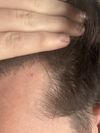
community M22 1 month topical minox/fina
The user has been using topical finasteride and minoxidil for a month to address hair thinning. They are experiencing shedding but have noticed small hairs on their temples.
community is it fin shed? how to solve this. pls help
An 18-year-old male using minoxidil and finasteride is experiencing increased hair loss, possibly due to a shedding phase from finasteride. He also takes zinc, magnesium, calcium, and vitamin C, and is concerned about hair loss from his temples.
community SCUBE3 and GT20029 could be the closet thing to a cure: Hair Follicle Regeneration and Protection Against DHT
SCUBE3 and GT20029 are potential treatments for hair loss, with SCUBE3 stimulating hair growth and GT20029 protecting against DHT. A combined approach using SCUBE3, finasteride or dutasteride, and later GT20029 could provide a comprehensive treatment for androgenetic alopecia.
community Early 2 months results Fin/min/1.5mmm
community Clascoterone phase 3 results are out!
Clascoterone phase 3 results show promising improvements in hair count, but concerns about high costs and lack of detailed data remain. Users compare it to existing treatments like Minoxidil and Finasteride, expressing skepticism about its accessibility and effectiveness.
community Likelihood of new treatments in the next few years?
New hair loss treatments like Shiseido/Replicel and Histogen were discussed, with cautious optimism about their availability by 2018. Setipiprant, Replicel, and Bimatoprost were mentioned as potential treatments expected around 2016-2017.
community Update to fin 0.25 mg, 4x/week
User reported initial hair regrowth with 0.25 mg finasteride taken four times a week, experiencing a second shedding phase, and no side effects. They also mentioned using RU58841 without success and plan to stop after a year.
community Ru-58841 vs KX-826/pyrilutamide while on steroids
The user increased their steroid dosage and noticed hair shedding, so they adjusted their regimen by reducing steroid doses and adding oral dutasteride. They are also experimenting with combining RU-58841 and KX-826/pyrilutamide in minoxidil to address hair loss.
community 10 weeks results, minox+1mg fin M25
A user shared their 10-week progress using Minoxidil and 1mg Finasteride daily, reporting no side effects and increased sex drive. Replies praised the noticeable improvement in hair thickness and hairline definition.
community ND dropped ecklonia cava which can cause hair growth. Alternative to fin/dut for those who have side effects
Ecklonia cava is suggested as an alternative to finasteride and dutasteride for hair growth, potentially offering benefits without their side effects. It is promoted for anti-aging, mood enhancement, and cognitive support.
community Silicon Valley backed company aims to cure hair loss
A Silicon Valley-backed company aims to cure hair loss. Exciting advancements include mRNA therapies, gene editing, hair cloning, AR degraders, anti-androgens, cell-based rejuvenation, and AI-based drug discovery, with hopes for FDA approval of GT20029 within 10 years.
community Creatine and hair loss: What is the your personal experience?
community PP405 Won’t Work: Follicle Is Miniaturized, Fibrosed, And Missing Key Support Cells
PP405 is ineffective for miniaturized, fibrosed hair follicles in androgenetic alopecia. AMP303 may activate hair follicle stem cells, but minoxidil and finasteride are still the main treatments.
community Which 2026 hair‑loss treatments have the strongest evidence so far? (minoxidil/finasteride vs. clascoterone, PP405, Re:You’s NV‑623/624, AMP‑303, RU58841)
community EssenGen 6-Plus with PG Results - 12 Weeks (Update 2)
Significant hair regrowth was achieved using EssenGen 6-Plus with 6% minoxidil and 0.05% finasteride, along with Nizoral shampoo, over 12 weeks. No side effects were experienced, highlighting the benefits of a low dose.
community The Chinese version of Stemson Therapeutics (Hair Multiplication) is here. It is called Yunce Medical.
Yunce Medical, a Chinese company, is developing hair multiplication technology similar to Stemson Therapeutics, with potential for quicker availability due to favorable regulations. Users express skepticism and hope for future advancements in hair loss treatments.